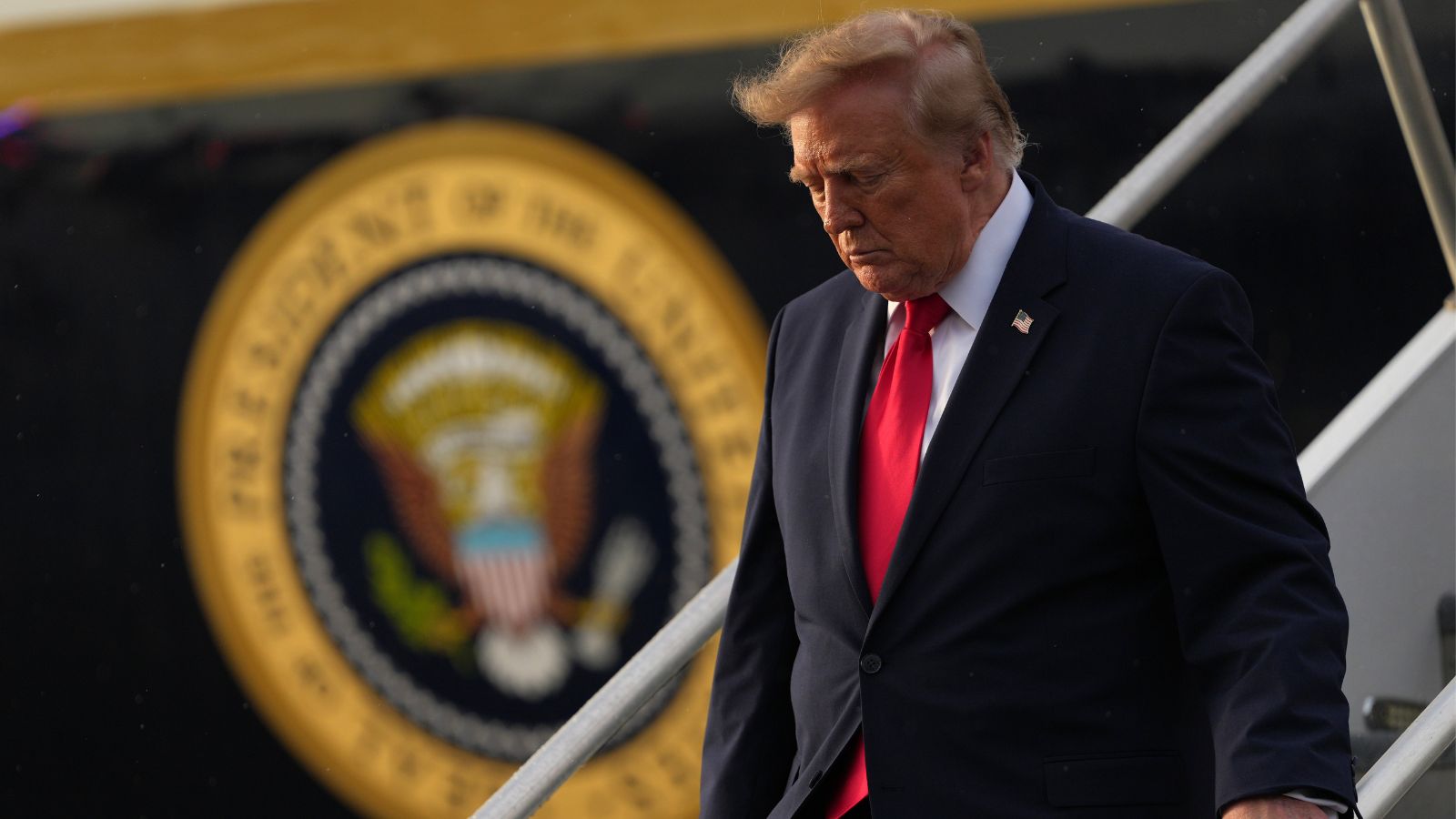
When Donald Trump steps up to a microphone and announces "There will be no strike today" regarding Iran, the internet immediately fractures into two predictable camps. One side claims total diplomatic victory and announces that peace in the Middle East has arrived. The other side dismisses the entire statement as erratic political theater designed to manipulate cable news cycles and oil futures.
Both sides miss the actual point.
Having spent years tracking geopolitical crisis signaling and reading the fine print of Pentagon posture reports alongside White House press briefings, I can tell you that a presidential pause on kinetic action isn't a peace treaty. It's a tactical holding pattern. When the commander-in-chief explicitly specifies that there won't be a strike today, every word in that five-word qualifier carries specific operational weight for military planners in Tampa, diplomats in Geneva, and energy traders in London.
If you're trying to figure out what US-Iran tensions actually look like right now, you have to strip away the partisan noise and look at how modern deterrence works.
Why the Word Today Matters More Than the Word No
In Washington's national security apparatus, ambiguity isn't an accident. It's the primary weapon.
When a president says there will be no strike today, he isn't ruling out tomorrow, next Tuesday, or three weeks from now. He's buying a 24-hour window while keeping every carrier strike group, bomber task force, and regional air defense battery on high alert. I've watched dozens of these high-stakes standoffs play out over the last two decades, from the 2019 drone shootdown crisis over the Strait of Hormuz to the 2020 retaliatory strikes following the death of Qasem Soleimani. The pattern rarely changes.
Public de-escalation statements almost always serve three distinct purposes behind closed doors.
First, they give back-channel intermediaries room to breathe. Countries like Oman, Qatar, and Switzerland have spent decades acting as the quiet message-carriers between Washington and Tehran whenever direct communication breaks down. When bombs are actively falling, those channels freeze. By declaring a temporary pause, the White House hands Omani or Qatari diplomats a narrow timeframe to deliver an ultimatum to Iranian leadership without forcing Tehran to lose face publicly.
Second, a pause shifts the burden of escalation onto the adversary. If Washington strikes first without giving an off-ramp, regional allies in the Persian Gulf—who host tens of thousands of American troops and sit directly within range of Iranian short-range ballistic missiles—get nervous. Arab Gulf states have repeatedly warned US officials that they don't want their oil infrastructure and desalination plants turned into collateral damage in an open-ended war. Saying "no strike today" reassures nervous partners in Riyadh and Abu Dhabi that the White House isn't rushing blindly into a regional conflagration.
Third, it buys time for logistics. Moving munitions, repositioning Patriot and THAAD missile defense batteries, and refueling naval assets across the Central Command area of responsibility takes days, not hours. Sometimes a public statement of restraint is simply cover while the Pentagon finishes hardening its bases against inevitable retaliation.
What Live Updates Usually Miss About US-Iran Escalation
If you follow standard live-blog coverage of a US-Iran crisis, you get a chaotic stream of disconnected headlines. A tanker gets harassed in the Gulf of Oman. A militia fires rockets near an airfield in Iraq. An anonymous official leaks a quote to a wire service. Then the president makes an off-the-cuff remark on the South Lawn, and cable news panels spend four hours dissecting his body language.
That kind of coverage creates massive blind spots. Live updates treat every development as isolated breaking news rather than pieces of a broader strategic doctrine.
Here's what actually drives the decision-making loop between Washington and Tehran, even when the headlines scream about imminent war.
The Escalation Ladder Isn't Linear
Most people picture military conflict like a staircase—one side takes a step, the other side takes a slightly higher step, and eventually you reach full-scale invasion. In reality, US-Iran confrontation operates more like a pressure valve. Both sides rely heavily on calibrated, asymmetric signaling.
Tehran prefers operating through what security analysts at the Center for Strategic and International Studies call the "gray zone"—actions that stay just below the threshold that would force a massive conventional US military response. Think cyberattacks, maritime harassment, and regional proxy pressure. Washington, conversely, relies on overwhelming conventional superiority paired with crushing economic sanctions. When Trump says there won't be a strike today, he's acknowledging that the current pressure hasn't crossed the specific red line requiring a massive kinetic response—or that the response is being delayed until the timing favors US forces.
Domestic Politics and Energy Markets Set Invisible Guardrails
Nobody in the White House makes a decision about bombing Iranian facilities without looking at crude oil prices and domestic inflation numbers.
Roughly a fifth of the world's petroleum passes through the Strait of Hormuz, a narrow chokepoint bordering Iran's southern coast. Even the credible threat of a US military strike sends Brent crude prices spiking within minutes. Higher oil prices translate directly to higher gas prices at American pumps within weeks, which is political poison for any administration.
Whenever you hear a president pump the brakes on military action, check the energy markets from the previous 48 hours. You'll almost always see a direct correlation between a sudden spike in oil volatility and a sudden burst of White House restraint.
The Common Mistakes People Make Reading Breaking Crisis News
When tensions flare in the Persian Gulf, misinformation spreads faster than verified intelligence. Over the years, I've seen the same three mistakes trip up even seasoned news consumers.
- Treating social media clips as real-time proof of strikes. Every single time a US-Iran headline trends, old footage from fireworks accidents in China, industrial explosions in Beirut, or video game simulations from Arma 3 gets recycled on X and TikTok as "breaking footage of airstrikes in Tehran." Unless major wire services like Reuters or the Associated Press confirm kinetic activity via multiple independent sources, assume viral explosion videos are fake.
- Confusing military readiness with guaranteed war. Moving an aircraft carrier into the Eastern Mediterranean or deploying B-52 bombers to Diego Garcia doesn't mean an attack has been ordered. Militaries call this "force posture signaling." You move the chess pieces into visible positions specifically so you don't have to use them. If the other side sees the bombers on the tarmac, they're more likely to back down.
- Assuming either government speaks with one unified voice. Neither Washington nor Tehran is a monolith. In Washington, hawkish voices on Capitol Hill often push for aggressive strikes while Pentagon brass warn about overstretching munitions stockpiles and risking American casualties. In Tehran, hardliners within the Islamic Revolutionary Guard Corps frequently clash with civilian officials who worry that a full-scale war would collapse an already fragile domestic economy. Contradictory statements within the same 24-hour period aren't a glitch—they reflect real internal tug-of-war.
How to Track US-Iran Developments Without Falling for Clickbait
You don't need a security clearance to separate genuine crisis escalation from routine political noise. You just need to watch the right indicators instead of refreshing sensationalist live blogs every ten minutes.
Start by watching maritime and aviation tracking data. Open-source intelligence analysts routinely monitor flight-tracking platforms like Flightradar24 and ADS-B Exchange for unusual spikes in US Air Force aerial refueling tankers (like KC-135s and KC-46s) operating over the Middle East. Large-scale air strikes cannot happen without massive aerial refueling operations. If the tankers aren't flying in unusual patterns, a major air campaign isn't starting in the next few hours.
Keep an eye on diplomatic advisories from regional embassies. Before any major military operation, the US State Department issues specific security alerts ordering non-emergency personnel to evacuate embassies in Baghdad, Beirut, or neighboring Gulf capitals. Embassy drawdowns are concrete, irreversible logistical steps that carry far more weight than a soundbite on a tarmac.
Pay attention to official Pentagon press briefings rather than anonymous leaks. Spokespeople at the Department of Defense have strict legal and operational boundaries around what they can say regarding force protection. When they shift from saying "we are monitoring the situation" to "we are taking active measures to protect our forces," the threat level has genuinely changed.
Ultimately, Donald Trump's statement that there will be no strike today tells you exactly one thing for certain: the clock is still ticking, the diplomatic window hasn't slammed shut yet, and both capitals are still calculating whether the cost of pulling the trigger outweighs the risk of holding fire. Follow the logistics, watch the oil markets, and ignore the noise until the planes actually leave the runway.



