Brussels has a phone line problem, and Moscow knows it. For months, European leaders have demanded a seat at the table as Washington, Kyiv, and Moscow test the waters for a settlement. Yet when Kremlin spokesman Dmitry Peskov mocked the European Union's inability to name a single envoy, he wasn't just tossing out routine diplomatic insults. He was pointing straight at a structural flaw that has paralyzed European foreign policy for decades.
You've probably seen the headlines framing this as simple Russian obstructionism. That's only half the story. In late October and early November 2026, Peskov repeatedly stated that Moscow would welcome a European negotiator—provided that person actually wanted a peaceful settlement—while simultaneously needle-pricking Brussels for "prolonged indecision" because the bloc "either cannot or does not dare" to pick someone. It's classic Kremlin judo. By acting reasonable and shifting the blame onto European bureaucracy, Moscow highlights a very real rift inside the EU before talks even begin.
The Anatomy of the EU’s Negotiator Quandary
Why can't 27 wealthy, sophisticated nations just pick one person to speak for them? Because in Brussels, picking a person means picking a policy.
When U.S. presidential envoy Steve Witkoff traveled to Oslo to meet Ukrainian President Volodymyr Zelenskyy and then flew to St. Petersburg to sit down with Vladimir Putin in October 2026, Washington demonstrated the raw speed of presidential diplomacy. One envoy. One mandate. Zero committee meetings.
Europe doesn't work like that. If the European Council tries to appoint a special envoy for Ukraine, every member state immediately asks whose agenda that envoy will push.
- The Eastern Flank: Countries like Poland and the Baltic states view any premature compromise as an existential threat. They want an envoy who treats military pressure and ironclad security guarantees as non-negotiable prerequisites.
- The Western Heavyweights: Leaders in Paris and Berlin talk openly about long-term European security architecture, yet they're constantly balancing domestic economic pressures against military aid commitments.
- The Spoilers: Governments in Budapest and Bratislava actively resist unified sanctions and push for immediate ceasefires on terms Kyiv rejects.
Because major foreign policy decisions in the EU still require unanimity, naming a single negotiator forces all 27 capitals to agree on the end goal first. Right now, they don't. So they stall. And while they stall, Moscow gets to tell the world that Europe isn't serious about peace.
Decoding Dmitry Peskov’s Strategy
If you read Kremlin statements at face value, you'll miss the actual mechanics of Russian messaging. Peskov rarely speaks off the cuff. Every phrase is calibrated to widen existing cracks among Western allies.
On October 25, 2026, Peskov told reporters that the EU's stance "can hardly be called constructive" because its leaders "are only talking and not taking any action". Then came the hook. He added that "if there was to be a negotiator – that would be good," and if that envoy was genuinely committed to a peaceful settlement, "that would be even better". By November 6, he escalated the mockery, claiming Europeans "have not even yet been able to decide who can speak on their behalf" despite the fact that discussing future European security without Europe is impossible.
Notice what he's doing here. He isn't slamming the door shut. In fact, by mid-November, Peskov insisted it would be "absolutely wrong" for Russia to set preconditions on who Europe puts in its negotiating group.
That sounds remarkably flexible until you look at the trap underneath:
- Legitimizing Bilateral Deals: By portraying the EU as hopelessly divided and indecisive, Moscow justifies negotiating primarily with Washington. It reinforces the narrative that the U.S. is the only adult in the room capable of making binding commitments.
- Defining "Constructive" on Russian Terms: When Peskov says an envoy must be committed to a "peaceful settlement", Moscow's definition includes recognizing territorial realities on the ground and overhauling NATO's posture in Eastern Europe. Any European diplomat who rejects those terms gets labeled "unconstructive" from day one.
- Sowing Transatlantic Distrust: European capitals already worry about being sidelined in trilateral U.S.-Russia-Ukraine consultations. Peskov's commentary rubs salt in that wound every single week.
Who Actually Wants the Job
Behind closed doors in Brussels, Paris, and Helsinki, plenty of names have floated around. None of them have stuck. As Peskov himself quipped in mid-November when asked about French President Emmanuel Macron potentially stepping into the role, "Every hour, reports are appearing that name completely different candidates".
The rumor mill reveals just how messy the internal debate has become.
The Institutional Route
Technically, the EU already has a top diplomat—High Representative Kaja Kallas—and European Commission President Ursula von der Leyen has insisted that Europe will be "present alongside our partners" when negotiations unfold. The problem? Moscow views the current Brussels leadership as fiercely hawkish and unwilling to engage in direct dialogue. Appointing an institutional insider guarantees a cold shoulder from the Kremlin, even if Peskov claims Russia won't veto anyone.
The National Heavyweight Route
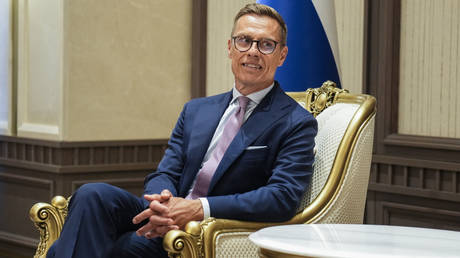
Some diplomats favor tapping a sitting head of state with direct lines to both Washington and Moscow. Finnish President Alexander Stubb has emerged as a prominent voice, maintaining regular contact with Donald Trump while arguing that asymmetric pressure—including Ukrainian long-range strikes—is necessary to force Russia into real talks. Norwegian Prime Minister Jonas Gahr Støre even defended holding direct phone calls with Putin so the Russian leader hears European views firsthand rather than through American intermediaries. Meanwhile, German Chancellor Friedrich Merz has floated smaller, agile groupings like the E3 or five-nation formats to bypass EU-wide gridlock.
The Special Envoy Route
Another option is appointing a respected former leader—someone with diplomatic scar tissue who doesn't have to answer to domestic voters every Tuesday. It worked during past Balkan crises. Today, however, finding a former prime minister whom Warsaw, Paris, Rome, and Budapest all trust equally feels nearly impossible.
Why Europe Cannot Afford the Sidelines
Here's the uncomfortable truth that European policymakers know all too well: you don't get to shape a peace deal you aren't negotiating, even if you're expected to pay for it.
Look at the financial and security math. Europe has shouldered a massive share of Ukraine's macro-financial survival, refugee hosting, and long-term reconstruction planning. When the fighting eventually stops, European troops, European money, and European intelligence agencies will carry the heaviest burden of policing any ceasefire line and deterring future aggression.
Putin himself acknowledged that broader discussions must address an "all-European security architecture". If Washington and Moscow sketch out the framework of that architecture while Brussels is still arguing over job descriptions and voting rules, Europe ends up as a rule-taker in its own backyard.
I've watched EU foreign policy crises unfold up close for years, and the pattern never really changes. Brussels excels at regulatory power, trade deals, and slow-motion consensus building. It stumbles badly when forced to play fast-moving geopolitical poker against autocrats who don't need parliamentary approval to make a counteroffer.
How to Cut Through the Diplomatic Noise
If you're tracking this story—whether for geopolitical risk analysis, market forecasting, or just trying to understand where the war is heading—stop getting distracted by daily press briefings. Statements from Moscow and Brussels are largely theater until structural moves happen on the ground.
Watch for three concrete signals instead:
- A Formal Mandate Without Unanimity: Watch if Paris, Berlin, Warsaw, and London bypass formal EU treaty structures entirely in favor of an informal "contact group". If they announce a joint envoy backed by a coalition of the willing rather than all 27 member states, Europe has finally solved its veto problem.
- Backchannel Verification: Real diplomacy rarely starts with a press conference. Pay attention to quiet travel schedules of national security advisors—not foreign ministers—visiting Washington, Kyiv, or neutral capitals like Ankara and Abu Dhabi.
- Security Guarantee Commitments: A negotiator without leverage is just a messenger. Until European capitals put hard numbers on post-ceasefire troop deployments, air defense umbrellas, and frozen Russian asset transfers, Moscow won't treat any EU envoy as a serious counterpart.
Ignore the Kremlin's theatrical sympathy for Europe's dilemma. Moscow doesn't want a strong, unified European negotiator—it wants a divided continent that talks in circles while facts are decided elsewhere. Until Brussels decides what it is willing to put on the table, arguing over who sits in the chair is completely pointless.
You can see Dmitry Peskov's full remarks criticizing Europe's lack of a designated representative in Peskov Says Europe Has No Ukraine Negotiator, which captures the exact framing Moscow is using to press its diplomatic advantage.