The water isn't just receding. It's vanishing.
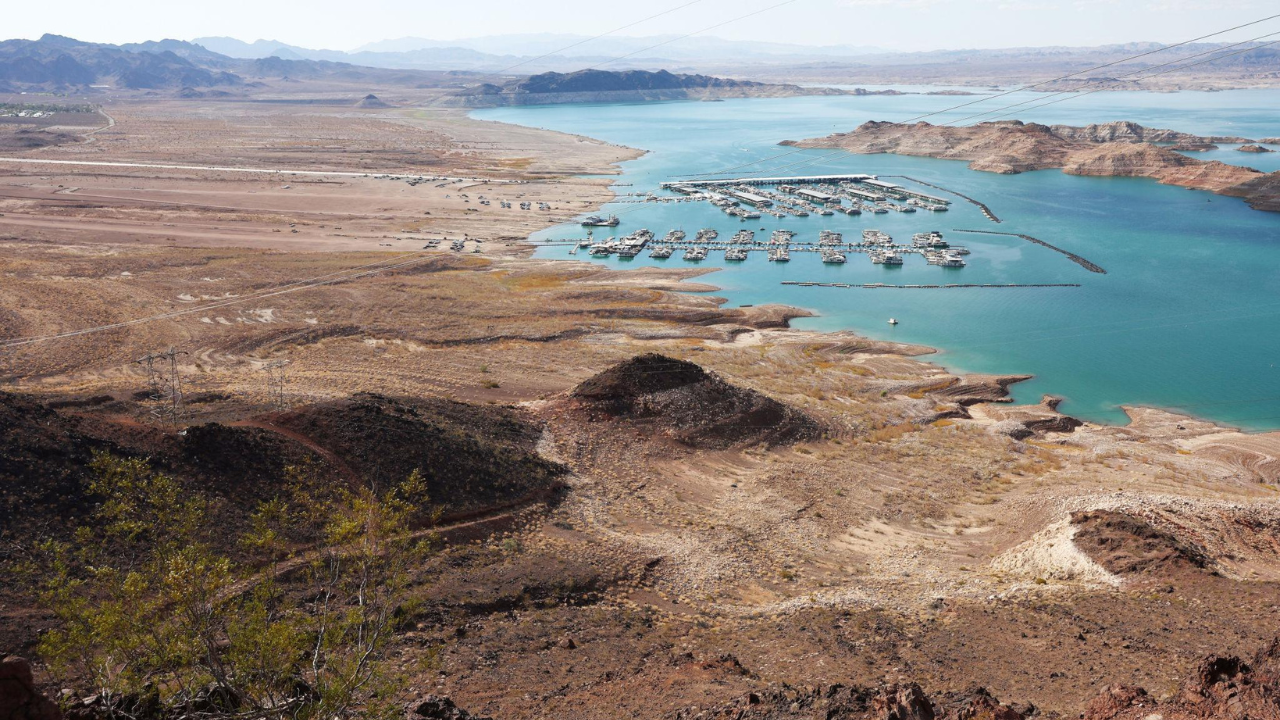
When you look at the bathtub rings starkly painted against the canyon walls of Lake Mead, you're seeing a slow-motion environmental crisis. For years, the reservoir behind Hoover Dam has drained due to relentless regional drought and overallocation. But as the surface drops, something strange happens. The bottom of the lake gives up its secrets.
You've probably seen the viral headlines. Human remains locked in rusted barrels. Sunken World War II-era craft resting upright on fresh silt. Decades-old sunken watercraft exposed to the blinding Nevada sun. It reads like a pulp fiction novel. Yet, it's completely real.
Let's talk about what's actually happening out there, why the water is disappearing, and what these sunken relics tell us about the human footprint in the American West.
The Shrinking Giant
Lake Mead isn't a natural lake. It's a massive bathtub created by the construction of Hoover Dam on the Colorado River during the 1930s. At full pool, it stores enough water to supply millions of people across Nevada, Arizona, California, and Mexico.
Right now, it's hovering near historic lows.
The math is brutal. The Colorado River basin has experienced a megadrought spanning over two decades. Less snowpack in the Rocky Mountains means less spring runoff feeding the river. At the same time, cities and farms keep taking their allotted shares. The system has operated on a deficit for years.
When water levels drop by over a hundred feet, the geography of the lake fundamentally alters. Coves turn into dry dirt tracks. Marinas have to be physically picked up and moved miles closer to the shrinking center channel.
And then, the bottom speaks.
Unearthing the Past
It started with a barrel.
In May 2022, boaters spotted a deteriorating metal barrel stuck in the newly exposed mud near the shoreline. Inside was a human body. Police quickly determined the person had been shot, likely during the mid-1970s or early 1980s, based on the clothing and footwear.
That single discovery opened a grim Pandora's box. Within weeks, more remains surfaced. Scuba divers, park rangers, and casual hikers started stumbling across bones left high and dry by the retreating waterline.
Why so many bodies? Lake Mead sits just a short drive from Las Vegas. During the mob era of the mid-20th century, the desert and the lake served as convenient places to make problems disappear. When the water was deep and cold, it kept those secrets hidden. Now, nature is forcing a reckoning.
Forensic teams face immense challenges. Submerged in mineral-heavy water for decades, DNA degradation is severe. Local law enforcement agencies coordinate with anthropology labs to run dental records and genetic genealogy databases, slowly putting names to the cold cases.
Sunken Ships and Forgotten Marinas
It's not just crime victims emerging from the deep. The retreating shoreline acts as a museum of mid-century recreation.
Take the Higgins boat, for instance. A Higgins landing craft used during World War II somehow ended up at the bottom of Lake Mead. How it got there remains a bit of local folklore, but as the water dropped, the vessel sat upright on the silt, largely intact. Tourists and history buffs scrambled to catch a glimpse before park services secured the area.
Marinas face a different kind of heartbreak. Floating docks built in the twentieth century now rest on dry land, hundreds of yards away from the water's edge. Abandoned vessels, neglected moorings, and old trash left behind by decades of careless visitors litter the beige mud.
Park rangers spend significant resources dealing with these hazards. Sunken boats that used to be deep underwater are now navigation hazards for the few remaining boaters, or worse, environmental risks leaking fuel and oil into the shrinking pool of drinking water.
What This Means for Your Tap Water
People focus on the spooky finds because they make great news stories. But the real story is about survival.
Lake Mead provides drinking water and irrigation for roughly twenty-five million people. When the level drops toward dead pool—the point where water can no longer flow through the dam's intakes—the entire infrastructure of the Southwest faces catastrophic failure.
State and federal agencies implemented mandatory water cuts. Farmers in Arizona fallow fields that have grown crops for generations. Suburbs in Southern Nevada rip out decorative grass and replace it with desert landscaping.
You can't ignore the data. Conservation efforts have helped slow the decline, but they haven't reversed it. The climate pattern driving this shift is structural, not temporary.
Practical Steps Forward
If you live in the Colorado River basin, water conservation isn't a buzzword. It's a daily requirement.
- Audit your irrigation system for leaks every spring.
- Replace turf grass with native, drought-tolerant plants.
- Upgrade to high-efficiency appliances that use less water per cycle.
- Support regional policies that price water according to actual scarcity.
The bodies and boats in Lake Mead remind us of human history, but the dry lakebed itself warns us about the future. Pay attention to how you use resources today, because the water won't wait for you to catch up.