Most coverage of the October 25, 2026 Brazilian presidential runoff treats the outcome like a simple replay of 2022. Luiz Inácio Lula da Silva won again. Donald Trump lost a friendly ideological partner in South America's largest country. Case closed.
Except that reading misses almost everything that actually happened on the ground in Brasília and Washington.
When Lula’s defeat of Bolsonaro in Brazil denies Trump an ally, the real story isn't just about ideological affinity between two right-wing movements. This time, Lula wasn't running against former President Jair Bolsonaro—who was serving a sentence under house arrest over a coup plot that prosecutors alleged included plans to assassinate Lula. He was running against Jair's son, Senator Flávio Bolsonaro, in an election that shattered a 41-year Brazilian political precedent. And the fallout has already reshaped trade leverage, critical mineral supply chains, and diplomatic friction across the Americas.
Why the 2026 Runoff Was Totally Different From 2022
If you only glance at the surnames on the ballot, it's easy to assume 2026 was a rerun. It wasn't.
In the first round on October 4, 2026, Flávio Bolsonaro actually finished ahead of the 80-year-old incumbent, pulling 47% of the vote to Lula's 45%—a lead of roughly 2.2 million votes. Every single presidential race in Brazil since the end of the military dictatorship in 1985 had gone to whoever led the first round. Until October 25.
Lula flipped the math in three weeks. He captured 51.79% of valid votes in the runoff, winning more than 64 million ballots compared to under 60 million for Flávio Bolsonaro—a margin of more than 4.4 million votes. Voter abstention dropped from 21.08% in the first round to 19.21% in the second, marking the lowest runoff abstention rate since 2006 as roughly 3 million additional voters showed up.
That turnaround didn't happen by accident. Flávio Bolsonaro campaigned openly on his proximity to the White House, visiting Washington in May 2026 and arguing that Brazil needed to cut better deals with the Trump administration. Lula turned that exact pitch into a nationalist liability.
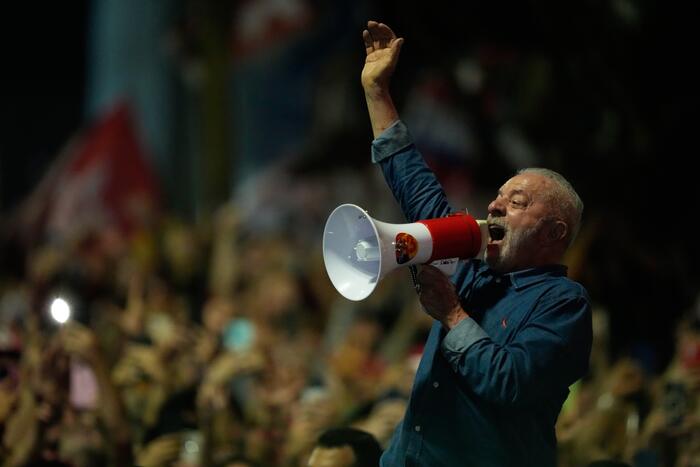
"This country will not accept being anyone's backyard," Lula told supporters in his victory speech. It was blunt. And in a country deeply protective of its diplomatic autonomy, framing a vote for Bolsonaro as a vote for U.S. subordination worked.
How Trump Lost His Closest Potential Partner in South America
Trump's relationship with the Bolsonaro family has never been subtle. Even though Trump claimed after the vote that he hadn't taken sides, he immediately called the Brazilian election "very strange" and "terrible," echoing unsubstantiated claims that the vote was "rigged".
Behind the scenes, the stakes for Washington were way higher than cable-news soundbites.
Across Latin America, a rightward political wave had given the Trump administration friendlier footing in several capitals. Brazil was supposed to be the crown jewel of that regional shift. Instead, Lula—who turns 81 right after the election and takes office for his fourth non-consecutive term on January 5, 2027—stopped that momentum cold at Brazil's borders.
The Critical Minerals Squeeze
Here's the part most pundits gloss over when they talk about Trump losing an ally in Brasília. This isn't just about speeches at the United Nations. It's about dirt and rocks.
Brazil holds an estimated 21 million tons of rare earth and critical mineral deposits, second globally only to China. Washington has been aggressively pressing Brasília for preferential access to those reserves so U.S. defense contractors and tech manufacturers can reduce their reliance on Chinese supply chains.
Flávio Bolsonaro explicitly campaigned on striking bilateral mineral deals with the Trump White House. Lula has taken the exact opposite stance, defending Brazil's freedom to trade simultaneously with China, the United States, and European partners without signing away strategic leverage.
As economist Monica de Bolle noted following the vote, any Brazilian export restrictions on those materials could directly disrupt U.S. defense manufacturing supply chains. "Brazil has leverage," she explained. "With Lula, the U.S. is on shakier ground".
The Tariff and Sanctions Backfire
Before the election, pressure from Washington and Bolsonaro-aligned lobbyists actually helped hand Lula his best campaign talking point.
In late 2025, a U.S. draft sent to Brazilian negotiators outlined 21 conditions tied to tariff relief, while Bolsonaro allies in Washington lobbied the U.S. government to sanction Brazilian Supreme Court judges overseeing investigations into the 2022 coup attempt. Eduardo Bolsonaro—another of Jair's sons, who relocated to Texas and was convicted by a Supreme Court panel in June 2026 of judicial coercion—actively pushed for U.S. intervention against Brasília's judiciary.
Instead of intimidating Brazilian voters into ditching Lula, perceived U.S. meddling rallied undecided moderates around national sovereignty. Even analysts who track transnational conservative alliances, like international relations scholar Oliver Stuenkel, pointed to Bolsonaro's loss as proof that cross-border political backing from Washington can't manufacture a majority in Brasília when voters feel pushed around.
Flávio Bolsonaro’s Flight to Miami Complicates Everything
If the election loss itself denied Trump an ally in the Planalto Palace, what happened 72 hours later turned a diplomatic setback into an active bilateral headache.
Minutes after the runoff results came in on October 25, a Brazilian Supreme Court justice ordered Flávio Bolsonaro to surrender both his regular and diplomatic passports by Tuesday morning. The order stemmed from a federal police criminal investigation into an alleged $905 million money-laundering scheme involving online betting companies—and allegations that diverted funds helped bankroll Eduardo Bolsonaro's lobbying stay in the United States.
Flávio didn't hand over his passports.
Instead, he crossed the Tancredo Neves International Bridge on foot into Argentina's Misiones province, flew via Ecuador, and touched down at Miami-Opa Locka Executive Airport on Wednesday, October 28, 2026, after the U.S. State Department granted visas to him and his family.
Once in Florida, he briefly posted online calling himself the "true elected President of Brazil" before editing the text to "real leader of Brazil". Meanwhile, his own Liberal Party—which actually had a strong night down-ballot, winning six governorships, 19 Senate seats, and 121 seats in the lower chamber—officially accepted the election results on Monday evening, effectively leaving him isolated.
Trump told reporters he approved of Bolsonaro coming to the U.S., saying "we gave him a pass to come into the country," though he also insisted he wouldn't get involved in Brazil's post-election turmoil.
That puts both governments in an awkward spot heading into 2027:
- For Brasília: Lula called the escape "shameful," and Brazilian authorities are already investigating alleged foreign interference in the 2026 campaign alongside extradition and judicial questions surrounding both Flávio and Eduardo Bolsonaro in the U.S.
- For Washington: Harboring a defeated candidate who defied a Supreme Court travel ban makes every trade, climate, and critical-mineral negotiation with Lula's incoming administration harder to pull off.
What Smart Observers Should Watch Next
Don't fall into the trap of thinking Lula's fourth term means smooth sailing for the Brazilian left, or that U.S.-Brazil relations are headed for a total freeze. Neither is true.
First, look at Brazil's Congress. While Lula won the presidency by 4.4 million votes, the Brazilian right strengthened its institutional grip at the state and legislative levels. With 121 Liberal Party lawmakers in the lower house and six aligned governors, Lula will have to bargain hard for every budget bill and tax reform between now and 2030.
Second, watch how pragmatism overrides ideology in Washington. Even analysts skeptical of Lula's foreign policy acknowledge that senior U.S. officials outside a small circle of Bolsonaro loyalists have little appetite to blow up trade with a $2 trillion economy over a defeated senator sitting in Miami. Watch three concrete indicators between now and Lula's January 5, 2027 inauguration:
- Critical mineral licensing announcements from Brasília's Ministry of Mines and Energy, which will signal whether Brazil plans to auction lithium and rare-earth projects to non-Chinese Western firms or keep strict state-backed export conditions.
- U.S. tariff carve-outs on Brazilian steel, ethanol, and agricultural exports, which will show whether the White House chooses commercial realism over ideological retaliation.
- Extradition and visa status rulings involving Flávio and Eduardo Bolsonaro, which will test whether judicial friction poisons routine diplomatic channels.
If you're tracking global markets, Latin American politics, or U.S. supply-chain strategy, stop watching the noisy social media posts coming out of South Florida. Keep your eyes on the trade desks in Brasília and the Treasury Department in Washington—that's where the real price of Trump losing his Brazilian ally is going to be settled.