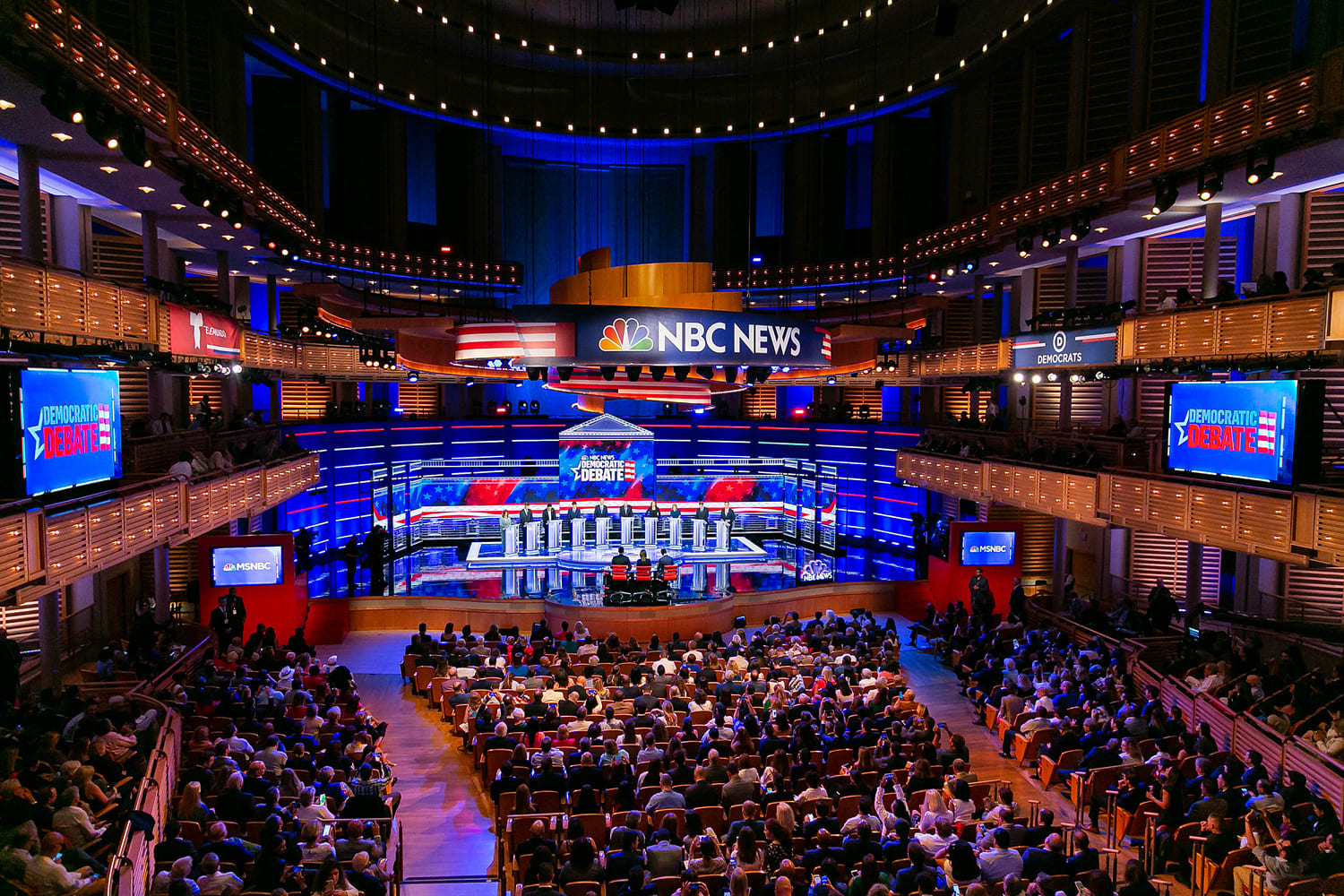
Twelve debates. A strict 20-candidate ceiling. A mandatory dark money pledge that sounds noble on paper yet hides a massive enforcement headache.
If you only skimmed the headlines about the Democratic National Committee setting broad rules for the party’s 2028 presidential debates, you probably walked away thinking party leaders finally figured out how to tame a chaotic primary. They didn't. After years of watching primary calendars implode and television ratings dictate candidate viability, I can tell you that rules look clean in November press releases and get messy fast once actual campaigns start throwing elbows.
On November 23, 2026, DNC Chair Ken Martin rolled out the overarching framework for the 2028 primary debate stage. Coming straight off sweeping Democratic victories in the 2026 midterm elections, the party is gearing up for a wide-open race with no incumbent at the top of the ticket. Here is what actually matters in this new playbook, why the anti-dark-money pledge might backfire, and how these rules will reshape the road to the White House.
The Basic Math Behind the 2028 Debate Schedule
Let's get the hard numbers out of the way first. The DNC is planning exactly 12 sanctioned presidential primary debates. Five of those showdowns will take place in 2027, starting with the opening salvo in June 2027 and a second round in July. The remaining seven debates will stretch across early 2028, wrapping up in March right as the primary calendar hits peak velocity.
Why start in June 2027? Because the 2028 Democratic field is shaping up to be massive.
Without a sitting Democratic president or an automatic heir apparent locking down the nomination, governors, senators, and House members are already testing the waters. Think back to 2024. When Joe Biden exited the race late and Kamala Harris stepped in without facing a contested primary, plenty of Democratic voters and strategists felt the party skipped a vital stress test. Ken Martin knows the party can't afford a repeat of that perception. By locking in a dozen debates starting seven months before a single primary ballot is cast, the DNC is forcing candidates to earn their stripes in front of live audiences.
Still, specific locations, broadcast partners, and exact polling or grassroots fundraising thresholds won't drop until January 2027. That two-month gap is intentional. It gives party operatives time to see who actually jumps into the pool before setting the bar so high it chokes off rising stars—or so low that the stage turns into a circus.
Why Capping the Stage at 20 Candidates Changes Everything
In 2020, the Democratic primary felt less like a race for the presidency and more like an overcrowded airport terminal. Nearly thirty candidates entered the fray, forcing networks to split early debates across two nights with ten people crammed behind podiums at once. Nobody got more than a few minutes to speak. Complex policy arguments died in 30-second soundbites.
This time, the DNC is drawing a hard line. Even if the qualifying field swells past two dozen hopefuls, the committee will cap total participation at 20 candidates split across two nights.
That cap isn't just about television pacing. It's a survival mechanism. When 20 people share two nights of airtime, every single candidate faces an immediate existential crisis. You either generate a viral moment in your limited speaking window, or your fundraising dries up by Tuesday morning. Candidates who squeak in at spots 18, 19, and 20 won't be there to outline white papers. They'll be throwing Hail Marys at the frontrunners just to stay relevant.
The Dark Money Pledge Sounds Great Until You Read the Fine Print
Here is the headline-grabber that has political consultants sweating through their suits. To step onto a DNC debate stage in 2027 or 2028, candidates must sign a Fair Campaign Practices Pledge requiring them to publicly denounce spending on their behalf from outside groups that refuse to disclose their donors.
Specifically, this rule targets dark money outfits—like 501(c)(4) nonprofits and opaque super PACs—buying television, radio, digital, billboard, or mail ads that promote a candidate or attack their Democratic rivals. Progressive leaders like Senator Elizabeth Warren immediately praised the move. Chair Martin admitted on MSNOW that enforcing it won't be easy, calling it an imperfect solution necessary for Democrats to live their values.
Honestly, Martin is understating the problem. Look closely at how the mechanism actually works:
- The Complaint Pipeline: Every campaign designates a representative to report suspected outside spending to the DNC.
- The Review: DNC officials evaluate the complaint and notify the benefited campaign if a formal denunciation is required.
- The Public Tracker: The party will maintain an online tracker listing every complaint, its adjudication status, and whether the candidate complied.
- The Penalty: If a candidate misses the deadline to disavow the spending, they get booted from the upcoming debate and stay locked out until they issue the statement.
Now ask yourself a basic question. What stops an outside group from running those ads anyway?
Nothing. Under federal campaign finance law, independent expenditure groups don't need a candidate's permission to spend millions of dollars. A candidate only has to denounce a specific group's spending once. Once the press release goes out and the box gets checked on the DNC tracker, that dark money group can keep flooding swing-state airwaves with the exact same ads all primary season long.
Even worse, consider the dirty-tricks angle. Suppose a wealthy donor wants to kneecap a surging progressive or moderate rival. They could theoretically fund an anonymous group to run half-baked ads praising their target right before a debate deadline, forcing the rival into a defensive news cycle where they have to publicly disavow support they never asked for. The DNC is banking on the court of public opinion to punish candidates who quietly coordinate with super PACs, yet voters rarely track obscure FEC filings when they're worried about grocery prices and healthcare costs.
What Gets Exempted From the Pledge
Before anyone assumes money is vanishing from the 2028 primary, look at what the DNC left untouched. The pledge does not ban outside groups from raising cash or building ground infrastructure during the primary to prepare for the November 2028 general election. Ads that strictly target Republican opponents are also completely exempt.
State and local party committees face tighter restrictions, too. Candidates can't ask or approve state, county, or local party outfits to run ads promoting their campaign or attacking a fellow Democrat unless they become the presumptive nominee. Still, candidates can attend and promote local party dinners and rallies all they want. It's a classic political compromise—tightening the screws on intra-party mudslinging while keeping the general-election war chest wide open.
The Unsanctioned Debate Trap and Independent Media
Buried beneath the dark money headlines is a second requirement that could quietly reshape how voters actually get to know the 2028 contenders. To qualify for DNC-sanctioned debates, candidates must agree not to participate in any outside event where two or more Democratic presidential candidates appear on stage at the same time.
This exclusivity rule isn't new, yet its impact hits differently in 2027 than it did a decade ago.
Traditional cable news ratings aren't what they used to be. Over the past few election cycles, voters have migrated toward independent podcasts, YouTube shows, Substack live streams, and grassroots issue forums. Those spaces thrive on unscripted, multi-guest conversations where moderators don't cut off a fascinating policy disagreement after 45 seconds for a pharmaceutical commercial.
By locking down multi-candidate appearances, the DNC keeps tight control over messaging, framing, and broadcast partners. Candidates can still do solo town halls, one-on-one podcast interviews, or cattle-call events where hopefuls speak sequentially rather than together. They just can't share a split-screen or a physical stage with a rival unless the DNC signs off on it. Independent media creators are already pushing back, arguing that forcing all head-to-head clashes into legacy broadcast formats protects establishment frontrunners who excel at rehearsed talking points.
How the Debates Collide With the New 2028 Primary Calendar
You can't analyze the debate schedule in a vacuum. Those 12 debates are designed to feed directly into a radically overhauled early primary calendar that the DNC officially approved back in August 2026.
For decades, Iowa and New Hampshire held an iron grip on the opening weeks of presidential politics. That era is over—at least on paper. The DNC's official 2028 early window lines up six states in rapid-fire succession:
- South Carolina kicks things off on January 22, 2028.
- Nevada follows ten days later on February 1.
- New Hampshire takes third place on February 8.
- New Mexico enters the early window on February 15.
- Michigan votes on February 22.
- Virginia closes out the early window on February 29.
Notice the pacing. Between January 22 and February 29, candidates face six high-stakes contests across six distinct regions in just over five weeks. Adding New Mexico and Virginia gives the early window broader geographic and demographic reach, though progressive organizers have already grumbled that Virginia's inclusion favors well-funded, establishment-aligned candidates.
There is also a giant wildcard hanging over those early 2028 debates. New Hampshire state law mandates that the Granite State hold the nation's first primary, and Iowa Democrats haven't exactly accepted their demotion quietly. If New Hampshire or Iowa goes rogue and schedules unsanctioned contests ahead of South Carolina's January 22 opener, candidates will face an agonizing choice. Campaign in those states and risk DNC sanctions—potentially losing debate access or convention delegates—or skip them and hand a rival free momentum.
Who Actually Benefits From This Setup
Every rule change in politics creates winners and losers long before the first podium light turns on. Looking at the current landscape of potential 2028 contenders—which includes names like Gavin Newsom, Josh Shapiro, Gretchen Whitmer, Kamala Harris, Pete Buttigieg, Alexandria Ocasio-Cortez, Andy Beshear, Wes Moore, JB Pritzker, and Ro Khanna—three clear strategic realities jump off the page.
First, strong grassroots fundraisers hold all the cards. Because the DNC hasn't released its exact donor and polling thresholds yet, campaigns are spending the winter of 2026 aggressively building small-dollar email lists. If the DNC requires 100,000 or 200,000 unique donors to make the June 2027 stage, candidates with national digital operations—like Newsom, Buttigieg, Ocasio-Cortez, or Khanna—will breeze through the door. Regional governors with high approval ratings at home but smaller national donor networks will have to scramble.
Second, self-funders face a fascinating loophole. Billionaire candidates who finance their own campaigns don't rely on outside 501(c)(4) dark money groups. They can sign the DNC's pledge with a smile, pass the purity test effortlessly, and still flood the airwaves with personal wealth while rivals wrestle with super PAC headaches.
Third, early momentum matters more than ever. With five debates packed into the second half of 2027, voters will form hardened impressions of the field long before 2028 arrives. You can't hide in a basement strategy when five nationally televised debates happen before New Year's Day.
How to Track the 2028 Primary Without Falling for the Spin
If you want to follow the 2028 Democratic primary like an insider rather than getting swept up in cable news hype, watch three concrete milestones over the next several months instead of daily horse-race polls:
- Watch the January 2027 threshold announcement. When the DNC publishes the exact polling percentages and unique donor counts needed for the June 2027 opener, pay attention to whether the bar rewards broad grassroots support or elite name recognition. That single metric will tell you which wing of the party holds the pen.
- Bookmark the DNC dark money tracker once it goes live. Don't just read candidate press releases claiming they reject corporate PACs. Check the official DNC complaint tracker to see which campaigns actually file complaints against rivals and how fast targeted candidates issue formal denunciations.
- Follow the rogue calendar standoff in New Hampshire and Iowa. Keep an eye on state legislative sessions in Concord and Des Moines. Whether those states defy the January 22 South Carolina start date will determine whether the early 2028 debates focus on policy or devolve into a brawl over party rules.