Most headlines about Paraguay's November 2026 financial crisis frame it as a sudden, unpredictable tech failure that dragged down an innocent economist-president. That narrative misses the real story entirely.
In early November 2026, the Central Bank of Paraguay seized Ueno Bank, locking roughly 3 million people—around 60 percent of the country's adult population—out of their accounts overnight. Within four days, former International Monetary Fund economist President Santiago Peña tried to resign, got rejected by Congress, was impeached unanimously by the Senate, and ended up under house arrest.
It wasn't a glitch. And it wasn't an accident. The Ueno Bank collapse was a textbook case of political patronage dressed up as fintech innovation.
How a Digital Startup Swallowed Half of Paraguay's Bank Accounts
If you looked at Paraguay on paper before November 2026, the country looked like a textbook macroeconomic success story. Three straight years of roughly 5.5 percent average annual GDP growth. Low public debt sitting around 38 percent of GDP. Investment-grade sovereign credit ratings from both Moody's and S&P. Foreign commentators even started throwing around nicknames like the "Dubai of South America".
Ueno Bank rode that wave harder than anyone else.
Controlled by the Grupo Vázquez business conglomerate, Ueno started out as a small finance company before securing a full banking license in 2023 and absorbing Visión Banco's physical branch network. Its pitch was simple: zero-friction mobile banking. You could open an account on your phone in minutes, skip the brutal paperwork traditional Paraguayan banks demanded, and earn way higher yields on your savings than competitors offered.
It worked almost too well. By late 2026, Ueno had become Paraguay's fifth-largest bank by assets and its single most-used financial institution by customer headcount. Around one million of its 2.9 to 3 million customers were first-time bank users. People didn't just park spare cash there. Employers used Ueno for payroll, pensioners received monthly checks through the app, and small businesses ran daily transactions over its rails.
When you concentrate 60 percent of a nation's adult population onto a single balance sheet, any crack in the foundation becomes a national emergency.
The Accounting Tricks Behind the Ueno Bank Collapse
Banks rarely die from one bad bet. They die from hiding bad bets until the cash runs out.
According to findings released by the Central Bank of Paraguay on November 2, 2026—and backed by reporting from the Associated Press and Paraguayan outlet ABC Color—Ueno's downfall came down to two classic failures: illegal insider lending and cooked books.
Here is what regulators actually found when they dug into the ledgers:
- Massive related-party loans: Ueno funneled roughly $146 million in loans to companies tied directly to its parent conglomerate, Grupo Vázquez. Those loans blew past legal lending limits and lacked adequate collateral to cover potential losses.
- Fake asset inflation: To mask its shrinking cushion, the bank improperly booked routine operating expenses as assets on its balance sheet.
- Missing documentation: Inspectors uncovered large, poorly documented credit lines extended to insider-linked firms, some of which were simultaneously winning government contracts.
Once central bank auditors stripped out the fake assets and accounted for the uncollateralized insider loans, Ueno's regulatory capital collapsed to less than half the legal minimum required to absorb losses. Less than a week before the seizure, Ueno had publicly announced a $100 million capital increase to calm nerves. Behind closed doors, the bank was already insolvent.
What makes this infuriating for ordinary savers is that regulators didn't discover the rot in November. Central bank inspectors had already flagged the excessive insider lending back in June 2026. Yet for five months, the bank kept operating, kept taking deposits, and kept collecting public money. Even in October 2026, President Peña publicly dismissed growing warnings about Ueno as a politically motivated "smear campaign".
Why an IMF-Trained Economist Ended Up Under House Arrest
On paper, Santiago Peña was supposed to be the ultimate technocrat. A former central bank board member, finance minister, and IMF economist in Washington, he campaigned on institutional credibility and market discipline.
In practice, his ties to Ueno created an impossible conflict of interest.
Before taking office, Peña held a financial stake in Grupo Vázquez, Ueno's parent company. He didn't divest those shares until March 2025—well over a year into his presidency. Worse still, shortly after taking office in 2023, Peña appointed Carlos Carvallo to run the Central Bank of Paraguay. Carvallo wasn't an outsider. He had previously led Financiera Ueno, the very institution that morphed into Ueno Bank.
While Carvallo sat in the regulator's chair and Peña sat in the presidential palace, public money poured into Ueno. Central bank data reviewed by Reuters and Al Jazeera shows Ueno was managing between $800 million and $850 million in public funds. Roughly $380 million of that belonged to Paraguay's state pension and health institute, the Instituto de Previsión Social. Another $21 million in development loans from Taiwan and the Inter-American Development Bank, earmarked for the state power utility, also ended up trapped inside the bank.
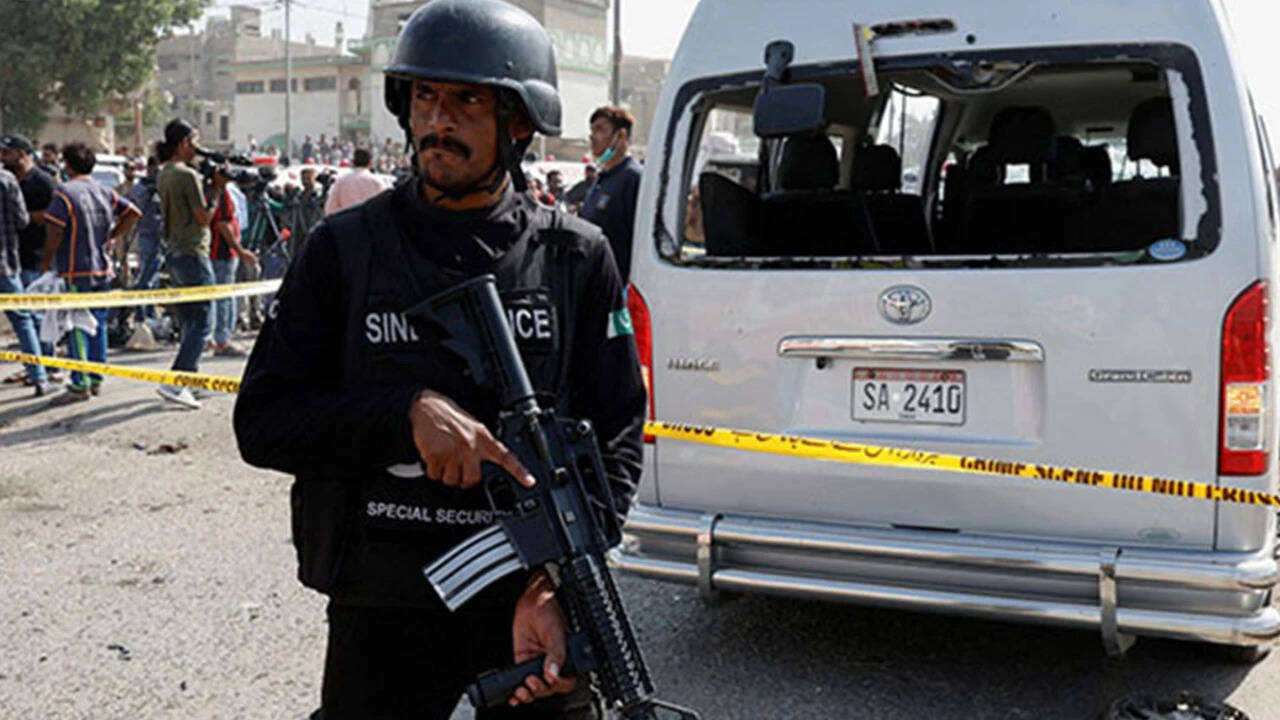
When the central bank finally pulled the plug on November 2 and locked branches on November 3, the streets of Asunción erupted. Protesters marched on Congress accusing the ruling Colorado Party of using their life savings and retirement funds as a slush fund for politically connected businessmen.
By November 5, Peña tried to execute a classic political escape hatch. Under Paraguay's constitution, a president who voluntarily resigns becomes a non-voting "senator for life," a title that carries parliamentary immunity from criminal prosecution. Peña recorded a video message offering his resignation in the name of "social peace".
Lawmakers didn't buy it. Knowing full well that accepting his resignation would shield him from prosecutors, Congress rejected his letter. On November 6 and 7, the lower house voted 78-0 to impeach him, and the Senate voted 44-0 to remove him from office. Vice President Pedro Alliana was sworn in to serve out the remainder of the term through August 2028. Hours after losing immunity, Peña was placed under house arrest, and prosecutors later added criminal association to the breach-of-trust and corruption probes already circling his administration.
Meanwhile, authorities arrested Ueno founder Miguel Vázquez and bank president Juan Manuel Gustale alongside other executives, seizing luxury cars, a yacht, and two small airplanes.
The Real Economic Damage Nobody Is Talking About
If you read purely official statements from Asunción, you might think the financial fallout is already contained.
Paraguay's Deposit Guarantee Fund—created after the country's brutal 1995–1998 banking collapse—insures individual accounts up to 75 minimum wages, roughly 228.3 million guaraníes or about $35,000 to $38,000 per depositor. Because Paraguay is a lower-middle-income economy where most retail balances are modest, that cap covers roughly 97 percent of Ueno's individual customers. By mid-November, the state had already distributed initial payouts to 93 percent of eligible retail savers.
So everyone's fine, right? Hardly.
First, roughly one-third of Ueno's $2.8 billion in total deposits isn't expected to be recovered. The uninsured gap falls heavily on public institutions, pension funds, and local businesses whose operating cash exceeded the $38,000 ceiling. A major local ride-hailing app that relied on Ueno for payment processing shut down immediately, leaving 3,000 drivers out of work overnight.
Second, Fitch Ratings promptly placed Paraguay's coveted investment-grade sovereign credit rating on watch for a potential downgrade. Even if the broader banking system stays liquid, draining the deposit insurance fund to cover a $2.8 billion hole strains public finances and raises borrowing costs across the entire economy.
Third—and most damaging over the long haul—is the psychological scar. Analysts at the Center for Strategic and International Studies (CSIS) point out that Paraguay spent a decade convincing skeptical working-class citizens to move away from cash under the mattress and trust digital banking. When 60 percent of adults wake up to a frozen screen because of insider self-dealing, you don't just lose a bank. You set financial inclusion back by ten years.
How to Protect Your Cash From Fintech and Bank Failures
You don't need to live in Asunción to take a hard lesson from what happened to Ueno's 3 million customers. Shiny mobile interfaces and high interest rates are marketing tools, not safety guarantees. Whenever a bank grows twice as fast as its peers while paying way above-market yields, someone is taking oversized risks on the back end.
If you keep significant savings in any digital bank, neobank, or regional lender, do these four things this week:
- Verify direct deposit insurance, not pass-through promises. Make sure your money sits in an institution directly covered by a statutory deposit guarantee scheme—like the FDIC in the United States or your country's national equivalent—and keep your total balance per institution strictly below the insured cap.
- Never use a single app as your sole financial lifeline. Even when deposit insurance works, payouts take days or weeks. Keep at least one month of essential living expenses—rent, food, utilities—in a completely separate, established bank with physical branches and independent payment rails.
- Treat outlier yields as a warning sign. When a challenger bank offers interest rates dramatically higher than established competitors, check their public regulatory filings or credit agency reports. High deposit rates often mean a bank is desperate for liquidity to plug holes in a shaky loan book.
- Watch ownership concentration. Whenever a bank belongs to a sprawling conglomerate that also owns construction, telecom, or energy companies, insider lending is the single biggest risk on the table. Spread your money across institutions with independent boards and transparent public ownership.
Paraguay's Ueno Bank collapse proved that sleek fintech branding doesn't erase the oldest rule in finance: when politicians, regulators, and bank owners sit at the same dinner table, ordinary depositors always end up paying the bill.
You can also watch Paraguay Bank Collapse: Half Population Without Funds, Prez Impeached for a quick visual breakdown of the timeline and street protests in Asunción. This video explains how the central bank seizure triggered the protests and political fallout covered above.