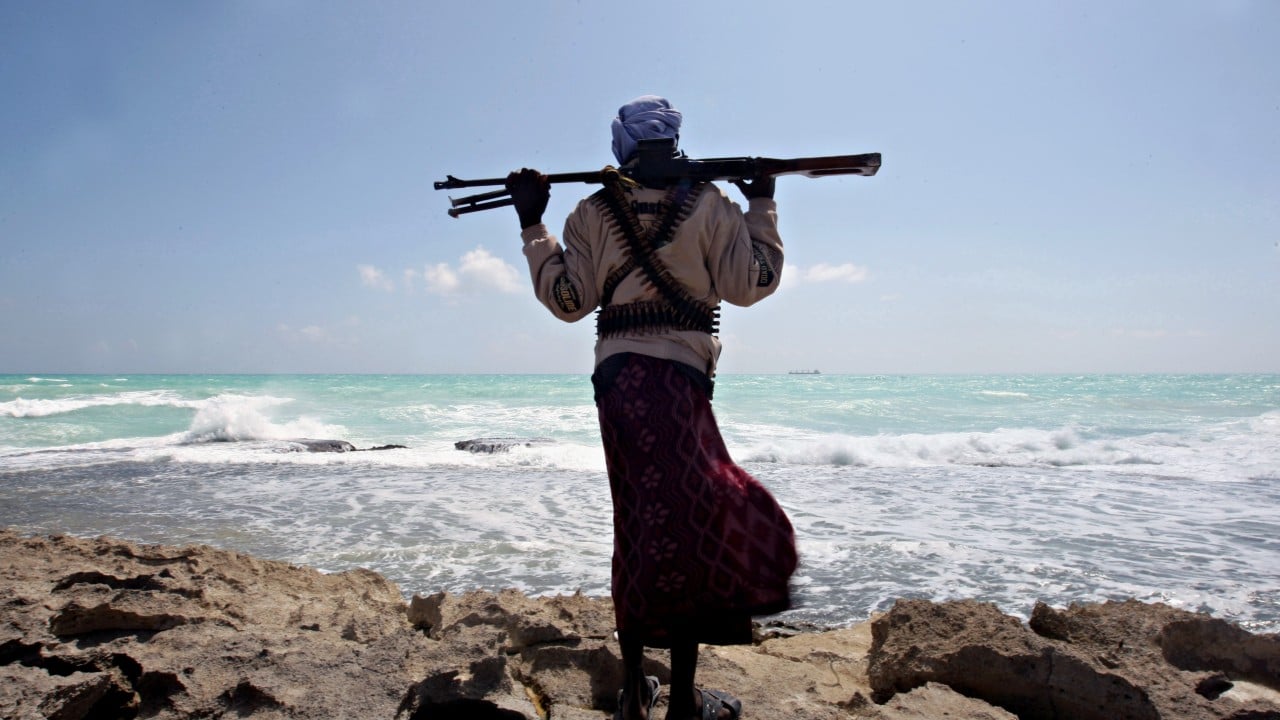
Twelve armed men boarded the Iranian fishing vessel Azini off northeastern Somalia on October 29, 2026, taking 21 Iranian fishermen and two Somali security guards hostage. Within days, headlines across the globe dusted off the exact same script they've been running since 2008: Somali pirates are back, global shipping is under threat, and the international community needs to patrol the Gulf of Aden.
They got the headline right and the story completely wrong.
If you think the hijackings happening off the Horn of Africa right now are just a nostalgic replay of the Captain Phillips era, you're missing the real danger. The Azini wasn't grabbed for a multi-million-dollar ransom from Tehran. It was grabbed to serve as a floating gas station and launchpad—a "mothership"—so pirate action groups can push hundreds of nautical miles out into commercial shipping lanes. And even more importantly, today's piracy isn't happening in a vacuum. It's a direct second-order effect of a regional war that has already choked the Strait of Hormuz and stretched Western warships to their breaking point.
The Hijacking of the Azini Was Never About Ransom
When news broke that the Maritime Security Centre Indian Ocean (MSCIO) was tracking the Azini, most casual observers looked at the crew count—23 people aboard—and assumed a drawn-out hostage negotiation was next.
That's not how the economics of Somali piracy work anymore.
Fishing vessels and regional dhows are low-value targets when it comes to ransom payouts. Nobody in Mogadishu or Puntland expects a massive wire transfer for a fishing boat. What pirates want is range. Small skiffs can't survive the open Indian Ocean on their own, and they burn through fuel fast. By hijacking a larger fishing vessel like the Azini—which was already moving 110 nautical miles farther east toward primary commercial shipping lanes by Saturday, October 31—pirates turn a local fishing boat into a mobile base of operations.
We've seen this exact playbook run before in 2026. Take the UAE-flagged dhow Fahad 4. Pirates seized it on April 25, used it as a mothership to launch an attempted attack on the merchant vessel Minerva Pisces just three days later, and then abandoned the dhow in the Arabian Sea on May 4 once their supplies ran dry.
The Azini was the fourth confirmed hijacking of a dhow or fishing vessel off Somalia in 2026, following a string of attacks that spiked in the spring and included the Liao Dong Yu 578 and an unnamed Chinese fishing vessel released back in March. Thankfully, the Azini crisis ended fast. On November 2, the Indian Navy executed a coordinated 48-hour maritime and aerial operation in the Arabian Sea, freeing the vessel, apprehending several pirates, and rescuing all 23 crew members safely.
It was a tactical win for New Delhi. It didn't fix the structural problem.
Why Somali Piracy Is Surging Right Now
Between January and mid-September 2026, maritime security monitors logged 25 piracy incidents off the Horn of Africa. Compare that to just nine operations across all of 2025. That isn't a statistical blip. It's a nearly threefold spike driven by three converging forces that didn't exist five years ago.
1. Naval Warships Are Distracted by the Iran War
For over a decade, international naval coalitions kept Somali piracy in a box. Warships from the European Union's Operation ATALANTA, the Combined Maritime Forces, and independent deployers like India patrolled the corridor relentlessly.
Then 2026 blew up the regional security map.
With active hostilities involving Iran disrupting the Strait of Hormuz and Houthi forces threatening Saudi-linked shipping through the Bab el-Mandeb strait, Western and allied warships have been pulled north and east. According to analysis from the Royal United Services Institute (RUSI), naval forces are spread dangerously thin. You can't escort tankers through a warzone in the Persian Gulf and simultaneously babysit every mile of Somalia's massive coastline. Pirates noticed the empty water immediately.
2. High Oil Prices Changed the Math
Piracy is a business, and every pirate action group runs a simple risk-to-reward calculation. For years, the risk of getting killed or arrested by a naval boarding team far outweighed the slim odds of actually collecting a ransom.
The 2026 energy shock flipped that equation upside down. With the Strait of Hormuz choked and daily tanker charter rates hitting $1 million, global petroleum prices surged. Suddenly, hijacking a product tanker carrying hundreds of thousands of barrels of refined fuel became exponentially more lucrative. Look at the commercial vessels grabbed between April and August 2026:
- April 21: Honour 25 (Palau-flagged tanker), seized off Somalia
- April 26: Sward (St. Kitts and Nevis-flagged cement carrier), seized northeast of Garacad
- May 2: Eureka (Togo-flagged tanker), seized off Yemen
- July 17: Asana (Tanzania-flagged tanker), seized southwest of Al Mukalla
- August 17: Lutuf (Cameroon-flagged cargo vessel), seized south of Mareeyo
- August 20: Sibu 1 (Eritrea-flagged tanker carrying 228,000 barrels of gasoil), seized east of Al Mukalla
Four of the six commercial ships taken in that window were tankers. Pirates aren't picking targets at random. They're chasing high-value energy cargoes—especially older, opaque "shadow fleet" vessels that lack top-tier armed security teams.
3. Illegal Fishing and Local Anger Haven't Gone Away
There's a reason Iranian and Chinese fishing boats keep showing up on piracy incident logs. Foreign industrial trawlers have stripped Somali coastal waters for years through illegal, unreported, and unregulated (IUU) fishing.
When local fishermen in Puntland watch foreign vessels vacuum up their livelihoods while food and fuel prices skyrocket on land, resentment boils over. Many pirate gangs justify their attacks on foreign trawlers as a form of vigilante taxation. Intelligence analysts at Windward Maritime AI have specifically noted that pirates seizing foreign fishing boats regularly cite anger over illegal fishing as a primary motivator. That doesn't excuse kidnapping 23 crewmen, obviously, but it explains why coastal communities look the other way when skiffs launch at night.
The Dangerous New Alliance Nobody Wants to Talk About
Here's the detail that separates 2026 from 2010, and it's the one most news reports completely gloss over.
In the old days, Somali pirates were pure capitalists. They had zero interest in ideology or politics—they just wanted cash. Today, the lines between criminal piracy and regional insurgent groups are blurring fast.
Intelligence assessments point to growing operational convergence across the Gulf of Aden between Somali pirate networks, Yemen's Houthi movement, al-Shabaab, and elements of Al-Qaeda in the Arabian Peninsula (AQAP). On paper, these groups shouldn't be working together. The Houthis are Shia; al-Shabaab and AQAP are hardline Sunni; the pirates are secular opportunists.
They don't care about theology. They care about shared smuggling routes and mutual enemies.
The Iran-Yemen-Somalia maritime corridor has turned into a massive weapons and contraband highway. When pirates seize a tanker off Yemen's coast—like the Eureka, Asana, and Sibu 1—they aren't operating in isolation. They're benefiting from Houthi territorial control along the Red Sea coast and potential logistical backing. Piracy has become just another revenue stream inside a much larger regional smuggling ecosystem.
Why This Is Getting Deadlier for Crews
If you think modern piracy is still a bloodless standoff where hostages sit around eating goat meat until a briefcase of cash drops from a plane, look at what happened aboard the Honour 25.
Pirates held that Palau-flagged tanker from April until late September 2026. When the Puntland Maritime Police Force finally launched a rescue raid off Bandarbeyla on September 30, arresting 16 suspected pirates, they didn't find an intact crew. Pirates had murdered five crew members in a gunfight before security forces could secure the ship.
Even the Azini had two Somali security guards onboard when the 12 pirates attacked. Having armed guards used to be an automatic deterrent—pirates would see rifles on the bridge rail and peel off to find an easier target. Now, pirate action groups are increasingly willing to engage in firefights or exploit political friction on land.
That political friction is making rescues harder, too. Following counter-piracy operations in August and September, Mogadishu's federal government and Puntland's regional authorities traded public accusations over who was facilitating piracy and whether local fishermen were caught in the crossfire during rescue raids. When Somalia's federal and regional leaders are fighting each other instead of coordinating coastal patrols, pirate syndicates get breathing room.
What Shipping Operators and Maritime Teams Must Do Now
You can't rely on 2015 security protocols in a 2026 threat environment. With warships tied up in the Persian Gulf and Red Sea, commercial vessels transiting the Somali Basin and Arabian Sea have to assume they're on their own for the first 24 to 48 hours of an incident.
If you're managing maritime operations, fleet risk, or supply chain logistics through the Indian Ocean, stop treating Somali piracy as a solved problem and take immediate steps to harden your transit posture:
- Treat every dhow and fishing vessel as a potential mothership. Piracy incidents involving local fishing craft are severely underreported because owners rarely notify international naval centers. Enforce strict closest-point-of-approach (CPA) buffers around unverified fishing vessels, even hundreds of miles off the Puntland coast.
- Audit your armed security rules of engagement. Two guards on a fishing boat weren't enough to stop a 12-man boarding party on the Azini. Ensure privately contracted armed security personnel (PCASP) have clear escalation protocols, functioning citadel communications, and verified vetting—especially if operating near Yemeni or Somali coastal waters.
- Register every transit with MSCIO and UKMTO before entering the Voluntary Reporting Area. The Indian Navy was able to track and intercept the Azini within 48 hours because maritime centers had active position reporting to work from. Going dark on AIS to dodge regional geopolitical threats makes it nearly impossible for naval assets to find you if pirates board.
- Screen third-party charters for shadow-fleet exposure. High-profile hijackings like the Sibu 1 involved sanctioned or opaque tankers carrying high-value fuel cargoes. If you're chartering tonnage or insuring cargo, verify ownership structures and flag compliance—pirates actively target vessels that lack institutional naval backing.
- Factor war-risk and piracy surcharges into Q4 and 2027 routing budgets. Rerouting around the Cape of Good Hope adds up to a month to transit times, while cutting through the Gulf of Aden now carries compounding threats from Houthi projectiles, Hormuz chokepoints, and Somali boarding parties. Build dual-contingency freight pricing into every Middle East and Asian supply contract now.