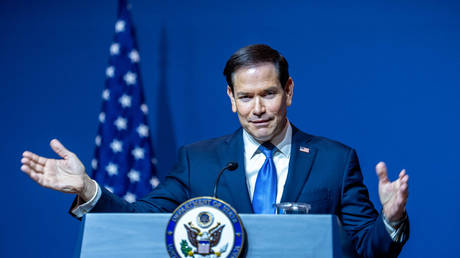
Everyone keeps waiting for a dramatic midnight announcement from the White House. They expect another wave of Tomahawk missiles to light up the Persian Gulf any second now, especially after headlines swirled around Secretary of State Marco Rubio confirming that President Donald Trump has not decided on new Iran strikes.
Here is the truth most cable news panels miss. Washington isn't paralyzed by indecision. It's running a calculated squeeze.
When Rubio stepped up to the microphones on the sidelines of the G20 meeting in Atlanta at the end of October 2026—and repeated the message through November—his phrasing was surgical. "We can achieve military objectives if we seek to," Rubio told reporters. "He hasn't made a decision." Most outlets treated that statement like a simple pause button. Look closer at the naval blockade in the Strait of Hormuz, the midterm election fallout in Washington, and the stalled diplomacy in Doha, and you see something entirely different. Trump doesn't need to launch a massive new air campaign right now because economic strangulation and maritime pressure are already doing the heavy lifting.
Why Rubio Keeps Saying No Decision Has Been Made
Foreign policy messaging rarely happens by accident. When the top US diplomat repeatedly emphasizes that the president prefers a diplomatic solution while keeping military force on the table, he's speaking to three audiences at once.
First, he's talking to Tehran. Following the joint US-Israeli campaign launched on February 28, 2026—Operation Epic Fury—Iran lost Supreme Leader Ali Khamenei, senior intelligence chiefs, and huge chunks of its air defense network. By November, Iran's new paramount leader, Mojtaba Khamenei, faced an economy buckling under a US naval blockade and cratering oil revenues. Rubio's message to Tehran is simple. Sign a permanent deal that permanently dismantles your nuclear enrichment capacity, or face a resumption of large-scale strikes once the calendar turns to 2027.
Second, Rubio is calming nervous oil markets and Gulf allies. Every time rumors leak—like the late-October reports suggesting US attacks could resume right after the November 3 midterm elections—crude prices twitch and Arab capitals panic about Iranian missile retaliation. Saying no decision has been made buys breathing room for Qatari and Omani mediators without giving up American leverage.
Third, the administration is managing domestic politics at home. You can't ignore what happened at the ballot box earlier this month.
The Midterm Reality Check
Politics always shapes war. Republicans took a beating in the November 2026 midterm elections, losing control of Congress. Even Vice President JD Vance admitted bluntly on social media the morning after the vote that the war was why the GOP lost. Fuel prices spiked after Iran shut down the Strait of Hormuz back in March, hitting American wallets right as inflation was supposed to cool.
Trump himself acknowledged the political cost during a November 20 White House press conference, though he insisted he'd still authorize the original February strikes again. Launching another massive bombing campaign right after voters punished the party for the economic fallout would torch whatever political capital the White House has left heading into 2027. Holding off isn't weakness. It's basic political survival.
What Actually Happened Since Operation Epic Fury Began
To understand why Trump is holding his fire—and why limited skirmishes still keep breaking out—you have to look at how messy this conflict has been since winter. Most casual observers think the war stopped in the spring. It didn't.
- Late February to March 2026: The US and Israel launched roughly 900 coordinated strikes in the opening hours, obliterating key nuclear facilities and killing top Iranian commanders. Iran fired back at Israel and US bases across Bahrain, Qatar, the UAE, Kuwait, Jordan, and Saudi Arabia, while closing the Strait of Hormuz to global shipping.
- April 2026: After 40 days of intense fighting, Pakistan helped broker a fragile ceasefire. Vance even led a historic US delegation to meet Iranian negotiators face-to-face in Pakistan. When those talks stalled, Trump ordered the US Navy to blockade Iranian ports.
- June to July 2026: Both sides signed the Islamabad Memorandum of Understanding, briefly reopening Hormuz and sending oil prices dropping from over $100 a barrel down toward $68. That truce collapsed in July amid renewed Gulf clashes and disputes over Israeli operations in Lebanon.
- September to November 2026: Hostilities flared back up. Maritime security trackers recorded a surge in tanker attacks, the US carried out targeted strikes on Qeshm Island, and Washington deployed multiple carrier strike groups—including the USS Abraham Lincoln and USS Roosevelt—to the region.
Notice the pattern here. When Trump says extensive new strikes are "quite unlikely" or "highly unlikely" while Rubio notes that no final decision has been made, they're drawing a sharp line between limited defensive hits and all-out strategic bombardment. Small strikes on radar sites, drones, or island outposts continue. The big question is whether Trump orders a second full-scale air war to "finish them off," as he mused publicly before the midterms.
The Diplomatic Deadlock in Doha and Why Talks Keep Stalling
If both sides are exhausted, why haven't they signed a permanent peace treaty? Because their core demands don't overlap at all.
Negotiators spent weeks passing draft proposals back and forth through Qatari and Omani intermediaries in Doha. According to diplomatic readouts and statements from White House officials, Tehran wants immediate relief from the naval blockade, unfrozen assets, and ironclad guarantees that neither Washington nor Israel will attack Iranian territory again.
Trump wants something far harder for Mojtaba Khamenei's government to swallow. The White House is demanding a permanent, verifiable end to uranium enrichment on Iranian soil—a deal Trump says must bind Tehran long after he leaves office—alongside strict limits on ballistic missiles and regional proxies. At his November 20 press briefing, Trump summed up the impasse bluntly. "They want to make a deal, but they don't want to make a deal that's acceptable to me."
Rubio has been even sharper behind closed doors and in press availability. He argues that the sanctions and naval interdiction campaign are squeezing Iran's economy so effectively that Washington doesn't need to rush into a bad compromise. Why pay the military and political price of bombing Tehran again when blocking Iranian oil tankers already forces the regime to the negotiating table?
Three Things to Watch Before January 2027
Trump recently told Israeli media he isn't rushing any decision on Iran and might wait until after the new year starts before making his next major move. In Fox News interviews, he paired that patience with a blunt warning. If nuclear talks fail, large-scale military operations remain squarely on the table for 2027.
If you're tracking where this conflict goes next—whether for energy investments, regional security, or global news—stop watching the daily rumor mill and track three concrete indicators instead.
- Tanker traffic and insurance rates in the Strait of Hormuz. Before February 2026, roughly a quarter of the world's seaborne oil moved through that narrow waterway. Watch weekly transit numbers from maritime trackers. If Iranian drone attacks on commercial vessels spike again, defensive US strikes will escalate automatically regardless of diplomatic talks.
- Carrier group positioning in the Arabian Sea. Right now, the Pentagon has heavy naval firepower parked within striking distance of Iran, backed by aerial refueling tankers positioned in Israel. If a carrier strike group rotates out without a replacement arriving, de-escalation is real. If heavy bomber deployments join them at Diego Garcia or regional bases, a major strike order is close.
- The January 2027 deadline rhetoric. Pay attention to whether White House officials start attaching hard dates to the Doha talks. Throughout 2026, Trump repeatedly used rolling deadlines—first five days, then April 6, then the 60-day Islamabad window—to extract concessions. Once a firm January date appears, markets and diplomats will have days, not months, to react.
Rubio's message that Trump hasn't decided on new Iran strikes isn't diplomatic filler. It's an accurate snapshot of an administration holding a loaded weapon while watching economic pressure slowly grind down an adversary. Keep your eyes on the shipping lanes and carrier movements over the next six weeks, because those will tell you Trump's decision long before a White House press release ever does.


