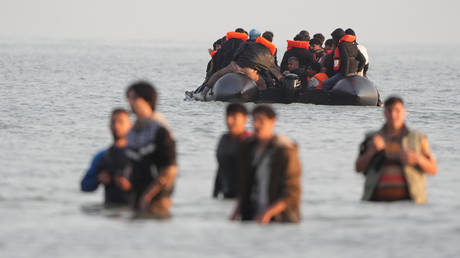
The headlines sound incredibly simple. A boat arrives on the Kent coast, individuals claim to be minors, and subsequent checks reveal they're actually fully grown adults trying to game the system. Tabloids run front-page splashes highlighting these instances as definitive proof of a widespread scam. But if you look past the screaming font, the reality of how the UK border handles age verification is an absolute mess. It's a broken system that manages to fail genuine children while triggering endless legal battles.
We need to talk about what actually happens when someone arrives without identification documents. The Home Office relies heavily on initial assessments made at the border. Officials look at physical appearance and demeanour. If an officer thinks someone looks "significantly" over 18, that person is classified as an adult right there. Discover more on a connected topic: this related article.
Here is the problem. Judging age based on a deep voice, a receding hairline, or facial structure is incredibly unreliable. People who flee war zones don't exactly arrive looking refreshed and youthful. Trauma, extreme stress, and months of rough sleeping change how a person looks.
The High Cost of Visual Guesswork
Relying on a visual test has massive consequences. Data compiled by the Helen Bamber Foundation, alongside the Refugee Council, revealed a stark picture of these border decisions. Over an 18-month period, more than 1,300 children were initially classified as adults by immigration officials. They weren't adults. They were children. Further journalism by The Guardian explores related perspectives on the subject.
When the Home Office makes a mistake at the border, these kids get sent straight into the adult asylum system. They end up in unsupervised hotels, massive adult accommodation facilities, or even immigration detention centers. Think about a 15-year-old who has traveled thousands of miles alone, now forced to share a room with completely unrelated adult men because a border official decided they looked too old.
Local authorities eventually step in. When these young people get referred to social workers, proper Merton-compliant age assessments are carried out. These are deep, structural interviews conducted by trained professionals who look at developmental milestones and social history rather than just checking for forehead wrinkles. In a massive chunk of disputed cases, local council social workers overturn the initial Home Office decision and confirm that the individual is indeed under 18.
When the Mistakes Go Both Ways
The debate isn't one-sided. Adults absolutely do try to claim they're minors to access better housing, education, and protection from deportation. Local authorities catch hundreds of these cases every year. It's a genuine safeguarding risk for schools and children's homes if an adult is accidentally placed in a space meant for kids. No one argues that the system should just blindly accept every claimed birthdate.
But the current method for weeding out adults is fundamentally flawed. In March 2026, an Upper Tribunal case involving a Sudanese teenager highlighted the breakdown of this process. Immigration officials had judged him to be 25 years old based on an Adam's apple and forehead lines. The tribunal blew that assessment apart, ruling that the process was completely subjective and relied on stereotyped assumptions. The boy was actually 17.
The UK government has tried to introduce "scientific methods" under the Nationality and Borders Act to fix this. This means using X-rays of teeth or bones and MRI scans to pinpoint age. Sounds foolproof, right? It isn't.
Major medical bodies, including the Royal College of Paediatrics and Child Health, have consistently warned against this. Biological age estimation has a wide margin of error. A person's bones don't magically change on their 18th birthday. Factors like nutrition and ethnic background heavily influence development. Using medical radiation on children for non-clinical reasons also carries serious ethical issues. Even the government's own advisory committees have admitted these tools can only show if a claimed age is possible, not provide a definitive date of birth.
How to Fix a Sinking System
The focus needs to shift away from quick border judgments toward robust, centralized social work assessments. The National Age Assessment Board was set up to handle this, but the infrastructure is lagging.
If you are a local authority worker, a legal representative, or an advocate dealing with an age dispute case right now, here are the immediate, actionable steps required to navigate this system:
- Trigger an immediate local authority referral: Do not accept a border official's visual assessment as final. Request a formal, Merton-compliant assessment from the relevant local children's services department immediately.
- Secure independent legal representation: Age disputes are intensely legalistic. A specialized immigration solicitor needs to be brought in to challenge wrongful adult classifications before the individual is moved deep into the adult estate.
- Document developmental history: Gather narrative evidence regarding the young person’s education, family structure, and journey timeline. This qualitative data holds up far better in a tribunal than a border officer's notes on physical appearance.
The system doesn't work when it relies on guesswork. Until the UK prioritizes thorough, professional social work evaluations over rapid visual checks at the port of entry, the cycle of wrongful detentions and costly legal appeals will keep spinning.