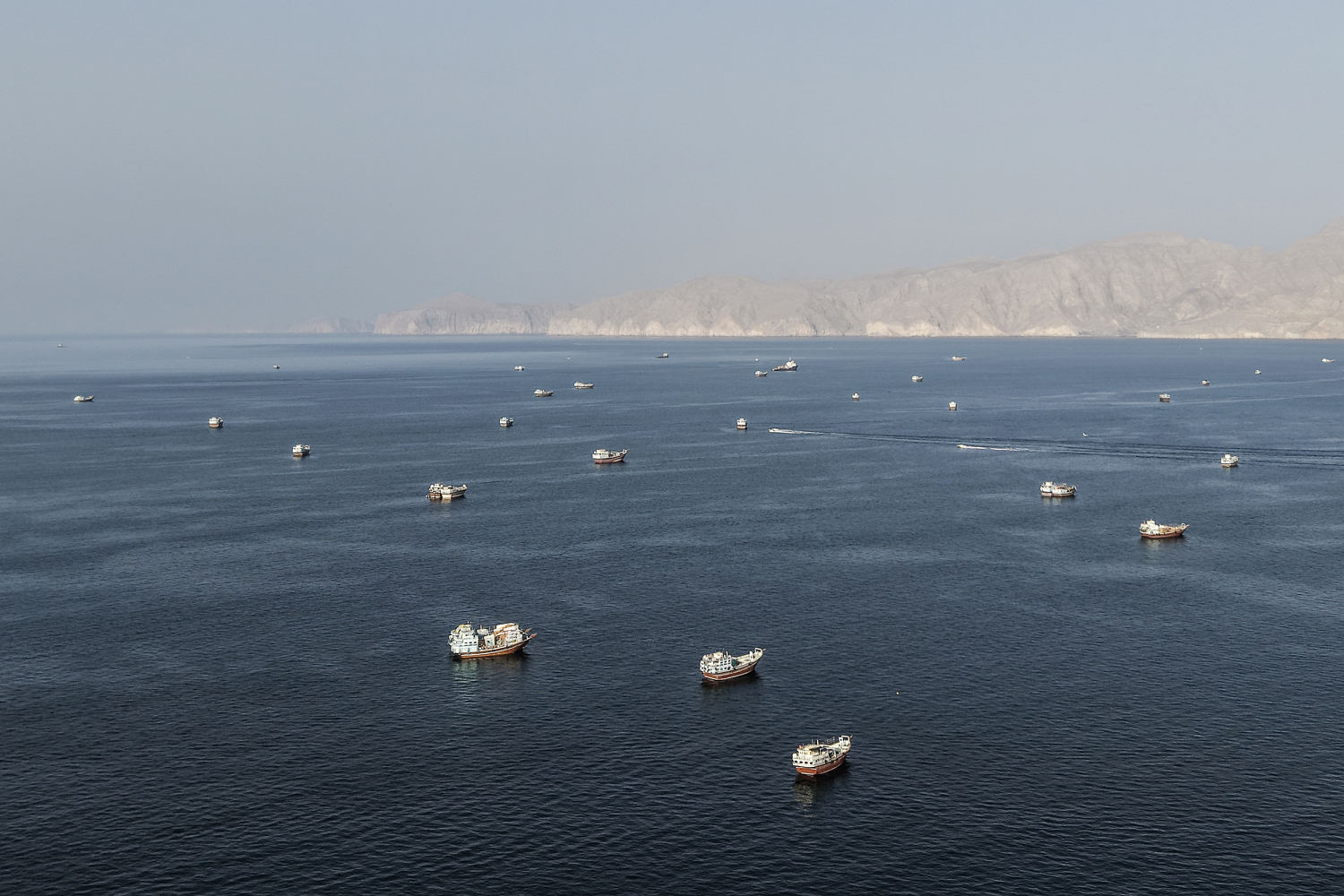
Most headlines treat every military flashpoint in the Persian Gulf like the opening act of World War III. They're wrong. When U.S. officials confirmed that American forces carried out limited strikes on Iran's Qeshm Island, the internet immediately defaulted to panic mode, missing the actual strategic math happening beneath the surface.
If you want to understand what just happened, forget the cable news chyrons for five minutes. Look at a map of the Strait of Hormuz instead. Qeshm Island sits right inside that narrow chokepoint, acting as a massive unsinkable aircraft carrier for the Islamic Revolutionary Guard Corps (IRGC). By keeping the strikes tightly scoped and limited, Washington sent a calibrated warning rather than lighting a match in a powder keg.
Let's break down the reality of the operation, why Qeshm Island matters so much, and how you can separate actual geopolitical risk from noise.
Why Qeshm Island Is the Real Pressure Point in the Gulf
You can't talk about Gulf security without talking about Qeshm. Stretching roughly 135 kilometers along the northern edge of the Strait of Hormuz, it's the largest island in the Persian Gulf. More importantly, its coastline hugs the narrow shipping lanes where roughly a fifth of the world's petroleum liquids pass through every single day, according to data from the U.S. Energy Information Administration (EIA).
When I've tracked maritime security incidents in this region over the years, one pattern always jumps out. Tehran doesn't need a massive blue-water navy to threaten global trade. It uses fast-attack craft, coastal anti-ship missile batteries, and drone launch sites tucked into rugged coastal terrain. Qeshm Island provides ideal cover for exactly those assets.
The IRGC Navy has spent years fortifying positions on and around the island. They maintain radar installations, subterranean storage facilities, and staging areas for unmanned aerial vehicles. When U.S. officials describe strikes on Qeshm as "limited," they're telling you something very specific about target selection.
Limited doesn't mean accidental. It means planners picked discrete military infrastructure—likely drone staging hubs, radar nodes, or missile storage—while deliberately avoiding civilian ports, energy infrastructure, and major population centers on the island.
The Difference Between Deterrence and Escalation
People confuse military action with full-scale war all the time. In Pentagon planning rooms, those are two completely different playbooks.
- Escalatory campaigns aim to dismantle a country's broader war-making capacity, hitting command-and-control networks across the mainland, air defense grids, and leadership compounds.
- Limited kinetic strikes work like a scalpel. They remove a specific capability that poses an immediate threat to regional forces or commercial shipping, while leaving the other side an off-ramp to stand down without losing face domestically.
Washington's messaging around the Qeshm Island operation fits the second category down to the letter. By keeping the footprint small and emphasizing the narrow scope, U.S. officials signaled that they want to restore deterrence without triggering a regional conflagration that drags in neighboring Gulf states.
What U.S. Officials Are Actually Signaling to Tehran
When anonymous defense officials brief reporters after an operation like this, every word gets weighed beforehand. Nothing leaks by accident at this level.
Notice the phrasing. "Limited strikes." Not "the beginning of a sustained campaign." Not "regime-targeted operations." That specific framing serves two audiences at once.
First, it tells Tehran that the island's proximity to mainland Iran doesn't make IRGC assets untouchable. For years, Iranian military doctrine leaned on the assumption that hitting targets directly on sovereign Iranian territory—even an island—crossed a red line Washington wouldn't touch for fear of massive retaliation. Striking Qeshm punctures that assumption cleanly.
Second, it reassures nervous allies in Riyadh, Abu Dhabi, and Doha. Gulf Arab capitals sit minutes away by ballistic missile from Iranian launch sites. Whenever tensions spike, those governments worry about getting caught in the crossfire. Telling the world the strikes were strictly bounded tells regional partners that Washington isn't trying to start a war on their doorstep.
Honestly, it's a tightrope walk. Hit too hard, and Tehran feels cornered into launching a massive retaliatory barrage to prove it isn't weak. Hit too softly, and the IRGC shrugs it off and keeps harassing vessels in the strait.
Common Misconceptions About Gulf Strikes
Whenever news breaks about U.S. military action against Iranian territory, the same three myths flood social media within minutes. Knowing why they're wrong saves you from falling for bad analysis.
Myth 1 Oil Prices Will Instantly Spike to $150 a Barrel
Energy markets hate uncertainty, sure. Algorithms instantly buy crude futures the second a headline mentions Iran and airstrikes. Yet physical oil flows rarely stop because of a limited military exchange.
Unless the Strait of Hormuz is physically mined or tankers are actively burning in the shipping lanes, global supply keeps moving. Traders know the difference between a targeted strike on a military outpost and a blockade of the strait. Initial price jumps almost always cool off once market participants realize export terminals at Kharg Island and loading facilities across the Gulf remain untouched.
Myth 2 Iran Has to Respond With an All-Out Attack
Tehran's leadership is ruthless, not suicidal. The IRGC understands the asymmetry of conventional firepower between Iran and the United States. An all-out war would devastate Iran's economy, air defenses, and naval assets in days.
Historically, when Iran faces limited strikes, it prefers calibrated, deniable, or delayed responses. That might mean cyber probes, increased harassment of commercial vessels via small boats, or leaning on regional proxy networks rather than firing hundreds of ballistic missiles directly at U.S. bases. They play a long game designed to stay just below the threshold that would trigger overwhelming American retaliation.
Myth 3 U.S. Forces Operate Without Regional Coordination
You won't see Gulf leaders holding press conferences to cheer on American airstrikes against Iran. Publicly, they call for restraint and de-escalation. Privately, intelligence sharing, airspace access, and maritime patrol coordination across the Persian Gulf remain tightly integrated through U.S. Central Command (CENTCOM) and coalition frameworks like the International Maritime Security Construct.
Diplomacy in the Middle East runs on two tracks. Public statements manage domestic politics; quiet operational coordination manages actual security threats.
The Strategic Risks That Still Remain
Calling the strikes limited doesn't mean the danger is over. Far from it.
The biggest risk in the Strait of Hormuz isn't a premeditated decision to start a war. It's miscalculation in a crowded, high-stress environment. Radar operators on hair-trigger alert, fast boats operating in choppy waters at night, and commercial ships transiting narrow lanes create endless opportunities for a localized mistake to spiral.
Consider the geography again. At its narrowest point, the Strait of Hormuz is only about 33 kilometers wide, with shipping lanes just a few kilometers across in each direction. There's zero margin for error. If an Iranian air defense unit mistakes a coalition surveillance aircraft for an incoming strike package, or if a naval standoff turns into an exchange of fire, both sides suddenly face intense pressure to escalate further.
There's also the domestic political pressure inside Iran. Hardliners within the IRGC constantly push for aggressive responses to project strength to their domestic base. Even when pragmatists in Tehran want to avoid a broader conflict, internal factional politics can force their hand into taking riskier moves than they'd prefer.
How to Track Developments Without Getting Misled
If you're following this situation for business, investing, or sheer geopolitical awareness, stop relying on viral clips and breaking news banners. Most of the footage circulating during Middle East crises turns out to be years old, pulled from video games, or taken from entirely different conflicts.
Do this instead to stay accurately informed:
- Check official CENTCOM and Pentagon readouts directly. Military statements are dry, cautious, and stripped of sensationalism. Pay attention to what they don't say—if they don't announce follow-on waves or carrier strike group repositioning, the operation was likely a single-phase action.
- Watch maritime tracking and insurance rates. Organizations like the Joint Maritime Information Center (JMIC) and UK Maritime Trade Operations (UKMTO) publish real-time advisories for commercial shipping in the Persian Gulf and Strait of Hormuz. If commercial tankers keep transiting normally without war-risk insurance premiums skyrocketing, the threat remains contained.
- Follow credible regional defense analysts. Look for specialists affiliated with established institutions like the International Institute for Strategic Studies (IISS), the Washington Institute for Near East Policy, or Chatham House. They look at satellite imagery and order-of-battle data rather than guessing from headlines.
- Ignore anonymous social media "insider" accounts. Real operational intelligence doesn't break on unverified accounts using sirens and flashing red emojis. Wait for corroboration from established wire services like Reuters or the Associated Press, which require multiple independent sources before publishing military confirmations.
Limited strikes on Qeshm Island prove that Washington is willing to hit targets on Iranian soil when deterrence needs reinforcing, while still keeping the door cracked open for de-escalation. Watch how shipping lanes behave over the next 72 hours—that's where you'll see the real answer to what happens next.