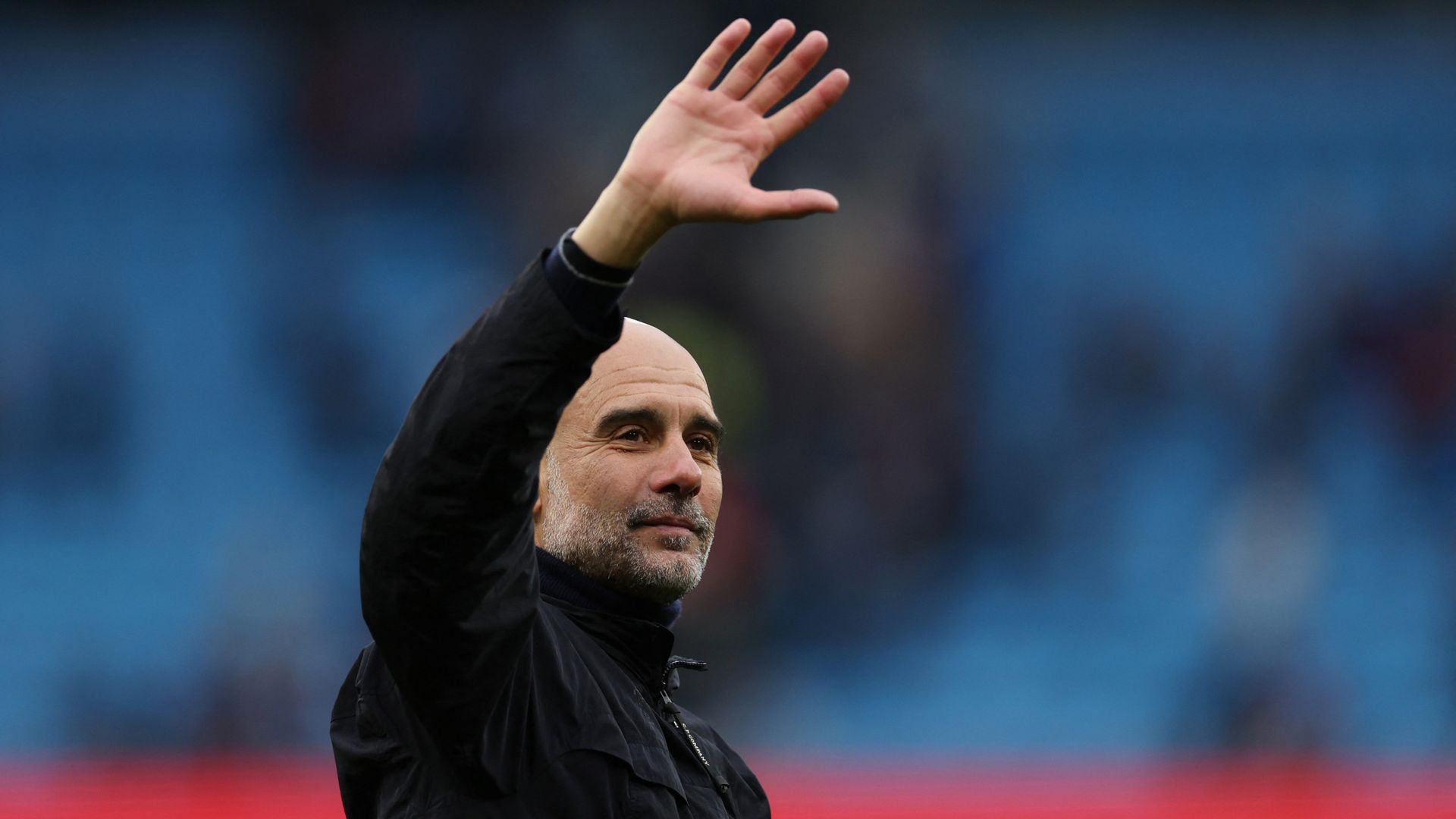
The football media is currently weeping into its collective keyboard over the rumor that Pep Guardiola is preparing to walk away from Manchester City. They are calling it the end of an era. They are predicting a dark age for the Premier League.
They are completely missing the point. For a deeper dive into similar topics, we recommend: this related article.
The mainstream narrative surrounding Guardiola’s eventual departure is built on a lazy, sentimental consensus. The pundits want you to believe that City’s dominance is purely a triumph of tactical genius, a beautiful romance between a visionary coach and a perfectly run club.
Let's strip away the PR. For additional information on this development, in-depth reporting is available on Bleacher Report.
Guardiola leaving Etihad Stadium isn't a tragedy for Manchester City. It is a calculated, structural necessity for the survival of the club’s modern legacy. More importantly, it is the ultimate stress test for the Premier League's financial regulations.
The Myth of the Indispensable Manager
Football fans suffer from severe recency bias. We look at Sir Alex Ferguson’s departure from Manchester United and assume every great managerial exit triggers a decade-long existential crisis.
That comparison is fundamentally flawed.
Ferguson built an empire based on personal authority, scouting networks, and sheer force of will. When he left, the infrastructure crumbled because he was the infrastructure.
Manchester City is not built that way. City is a highly corporate, hyper-efficient talent processing machine. The sporting director framework, led by Txiki Begiristain's established blueprint, was explicitly designed to create a system where the manager is merely the high-end driver of a custom-built Formula 1 car.
I have watched football executives blow hundreds of millions trying to replicate this model, only to fail because they hired the manager before building the machine. City built the machine first. Guardiola was the premium fuel, not the engine.
When Pep steps down, the car does not stop running. The system survives.
The Financial Fair Play Elephant in the Room
Let's address the 115 charges.
The media loves to separate City’s on-pitch brilliance from their ongoing legal battles with the Premier League regarding Profit and Sustainability Rules (PSR) and alleged financial breaches. You cannot separate them.
The lazy consensus says: If Pep leaves, City will fall apart under the weight of the investigation.
The counter-intuitive reality? Guardiola’s exit provides Manchester City with the perfect narrative reset button.
Imagine a scenario where a club faces unprecedented regulatory scrutiny while maintaining a monopoly on domestic trophies. The optics are terrible. It breeds resentment, fuels rival fan bases, and keeps a permanent target on the club's back.
By changing the figurehead at the top, City breaks the monotony of their dominance. They introduce an element of artificial vulnerability.
If City undergoes a minor transitional phase under a new manager, the intense political pressure on the Premier League to hand down a catastrophic punishment subtly shifts. A league dominating every single year under one man invites radical intervention. A league that naturally shifts toward a more competitive balance lowers the temperature in the room.
The Tactical Stagnation Nobody Admits
To suggest Guardiola’s tactics could ever become a liability sounds like heresy. But look closer at how the tactical evolution of football actually works.
Guardiola’s positional play has conquered England. It has also standardized it. Every mid-table club now attempts to build from the back, invert their full-backs, and choke games through possession. The entire league has spent eight years learning how to counter, survive, or mimic Pep's specific brand of control.
By staying too long, any manager—even the greatest of all time—becomes a known quantity.
The downsides to the contrarian view are obvious: you risk short-term instability. You risk losing elite players who only signed to play for the Catalan maestro.
But the upside is massive. A new tactical philosophy breaks the defensive muscle memory of the rest of the Premier League. When Arsenal and Liverpool have spent years calibrating their entire high-pressing systems specifically to stop Guardiola's patterns of play, introducing a completely different tactical variable at City disrupts the entire ecosystem.
Dismantling the Premier League's Flawed Premise
Go to any football forum or sports news site and you will see the same question: Can the Premier League remain the best league in the world without Guardiola?
This question asks the wrong thing entirely. It assumes the league's value is tied to the excellence of its champion.
The truth is the exact opposite. The Premier League’s global commercial power is built on the illusion of unpredictability.
When one team wins six titles in seven years, the product begins to look dangerously like Ligue 1 or the Bundesliga during the height of Bayern Munich's dominance. Broadcast executives in New York and Tokyo do not pay billions to watch a foregone conclusion.
Guardiola leaving is the best thing that could happen to the Premier League's balance sheet. It restores the chaotic, anyone-can-win narrative that made the league a global powerhouse in the first place.
The Real Power Moves Left on the Board
If you think Manchester City will panic when the official announcement drops, you do not understand how modern multi-club ownership works.
The City Football Group is an empire. They do not react; they execute.
The next manager will not be a Pep clone. Trying to hire a "Pep-lite" is exactly how clubs fall into mediocrity. They will look for a disruptor. Someone who utilizes the sheer athletic and technical profile of the current squad but applies it with a faster, more direct verticality.
The media will spend months writing obituaries for the Manchester City dynasty. They will analyze every dropped point as proof of a collapse.
Let them write their narratives. The institutional structure is set. The financial powerhouse remains intact. The academy is still churning out generational talent.
Guardiola's exit isn't the curtain call. It's the moment the machine shifts into second gear. Stop mourning the departure of a manager and start watching how an empire survives him.