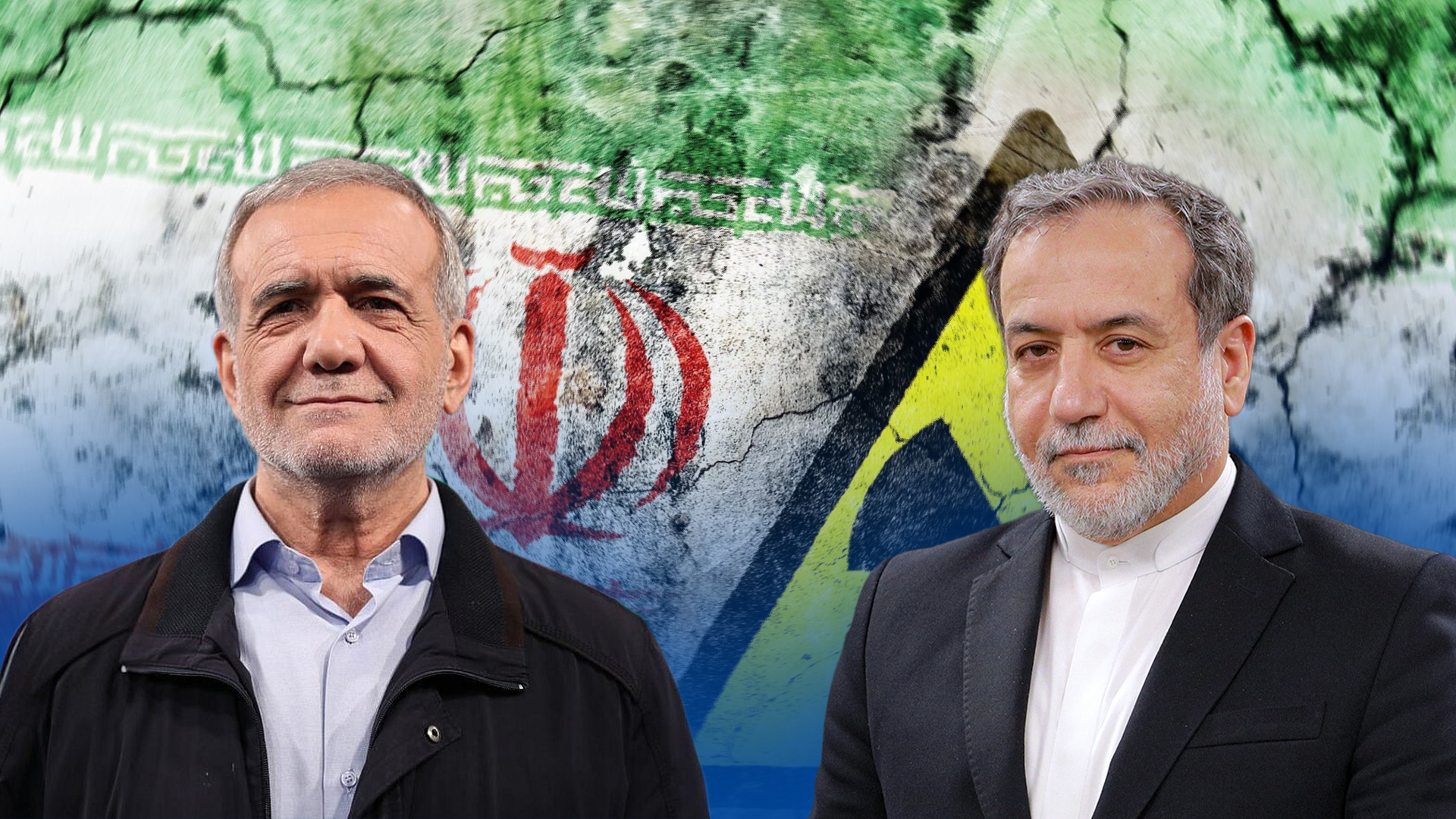
The international press is currently obsessed with a ghost. They call it "reform." Every time a new face appears in Tehran wearing a suit instead of a robe, the same tired narrative resurfaces. The headline is always some variation of Masoud Pezeshkian seeking to "quash the narrative of a divided leadership."
Western analysts are falling over themselves to interpret his latest speeches as a sign of internal friction or, better yet, a pivot toward the West. They are wrong. They are misreading the basic architecture of power in the Islamic Republic. Pezeshkian isn't trying to bridge a gap between reformers and hardliners because, in the ways that actually matter for global security and oil markets, that gap is an optical illusion.
The Consolidation Trap
The "divided leadership" trope is the favorite security blanket of diplomats who want to believe a deal is always one "moderate" away. They see Pezeshkian’s calls for unity as a desperate attempt to rein in the Islamic Revolutionary Guard Corps (IRGC). This is a fundamental misunderstanding of his job description.
Pezeshkian was not elected to challenge the Supreme Leader. He was selected to stabilize the system. After the death of Ebrahim Raisi, the establishment needed a pressure valve. They didn't need a rebel; they needed a technocrat who could speak the language of the disgruntled middle class while remaining fundamentally loyal to the Velayat-e Faqih.
When Pezeshkian talks about "unity," he isn't begging the hardliners to play nice. He is signaling to the world that the Iranian state is a monolith. The idea of a "fractured" Tehran is a projection of Western democratic norms onto a system that views internal dissent as a fatal weakness, not a feature of governance.
The Moderate Mirage
I have spent years watching the same cycle: Khatami, Rouhani, and now Pezeshkian. Each time, the "insider" consensus claims this time is different. It never is.
The term "reformist" in Iran is a misnomer. In any other context, these individuals would be considered staunch conservatives. They believe in the system; they just disagree on the speed at which it should antagonize the West. Pezeshkian’s primary utility is not policy change—it is brand management.
By presenting a face that appears open to "engagement," Iran successfully buys time. Time for what?
- Advancing the nuclear program.
- Hardening domestic infrastructure against sanctions.
- Strengthening the "Axis of Resistance" across the Middle East.
If you think Pezeshkian is a rogue agent fighting the "Deep State" in Tehran, you’ve been sold a script. He is the velvet glove on the iron fist. The IRGC doesn't fear him; they use him as a shield against further international isolation.
Misunderstanding the Iranian Street
People often ask: "Doesn't the Iranian public want Pezeshkian to succeed against the hardliners?"
This question is flawed because it assumes the Iranian public still believes the presidency holds the keys to the kingdom. After the 2022 protests, the disillusionment is total. The "People Also Ask" sections of search engines are filled with queries about whether Pezeshkian can fix the economy.
The answer is a hard no, and not for the reasons you think.
The Iranian economy isn't struggling just because of sanctions. It is struggling because it is a "resistance economy" designed to favor military-linked conglomerates over private enterprise. Pezeshkian cannot "reform" the economy without stripping the IRGC of its assets. If he tries that, he won't be "quashing a narrative"—he’ll be looking for a new job, or worse.
The public knows this. The only people who seem to believe in the President’s transformative power are Western journalists and think-tank residents who haven't set foot in a Tehran bazaar in a decade.
The Geopolitical Theater of Unity
Pezeshkian’s recent efforts to project a unified front are specifically timed. We are in a window of extreme regional volatility. From the Levant to the Red Sea, Iran’s proxies are engaged in high-stakes kinetic warfare.
In this environment, a "divided" Iran would be a target. A "unified" Iran under a "moderate" president is a puzzle. It forces Washington and Brussels to hesitate. They ask: "If we strike back too hard, will we weaken the moderates and empower the hardliners?"
This is the greatest trick the Islamic Republic ever pulled. They convinced the world that there is a "good" faction worth saving.
There is no "moderate" faction when it comes to:
- The destruction of Israel.
- The expulsion of US forces from the region.
- The pursuit of regional hegemony.
Pezeshkian’s "unity" isn't a domestic policy goal. It is a strategic deterrent. By appearing to have the hardliners under control, or at least in the same room, he creates a diplomatic fog that makes decisive Western action nearly impossible.
Why Engagement is a Dead End
The unconventional truth is that "empowering the moderates" actually accelerates Iran's most dangerous ambitions.
When the West offers sanctions relief or diplomatic "wins" to a president like Pezeshkian, that capital doesn't go to schools or hospitals. It flows into the same bureaucratic and military pipelines that the hardliners control. You cannot feed the "reformist" arm of the government without also gorging the "revolutionary" one.
We saw this with the JCPOA. Foreign direct investment didn't lead to a liberalized Iran; it led to a more confident, better-funded regional shadow war. Pezeshkian’s role is to restart that flow of capital. He is the salesman. The Supreme Leader is the CEO. The IRGC is the enforcement wing.
Stop Looking for a Gorbachev
The West is obsessed with finding an Iranian Gorbachev. We want someone to dismantle the system from within. This desire blinds us to the reality of the Iranian constitution.
Under Article 110, the President’s powers are strictly circumscribed. He is an administrator. He manages the budget, the civil service, and the public face of the country. He does not command the army. He does not set foreign policy. He does not control the judiciary.
Pezeshkian "seeking to quash the divided leadership narrative" is him simply acknowledging his reality: he is a subordinate. Any attempt to portray him as a rival to the Supreme Leader’s authority is a fantasy cooked up in DC and London to justify more "strategic patience."
The Brutal Reality of the Transition
We are not watching the birth of a new, liberal Iran. We are watching a succession rehearsal.
The Supreme Leader is aging. The system is preparing for a transition of power that could happen at any moment. During such a transition, "divided leadership" is a death sentence for the regime. Pezeshkian’s "unity" campaign is about ensuring the gears of the state are greased and silent for when the big chair finally becomes vacant.
He is the caretaker. His job is to keep the house quiet while the real power brokers decide who takes over next.
If you want to understand what is happening in Tehran, stop reading the President’s lips. Start watching the IRGC’s hands. While Pezeshkian talks about cooperation and ending the "divided" narrative, the military apparatus is digging in, expanding its drone programs, and tightening its grip on the Strait of Hormuz.
The "division" was never real, and the "unity" is just a warning.
Stop asking if Pezeshkian can change Iran. Start asking why you still believe anyone in that office is allowed to.
The narrative isn't being quashed because it was wrong. It’s being quashed because the regime is finished with the performance. The mask of the "divided state" served its purpose during the negotiation years. Now, in a world of drone warfare and shifting alliances, Tehran wants you to know exactly who is in charge.
It isn't the man in the suit. It never was.


