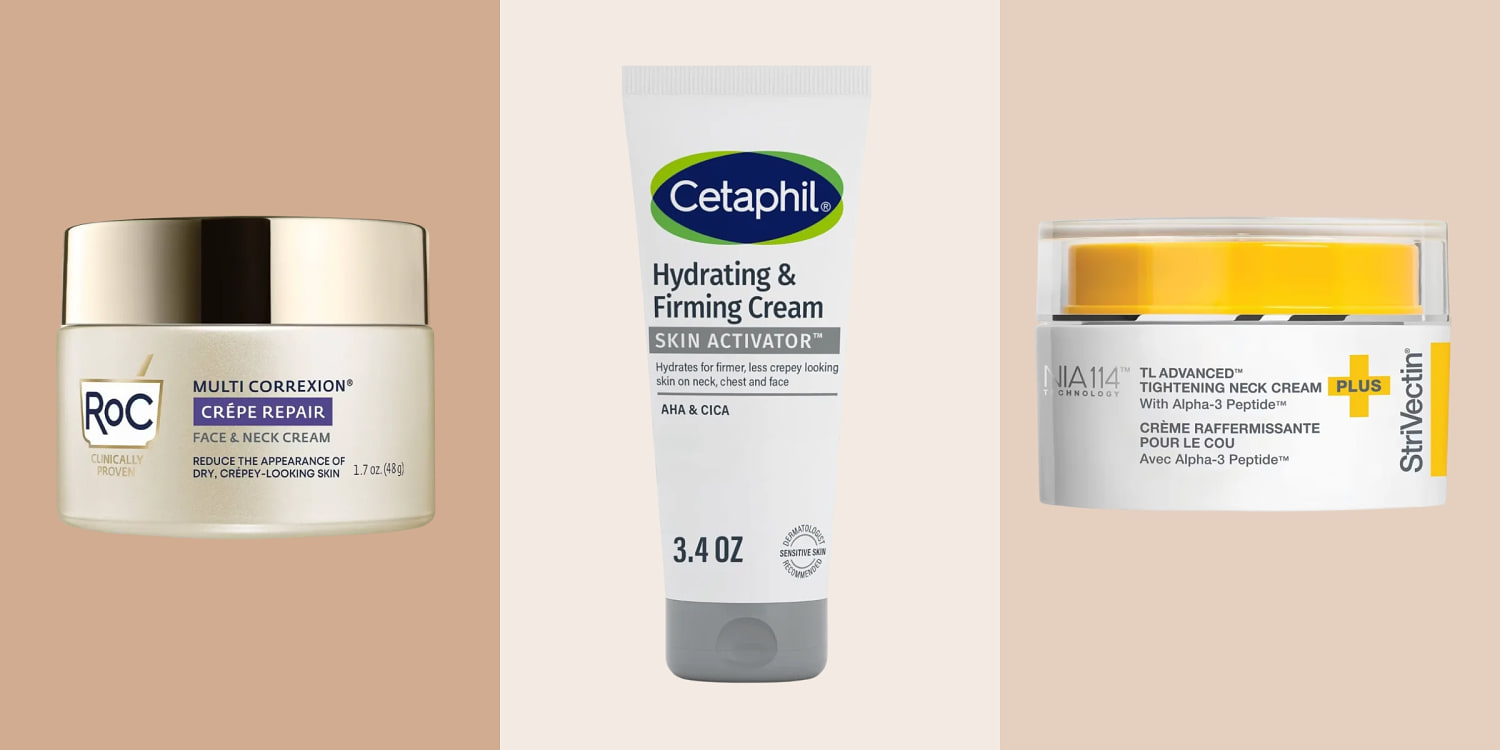
You are probably reading this right now with your chin tucked into your chest. Tilt your head back up. Feel that tightness across the front of your throat? That is the daily toll of staring down at screens.
We call it tech neck, but dermatologists call it what it really is: mechanical aging. Every time you bend your cervical spine downward to check notifications, scroll social feeds, or bang out emails, your skin folds. Do that a few thousand times a day for years and those temporary creases turn into permanent horizontal rings.
Skincare brands spotted this panic early. Suddenly, every beauty counter stocks dedicated neck creams promising miraculous lifts, tightening blends, and wrinkle erasure. Most of them are just overpriced moisturizers with aggressive marketing departments.
Yet, targeted topicals do work if you pick the right chemistry and manage your expectations. Your neck skin is paper-thin, holds fewer oil glands than your face, and lacks structural support. It shows wear and tear fast.
Let's look past the slick packaging. Here is how your daily posture damages your skin and which ingredients actually fight back.
The Anatomy of Tech Neck
Your neck deals with unique structural challenges. The platysma muscle spans from your jaw down to your collarbone like a thin sheet. Unlike other facial muscles attached tightly to bone, the platysma mostly anchors to skin and soft tissue. When you constantly pull that tissue downward by looking at devices, gravity and muscle memory team up to break down collagen.
Sun exposure plays a brutal role here too. Most people slather SPF 50 across their cheeks and forehead, then completely neglect the throat and chest. Ultraviolet radiation destroys elastin fibers faster than screen time can, leaving skin loose and unable to snap back after folding.
You are fighting two battles at once: repetitive physical creasing and ultraviolet damage. A basic body lotion will not cut it.
What Dermatologists Actually Look For in Ingredients
When skin specialists formulate or recommend treatments for horizontal neck lines, they skip the marketing fluff and look straight at active biochemistry.
Retinoids remain the gold standard for cell turnover and collagen production. Slathering your heavy-duty facial retinol down your neck works, but the skin there is sensitive. Start slow, maybe twice a week, to avoid raw, peeling irritation.
Peptides help signal your skin to build fresh structural proteins. Matrixyl and copper peptides are worth hunting for on ingredient labels because they target firmness without the redness risk of prescription-strength vitamin A derivatives.
Hyaluronic acid plumps out the fine lines instantly by drawing moisture into the upper skin layers. It will not fix structural sagging, but it makes those surface rings look less harsh within minutes of application.
Antioxidants like vitamin C and niacinamide protect against daily pollution and environmental stress while brightening hyperpigmentation caused by neglected sun exposure.
The Daily Habits That Matter More Than Creams
No jar of peptide cream can rescue skin if you spend twelve hours a day folded like a lawn chair. Posture correction is your first line of defense.
Raise your phone to eye level instead of dropping your chin to meet the screen. Prop your laptop on a stand so you look straight ahead during work hours. These small physical tweaks stop the constant folding motion that deepens neck rings in the first place.
Build a dedicated skincare routine that treats your neck as an extension of your face, not an afterthought. Extend your cleanser, your serums, your evening moisturizer, and your morning sunscreen all the way down to your collarbone.
Consistency beats intensity every single time. A gentle retinoid applied three nights a week for a year will completely transform the texture of your throat far better than a luxury cream you use twice and abandon in the back of a drawer. Pay attention to how you move, protect your skin from UV rays, and give the delicate skin on your neck the active ingredients it craves.