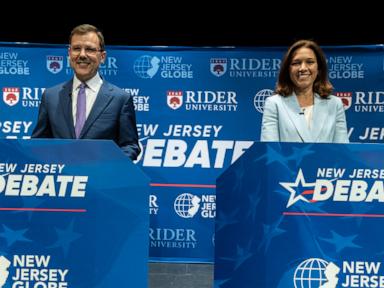
The political geography of New Jersey's seventh congressional district transformed under the weight of an unexpected ideological split. When Republican incumbent Tom Kean Jr. and Democratic challenger Rebecca Bennett squared off during their fierce campaign cycle, the rhetoric quickly bypassed routine local grievances to fixate on distant capitals and sweeping executive decrees. At the center of their confrontation stood two polarizing national pillars: Washington trade policy and military intervention in the Middle East. For months, political analysts had viewed the race through the familiar lens of suburban fatigue and congressional gridlock. Yet the debates over tariff burdens and the war in Iran exposed a deeper fault line regarding how congressional representatives relate to executive overreach and accountability.
Understanding why this particular clash resonated so deeply requires looking past standard talking points and examining the direct economic transmission belt connecting federal decisions to local pocketbooks. Spanning all of Hunterdon and Warren counties, alongside pieces of Morris, Somerset, and Union counties, the seventh district represents a complex mosaic of suburban commuters, small business owners, and rural agricultural pockets. Tariffs implemented under the White House were sold as a defense of domestic manufacturing, but in these local communities, voters felt an immediate pinch. Everyday goods, from automotive components to imported household appliances, crept upward in price. Bennett seized on these cost-of-living increases, arguing that broad duties functioned as a hidden tax imposed directly on middle-class families. She maintained that Congress abdicated its constitutional authority by allowing executive branches to dictate economic protectionism without legislative checks or rigorous cost-benefit analysis.
The Anatomy of a Suburban Battleground
The seventh district has long prized a brand of independent pragmatism. Voters here historically reward politicians who project moderation and an ability to work across party lines. Kean attempted to maintain this tightrope walk by pointing to areas where he broke with party leadership, such as his resistance against executive attempts to defund infrastructure projects like the Gateway tunnel and his opposition to strict tax limitations on state deductions. Yet on foundational matters of war and trade, he repeatedly anchored himself to White House directives.
During their high-profile debate hosted by the New Jersey Globe and Rider University, Kean defended the protectionist measures with a steady insistence that executive trade maneuvering protected American workers from predatory foreign competition. To his base, the duties signaled a muscular defense of local industry. Yet that defense came with a severe political vulnerability in a district sensitive to cost pressures. Suburban families who pride themselves on fiscal conservatism frequently find themselves alienated by inflationary economic policies that inflate the price of basic commodities. Kean attempted to frame his opponent as an inexperienced outsider, but his refusal to question executive tariff architecture left him vulnerable to charges of blind partisanship.
The divide over military action in Iran magnified these economic anxieties into a debate over national security and constitutional duty. Kean consistently voted against congressional resolutions intended to rein in military escalation, arguing that foreign adversaries understood only strength and that preemptive deterrence kept American shores safe. His public stances aligned closely with hawks who believed any dissent signaled weakness to hostile regimes.
Tariffs and the Burden on Middle-Class Wallets
Across the aisle, Bennett approached the subject with the lived authority of a military veteran. Having served as a Navy helicopter pilot deployed to the Middle East, she possessed an insider's view of the human and economic costs associated with protracted engagements. During public forums, she did not hesitate to label the ongoing military conflict in Iran an unnecessary distraction that directly strained domestic resources and sent global energy markets spiraling. Gasoline prices at local pumps across New Jersey surged alongside geopolitical tensions, providing a tangible daily reminder of distant hostilities. Bennett argued that sending American service members into harm's way demanded intense congressional oversight rather than passive rubber-stamping, a critique that struck a raw nerve among voters weary of endless foreign entanglements.
This policy divergence exposed a fundamental vulnerability in how incumbent politicians handle executive alignments. Voters watching the single debate realized that when national security and macroeconomic survival intersected with presidential ambition, party loyalty consistently won out. The friction was further exacerbated by the physical reality of the campaign trail. Incumbents running in tight races typically rely on omnipresent visibility, town halls, and aggressive local press engagement to reassure constituents. Kean adopted a radically different approach, limiting public appearances and keeping a low profile that critics labeled an evasion of accountability. This strategy created a vacuum that opponents filled with aggressive messaging about his voting record and his responsiveness. When an incumbent avoids direct confrontation with voters over controversial votes, the silence speaks louder than any prepared statement.
Military Intervention and the Veteran Perspective
The consequences of this strategy became starkly apparent as election day approached. Outside political action committees poured millions into the media market, turning a local contest into a national referendum on congressional spine. Major editorial boards in the region took notice, noting that a representative who refuses to defend his votes in open forums forfeits the right to claim the mantle of consensus builder. The contrast between Bennett's active, retail-heavy campaign style and Kean's insulated approach crystallized the central question of the contest. Constituents were asked whether they wanted a lawmaker who asked hard questions or one who followed orders from party leadership.
Economic realities compounded these tactical errors. Beyond federal tariffs, local businesses struggled with high energy overhead and commercial regulatory hurdles. Bennett's platform focused heavily on modernizing local infrastructure, expanding clean energy investments that created regional jobs, and easing regulatory bottlenecks for small businesses. By grounding her campaign in practical economic fixes rather than abstract partisan grievances, she appealed directly to independent voters who felt forgotten by both major parties. Kean counterattacked by targeting her background, attempting to paint her policies as out of touch, but those attacks failed to deflect attention from his own voting history on healthcare cuts and economic protectionism.
The Strategy of Incumbent Evasion
Foreign policy and domestic economics rarely stay neatly separated during high-stakes election cycles. The war in Iran drove energy costs upward at the exact moment inflation was squeezing household budgets, creating a compounding economic crisis that voters blamed directly on incumbent leadership. When a representative defends policies that inflate household expenditures while simultaneously backing military actions that destabilize global markets, constituents look for alternatives. Bennett's background as a service member gave her a unique credibility on defense issues, neutralizing the traditional Republican advantage on national security. She could argue for a strong national defense while simultaneously condemning reckless interventions that yielded few strategic benefits.
The outcome of the race signaled a seismic shift in voter tolerance for congressional passivity. Pundits who anticipated a quiet victory for institutional incumbency underestimated the fury of suburban voters confronting rising living costs and foreign entanglements. The seventh district historically rewarded candidates who maintained a cautious, middle-of-the-road posture, but the modern political climate punishes ambiguity. When a representative ducks difficult questions about war and trade, voters fill the silence at the ballot box.
Reconciling Local Rhetoric with National Reality
As the dust settles over the district, the broader lessons of the contest extend far beyond local county lines. Lawmakers nationwide must reckon with the reality that voters draw a direct line between Washington executive policies and their personal financial stability. Defending measures that worsen inflation or prolong foreign conflicts without clear exit strategies carries a heavy electoral price. The era of sliding by on family legacy and cautious silence has closed, replaced by an electorate demanding direct answers to existential questions about war, peace, and the cost of living.