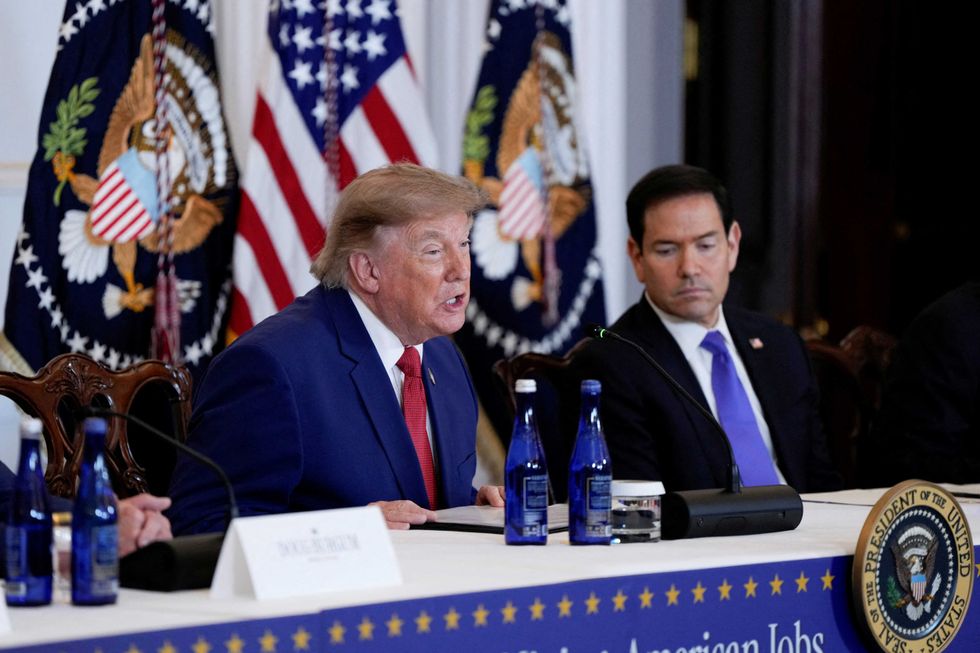
Political information leaks rarely represent mere public relations failures. In high-stakes executive environments, unauthorized disclosures function as empirical diagnostics of internal institutional friction, fractured incentive structures, and operational insecurity. Analyzing the mechanics behind the headline "Embarrassing leaks reveal just how badly Trump 'lost': expert" requires separating partisan media framing from the underlying organizational realities of executive information control.
To evaluate political loss or institutional failure rigorously, analysts must bypass surface-level commentary and examine three structural mechanisms: Principal-Agent divergence, narrative asymmetry, and operational security degradation.
The Principal-Agent Problem in Executive Operations
In political science and organizational economics, the Principal-Agent problem occurs when an agent (a staffer, advisor, or cabinet official) acts in their own self-interest rather than the interest of the principal (the executive or political leader). When an administration or campaign experiences a high volume of damaging leaks, it signals a collapse in incentive alignment.
In a cohesive political operation, the expected payoff of loyalty exceeds the expected payoff of defection. Loyalty yields career advancement, access, and ideological victory. Defection—manifested through leaking internal deliberations, polling data, or strategic disputes to the press—carries severe reputational and legal risks.
The calculus shifts when internal actors perceive an impending political defeat or catastrophic policy failure. Under these conditions, individual actors engage in preemptive reputation laundering. By leaking unfavorable internal assessments to journalists, staffers attempt to establish a historical record that separates their personal judgment from the principal's ultimate failure.
The Three Drivers of Internal Defection
- Survival Horizon Compression: When staffers believe an administration or campaign has a finite, shrinking window of power, long-term loyalty loses its utility. Immediate survival in the broader political ecosystem takes precedence over protecting the principal.
- Factional Warfare: Executive teams frequently contain competing ideological or strategic factions. When internal debate mechanisms fail to resolve policy or messaging disputes, factions externalize the conflict by leaking damaging information about rival advisors to force the principal's hand.
- Moral Hazard and Insulation: In environments characterized by high turnover and public scapegoating, subordinates recognize that loyalty does not guarantee protection. Without reciprocal loyalty from the principal, subordinates treat sensitive information as a defensive hedge.
Narrative Asymmetry and the Media Framing Engine
Media coverage of political leaks routinely conflates internal dissent with definitive political defeat. A headline asserting that leaks prove a leader "lost" relies on narrative asymmetry—a cognitive and editorial bias where internal friction is interpreted exclusively as weakness, rather than a standard feature of high-pressure decision-making.
Every major political campaign and presidential administration experiences intense internal conflict. The differentiator is not the existence of conflict, but the containment boundary. When containment fails, journalists gain access to raw, unfiltered deliberation. Because media incentives favor conflict and finality, raw deliberation is packaged as evidence of collapse.
Distinguishing Fact from Hypothesis in Leak Analysis
To maintain analytical rigor when evaluating reports based on anonymous disclosures, observers must categorize the incoming data strictly:
- Known Facts: The existence of the leak itself, the specific media outlet chosen as the conduit, and the verifiable text or data contained within the disclosure (such as internal polling numbers or authenticated communications).
- Educated Hypotheses: The identity of the leaker, their specific strategic motivation, and the broader impact of the disclosure on voter behavior or institutional stability.
- Editorial Framing: The interpretive overlay applied by commentators and "experts" who use the leak to validate a pre-existing thesis regarding political victory or defeat.
Relying on commentator framing rather than structural mechanics obscures the actual vulnerability. A leak of unfavorable internal polling does not cause a political loss; it reveals that the organization's internal reality has diverged so sharply from its public messaging that staffers feel compelled to correct the record externally.
Operational Security Degradation and Information Hygiene
From an operational standpoint, chronic leaking is a failure of information hygiene and compartmentalization. In intelligence and corporate strategy, sensitive data is protected through strict access controls, audit trails, and minimized distribution lists. Political operations frequently violate these principles due to the speed of the news cycle and the fluid nature of advisory roles.
When too many individuals have access to sensitive strategic assessments, the probability of an unauthorized disclosure approaches certainty. This creates a destructive feedback loop within the organization:
- Paranoia and Witch Hunts: Leadership responds to leaks by restricting information flow, launching internal investigations, and demanding loyalty oaths.
- Decision-Making Paralysis: Fear of surveillance and suspicion causes advisors to withhold candid advice, leading to groupthink and strategic blind spots.
- Accelerated Leakage: The resulting toxicity and operational dysfunction further alienate staff, increasing the motivation to leak to external press outlets.
This cycle degrades executive performance far more severely than the specific content of any individual leak. The primary damage is not the embarrassment caused by a single news cycle, but the systemic erosion of trust required for rapid, high-stakes decision-making.
Limitations of Leak-Based Political Forecasting
Using internal leaks as the primary metric to declare a political actor "defeated" carries significant analytical limitations. History demonstrates that organizations plagued by severe internal friction and constant press leaks can still achieve major legislative victories or win national elections.
External political outcomes depend on structural variables—macroeconomic conditions, opposition party vulnerabilities, turnout mechanics, and demographic shifts—that operate independently of internal staff cohesion. An administration can suffer from catastrophic operational security while simultaneously benefiting from favorable external macro-trends. Treating internal press leaks as a deterministic indicator of electoral or political failure mistakes organizational dysfunction for structural inevitability.
Strategic Mitigation Protocols
For political principals, campaign managers, and executive chiefs of staff, eliminating leaks requires restructuring internal incentives and enforcing strict operational discipline rather than relying on rhetorical appeals to loyalty.
- Implement Strict Compartmentalization: Distribute sensitive polling, legal assessments, and strategic memos strictly on a need-to-know basis. Utilize unique digital watermarking and tailored phrasing across different distribution tiers to pinpoint the exact source of any unauthorized disclosure immediately.
- Align Exit Incentives: Establish clear post-administration or post-campaign career pathways for loyal staffers through affiliated think tanks, corporate boards, and consulting networks. When subordinates see a viable financial and professional future tied to the principal's network, the incentive to defect to the press diminishes.
- Institutionalize Internal Dissent: Create formal, protected channels for advisors to voice sharp disagreement directly to the principal without fear of public humiliation. When staffers believe their strategic warnings are genuinely heard and weighed internally, they are significantly less likely to litigate those arguments through the media.