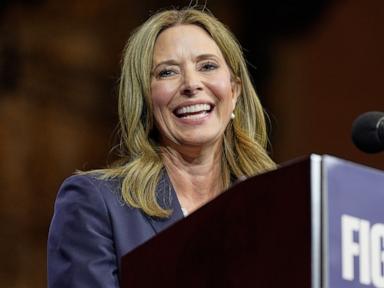
Political campaigns frequently hinge on the tension between retrospective policy evaluation and prospective voter persuasion. In the contest for Ohio’s governorship, this dynamic surfaced directly when former Ohio Department of Health Director Amy Acton responded to a campaign advertisement released by entrepreneur and political candidate Vivek Ramaswamy. Rather than engaging solely on emotional appeal, Acton urged former President Donald Trump and Vice President JD Vance to examine the factual record surrounding her tenure during the 2020 public health crisis. This exchange illustrates a classic strategic divergence in modern electoral politics: the clash between narrative framing through attack media and empirical counter-positioning aimed at neutralizing partisan endorsements.
To understand the mechanics of this dispute, one must separate the competing objectives of the actors involved. Attack advertisements operate as heuristic shortcuts, compressing complex historical periods into high-salience emotional triggers. Conversely, a call to inspect the factual record attempts to disrupt that shortcut by introducing administrative context, statutory authority, and shared institutional responsibility.
The Structural Anatomy of the Attack Advertisement
A campaign advertisement targeting a former public health official relies on retrospective attribution. During an unprecedented public health emergency, executive branch agencies execute policies that carry immediate, visible economic and social costs—such as business closures, school disruptions, and movement restrictions. Because public health directors serve as the primary public communicators of these measures, they become the focal point for voter frustration years later.
Ramaswamy’s advertisement capitalizes on this visibility through three distinct mechanisms:
- Attribution Consolidation: Complex, multi-agency executive decisions are attributed to a single individual rather than the broader administration or legislative framework. In Ohio’s executive structure, the Department of Health operates under the authority of the Governor, who appoints the director and directs state-level emergency responses. Isolating the director simplifies the causal chain for the viewer.
- Outcome Asymmetry: The advertisement emphasizes immediate, tangible disruptions—such as economic contraction and social isolation—while omitting counterfactual variables, such as projected hospital capacity strain or mortality modeling that drove the initial policy decisions.
- Endorsement Signaling: By framing a primary or general election opponent through the lens of unpopular pandemic-era restrictions, the messaging is calibrated to appeal not only to general electorate grievances but also to national political figures whose endorsements carry decisive weight in Republican primaries and statewide contests.
Counter-Positioning Through Institutional Context
Amy Acton’s response—calling on Donald Trump and JD Vance to look at the facts—represents a deliberate pivot away from defensive emotional rebuttal toward institutional reframing. Rather than debating the abstract popularity of 2020 public health interventions, her strategy introduces two critical counter-variables: the bipartisan nature of the original response and the alignment between state actions and federal guidance at the time.
First, Acton’s framing highlights the chain of command. During the initial phase of the pandemic in early 2020, Ohio’s public health orders were issued under the administration of Republican Governor Mike DeWine. By pointing to the factual record, Acton implicitly reminds political observers and national figures that the policies in question were not unilateral ideological experiments, but state-level implementations executed within a Republican-led executive branch.
Second, invoking Trump and Vance directly targets the federal-state alignment of 2020. In March and April 2020, the White House Coronavirus Task Force—operating under the Trump administration—issued federal guidelines recommending social distancing, capacity limits, and temporary closures to slow viral transmission. Calling on Trump and Vance to review the facts forces a confrontation with historical continuity: attacking state-level compliance with 2020 federal guidelines risks indirectly indicting the federal response orchestrated by the Trump administration itself.
The Endorsement Dynamic and Information Asymmetry
In statewide races where national figures hold substantial influence over voter turnout and fundraising, the battle for narrative control extends beyond the general public to a secondary audience of political gatekeepers.
- The Gatekeeper Audience: For candidates seeking or protecting the backing of figures like Trump and Vance, media buys serve as proof-of-concept demonstrations. An aggressive attack ad signals ideological alignment and combativeness, traits prized in contemporary primary politics.
- The Verification Friction: Attack ads succeed when the cost of verifying their claims exceeds the voter's willingness to investigate. Most viewers do not cross-reference 2020 executive orders with federal task force timelines. Acton’s directive to look at the facts attempts to lower that verification friction for journalists, political commentators, and national leaders by pointing to publicly documented timelines.
- The Limitation of Factual Rebuttals: Empirical framing faces a structural disadvantage against emotional messaging. Facts require cognitive processing and contextual explanation—such as distinguishing between statutory advisory roles and gubernatorial executive authority. Attack ads require zero prior knowledge to register an emotional reaction. Consequently, a fact-based counter-strategy rarely neutralizes an attack among already polarized voters; instead, its primary utility lies in persuading undecided moderates and preventing media narratives from accepting the attack's premise uncritically.
Cause-and-Effect in Retrospective Crisis Politics
The friction between Ramaswamy’s messaging and Acton’s response demonstrates how crisis management transforms into an electoral liability over time. During an acute emergency, public tolerance for executive intervention is temporarily elevated by immediate perceived risk. Once the acute phase subsides, the psychological salience of the threat diminishes, while the memory of the restrictions persists.
This creates a predictable political cycle:
- Phase One (Acute Crisis): Executive actions are judged against immediate worst-case scenarios. High visibility builds name recognition and public trust.
- Phase Two (Post-Crisis Normalization): As the baseline risk fades, the interventions are re-evaluated against normal peacetime standards, generating retrospective discontent.
- Phase Three (Electoral Weaponization): Opponents extract the interventions from their original emergency context and present them as permanent ideological preferences.
Acton’s challenge in the Ohio gubernatorial race is to restore the Phase One context within a Phase Three electoral environment. Conversely, Ramaswamy’s strategic objective is to keep the voter anchored in Phase Three, ensuring that Acton’s name recognition remains permanently tethered to the disruptions of 2020 rather than her broader public health credentials or policy platform.
Tactical Implications for Statewide Campaign Strategy
As the Ohio gubernatorial race progresses, the durability of either strategy depends on how effectively each campaign manages the boundary between historical accountability and future governance.
For challengers utilizing retrospective attacks, over-reliance on pandemic-era grievances carries diminishing returns if voters prioritize current economic conditions, infrastructure, or cost-of-living metrics. If the electorate views 2020 debates as settled history rather than a proxy for future leadership, attack media loses its persuasive elasticity.
For candidates defending an administrative record, simply citing facts is insufficient unless those facts are translated into a forward-looking governance model. To neutralize retrospective attacks, Acton’s campaign must pair factual corrections regarding 2020 federal-state coordination with clear commitments on how executive authority, economic continuity, and public health would be balanced under her leadership. Without that forward-looking bridge, factual rebuttals risk keeping the campaign trapped on terrain chosen by the opposition.