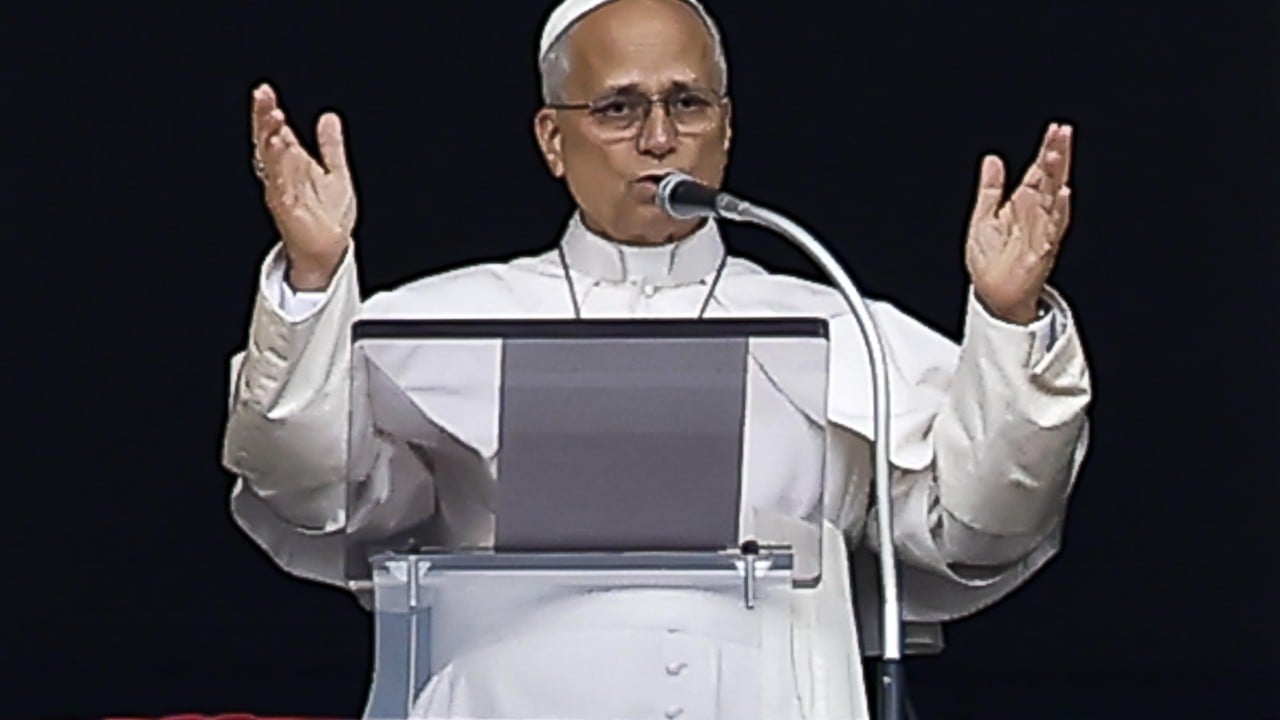
Pope Leo XIV returned to his full slate of international engagements following a successful lobectomy at Rome's Gemelli Hospital to remove a cancerous tumor from the lower lobe of his right lung. The 71-year-old pontiff's rapid recovery and subsequent transit through a grueling multi-nation pastoral journey to Latin America have triggered a broader conversation inside the Vatican regarding medical transparency, executive continuity, and the unforgiving physical demands of modern leadership at the highest levels of the Holy See.
When the Vatican announced on October 13 that the Chicago-born pope had undergone surgery to excise a malignant nodule discovered unexpectedly during a routine checkup, the news sent immediate shockwaves through institutional circles. Unlike the final, protracted decline of his predecessor Pope Francis—whose repeated bouts of bronchitis and respiratory distress turned daily bulletins into medical bulletins—Pope Leo's medical intervention was swift, contained, and clinically definitive. Attending physicians confirmed that the localized adenocarcinoma had not spread, sparing the pontiff from adjuvant chemotherapy or radiation. Also making news lately: Stop Pretending the Ancient West Is a Modern Club.
Yet the speed of his return to the public eye masks a deeper structural anxiety.
The papacy is an office uniquely unequipped for physical vulnerability. For centuries, the assumption of absolute lifetime tenure meant that health crises were managed behind heavy velvet curtains, often resulting in periods of governance paralysis. While Pope John Paul II famously turned his aging body and Parkinson's progression into a public testament of suffering, modern geopolitical and administrative realities demand an executive who can absorb brutal international itineraries, negotiate multi-layered diplomatic friction, and manage a deeply polarized curia. Further insights regarding the matter are covered by NPR.
Following his discharge, Pope Leo addressed reporters aboard the papal aircraft with characteristic bluntness, noting that endurance remained central to his outlook. He brushed aside immediate calls to draft a formal advance letter of resignation for medical incapacitation—a precautionary step some canon lawyers argue is essential should a pontiff lose communicative faculties. By stating that he saw no immediate necessity for such provisions, Leo signaled an intent to project absolute stability, rejecting the narrative that his health scare marks the beginning of a transitional or fragile pontificate.
This insistence on business-as-usual was immediately tested by his itinerary. The subsequent apostolic voyage to South America—testing human limits across shifting altitudes from Andean highlands to the humid Amazon basin—served as an empirical stress test for his thoracic recovery. Medical teams monitored ambient oxygenation and fatigue indexes closely, treating the journey as a calculated clinical trial of one. The successful completion of the trip provided tangible proof of his physical rebound, but it also underscored the precarious margins under which contemporary papal administration operates.
The underlying tension extends beyond a single medical chart. The Vatican machinery remains locked in an era of transition, balancing the structural reforms initiated under Francis with Leo's stated priority of institutional unity. By refusing to rush appointments for the College of Cardinals or entertain divisive structural departures—such as ordaining married priests to alleviate regional clergy shortages—Leo is husbanding his political and physical capital carefully. He is calculating that institutional healing requires a steady hand over a prolonged timeline, rather than erratic bursts of hurried reform.
A major health crisis at the onset of a papacy forces an unvarnished re-examination of how the Vatican communicates risk. The transition from secrecy to sudden candor represents a cultural shift for an institution historically averse to displaying weakness. Yet as medical diagnostics improve and early-detection protocols catch asymptomatic malignancies like Leo's, the relationship between a leader's biological limits and geopolitical duties enters a sharper focus.
The physical architecture of the Vatican must now account for a reality where high-stakes surgery is a manageable interruption rather than an insurmountable barrier. Pope Leo walks back into his apartments with four functional lung lobes, an intact travel schedule, and a clear bill of health from his surgical team.
The machinery of the Holy See moves forward, tethered to the pulse of a leader determined to prove that a scar across the chest does not dictate the trajectory of a global church.