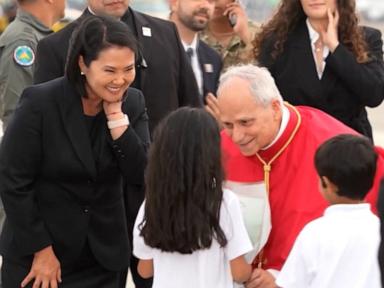
When Pope Leo XIV stepped onto the tarmac in Lima, the cameras captured a homecoming decades in the making. Before taking the papacy, Robert Francis Prevost spent years as an Augustinian missionary and bishop in northern Peru, earning both local citizenship and an intimate understanding of the Andean church. His return as pontiff is far more than a ceremonial victory lap. It is a calculated geopolitical and pastoral intervention aimed at stabilizing a fractured Latin American church, confronting aggressive secularization, and signaling how the Vatican intends to govern the Global South over the next decade.
Most mainstream coverage treats papal travel as a series of photo opportunities and liturgical pageantry. That misses the institutional mechanics at work. Every papal itinerary is a strategic document, negotiated months in advance between the Vatican Secretariat of State, the local apostolic nunciature, and national governments. By choosing Peru for a high-profile return, Leo XIV is deploying his personal biography as diplomatic capital in a region where Catholic institutional authority has eroded rapidly over the past twenty years.
The Missionary Bishop Who Became Pontiff
To understand the weight of this visit, you have to look at the timeline of Prevost’s career before he ever entered a conclave. Born in Chicago, he joined the Order of Saint Augustine and arrived in Peru in the mid-1980s, a period when the country was torn apart by the Maoist Shining Path insurgency and severe economic collapse. He did not operate from an insulated diplomatic compound in the capital. He worked in Chulucanas and Trujillo, running seminaries, teaching canon law, and navigating the daily realities of rural poverty and political violence.
In 2014, Pope Francis appointed him apostolic administrator and later Bishop of Chiclayo, a coastal diocese in northwestern Peru. Prevost became a naturalized Peruvian citizen, a legal and symbolic step that permanently altered his standing among local clergy and laity. When he was later summoned to Rome to lead the Dicastery for Bishops—the powerful Vatican office responsible for vetting and recommending episcopal appointments worldwide—he brought that ground-level Peruvian sensibility directly into the Roman Curia.
That background explains why his return carries a different charge than previous papal visits to South America. John Paul II came to Peru in 1985 and 1988 as a towering European anticommunist figure warning against ideological distortions of liberation theology. Francis arrived in 2018 as an Argentine neighbor preaching ecological conversion and anti-corruption in the Amazon. Leo XIV returns as an insider who already knows where the institutional bodies are buried, which dioceses are administratively hollowed out, and which political factions are attempting to co-opt religious rhetoric.
Geopolitics and the Battle for Latin America
The numbers tell a stark story. For centuries, Latin America was treated by Rome as a guaranteed demographic reservoir. That era is over. Across the region, and sharply within Peru, the Catholic Church faces simultaneous pressure from two directions: the rapid expansion of Pentecostal and evangelical movements in working-class neighborhoods, and rising secularization among urban youth.
Evangelical churches have succeeded in Peru precisely where traditional parish structures stalled. They offer tight-knit social safety nets, immediate pastoral accessibility, and decentralized leadership that does not wait years for approval from a distant chancery. Meanwhile, the Peruvian Catholic hierarchy has spent much of the last decade on the defensive, battered by protracted clergy abuse scandals—most notably the crisis surrounding the Sodalitium Christianae Vitae—and bitter internal ideological divides.
The Sodalitium Shadow
You cannot analyze the modern Peruvian church without addressing the Sodalitium Christianae Vitae. Founded in Lima in 1971 by Luis Fernando Figari, the lay society grew wealthy and politically influential while cultivating a hardline conservative profile. Subsequent investigations revealed systemic physical, psychological, and sexual abuse, alongside opaque financial dealings.
During his tenure in Peru and later at the Dicastery for Bishops, Prevost was directly involved in the Vatican's prolonged, often frustrating effort to investigate and dismantle the group's abusive structures. Victims' advocates frequently criticized Rome for moving too slowly. By returning to Peru as Pope, Leo XIV places himself squarely in the crosshairs of survivors and reformers who expect concrete accountability rather than vague expressions of sorrow. How he handles unresolved governance and restitution issues during this trip will serve as a litmus test for his broader administrative credibility.
Political Volatility in Lima
A papal visit never happens in a political vacuum. Peru has cycled through presidents, constitutional crises, and widespread street protests at a dizzying pace in recent years. Public trust in state institutions—congress, the judiciary, and the executive branch—routinely polls in the single digits.
In this environment, the Catholic Church remains one of the few national institutions capable of convening rival factions, even as its own moral authority has been bruised. Peruvian politicians across the ideological spectrum inevitably try to stand next to the Pope to borrow a fraction of his legitimacy. Vatican diplomats know this playbook well. Every handshake, every joint appearance at the Government Palace, and every line in a homily about social justice or the rule of law is calibrated to avoid endorsing a specific administration while still pressing the state on poverty, corruption, and human rights.
Inside the Papal Travel Machine
Observers often underestimate the logistical and financial friction behind a trip like this. A papal visit is not funded by an endless pot of Vatican gold. The host government and the local bishops' conference bear the overwhelming majority of the security, infrastructure, and staging costs.
In a country grappling with infrastructure deficits and uneven economic recovery, spending millions of soles on crowd barriers, broadcast centers, and security deployments triggers inevitable domestic pushback. Critics ask why public funds are allocated to religious pageantry when regional hospitals lack basic supplies. Local organizers counter with projections of tourism revenue and international visibility, though independent economists consistently note that mega-events rarely generate the net windfalls promised by state boosters.
Behind the scenes, the Vatican’s logistical apparatus—led by the papal trip coordinator and the Gendarmerie Corps—works alongside Peruvian national police and military intelligence to lock down routes months ahead of arrival. Because Leo XIV knows the geography of northern Peru intimately, the itinerary reflects deliberate choices. Visiting secondary cities outside Lima is a standard papal move to decentralize attention, yet here it carries personal resonance. Returning to places like Chiclayo or Trujillo is an intentional signal to peripheral dioceses that Rome does not merely govern from metropolitan centers.
What This Signals for Global Church Governance
The deeper significance of Leo XIV’s return to Peru extends well beyond the Andes. Since his election, Vatican watchers have scrutinized every move to determine whether his pontificate represents continuity with Francis’s decentralized, synodal style or a return to stricter institutional order.
The reality is more complex than a simple binary. Having run the Dicastery for Bishops, Leo XIV understands the mechanics of personnel management better than almost any recent pope. He knows that papal encyclicals change very little on the ground if the local bishops tasked with implementing them are incompetent, compromised, or locked in ideological warfare.
His Peruvian itinerary is an exercise in pastoral reinforcement. By appearing alongside local clergy, meeting with indigenous and rural communities, and addressing the youth, he is attempting to model a style of leadership that blends institutional discipline with direct street-level engagement. He speaks the local idiom—literally and culturally—without needing a briefing book to explain the difference between coastal urban politics and highland realities.
The Limits of Personal Charisma
Still, charisma and shared citizenship have hard limits. A four- or five-day visit cannot reverse decades of declining Mass attendance or rebuild broken trust overnight. Once the papal plane departs and the temporary altars are dismantled, the Peruvian church is left with the exact same structural problems it had the week before: a shortage of native vocations in remote areas, deep socioeconomic inequality, unresolved legal battles over historical abuses, and fierce competition from agile evangelical congregations.
Veteran observers of Latin American religion recognize this pattern. Papal visits create an intense surge of emotional solidarity that temporarily masks institutional fragility. The real test begins six months later, measured not by crowd sizes on the Costa Verde, but by whether diocesan finances become transparent, whether abuse survivors see actual restitution, and whether parish priests feel supported rather than abandoned by their hierarchy.
Leo XIV knows this better than anyone cheering behind the barricades in Lima. He spent decades living with the aftermath of grand ecclesiastical promises in northern Peru, watching how policies drafted in Rome either survive or die in dusty parish offices. His return as pontiff strips away any excuse of institutional ignorance; he cannot claim he did not know the terrain, and the Church in Peru will judge his papacy by what changes after the cameras leave.