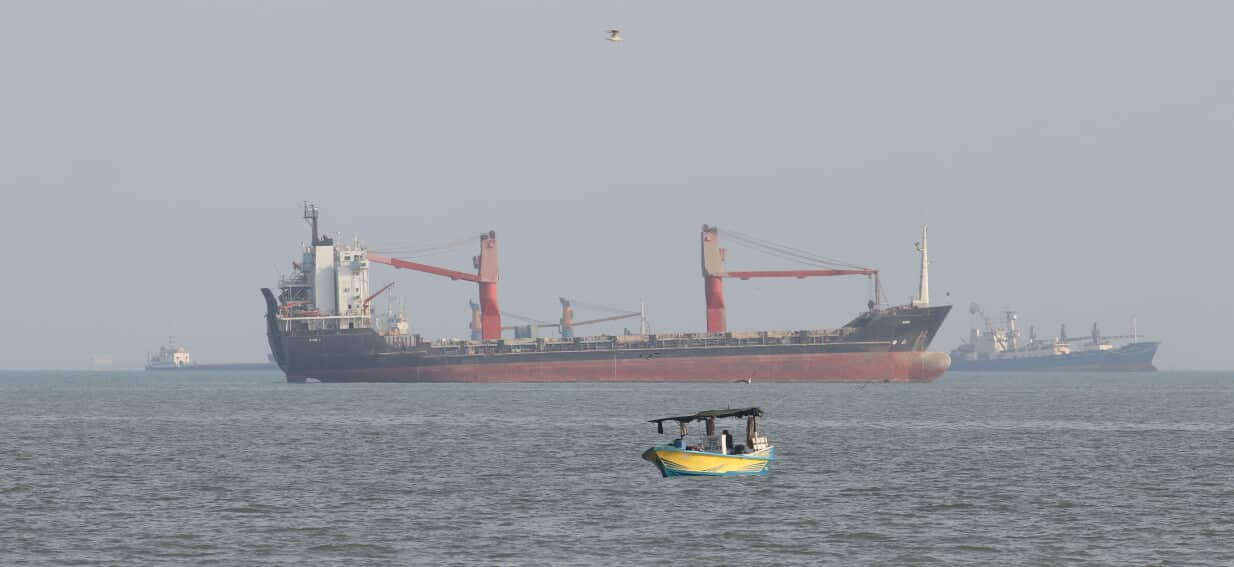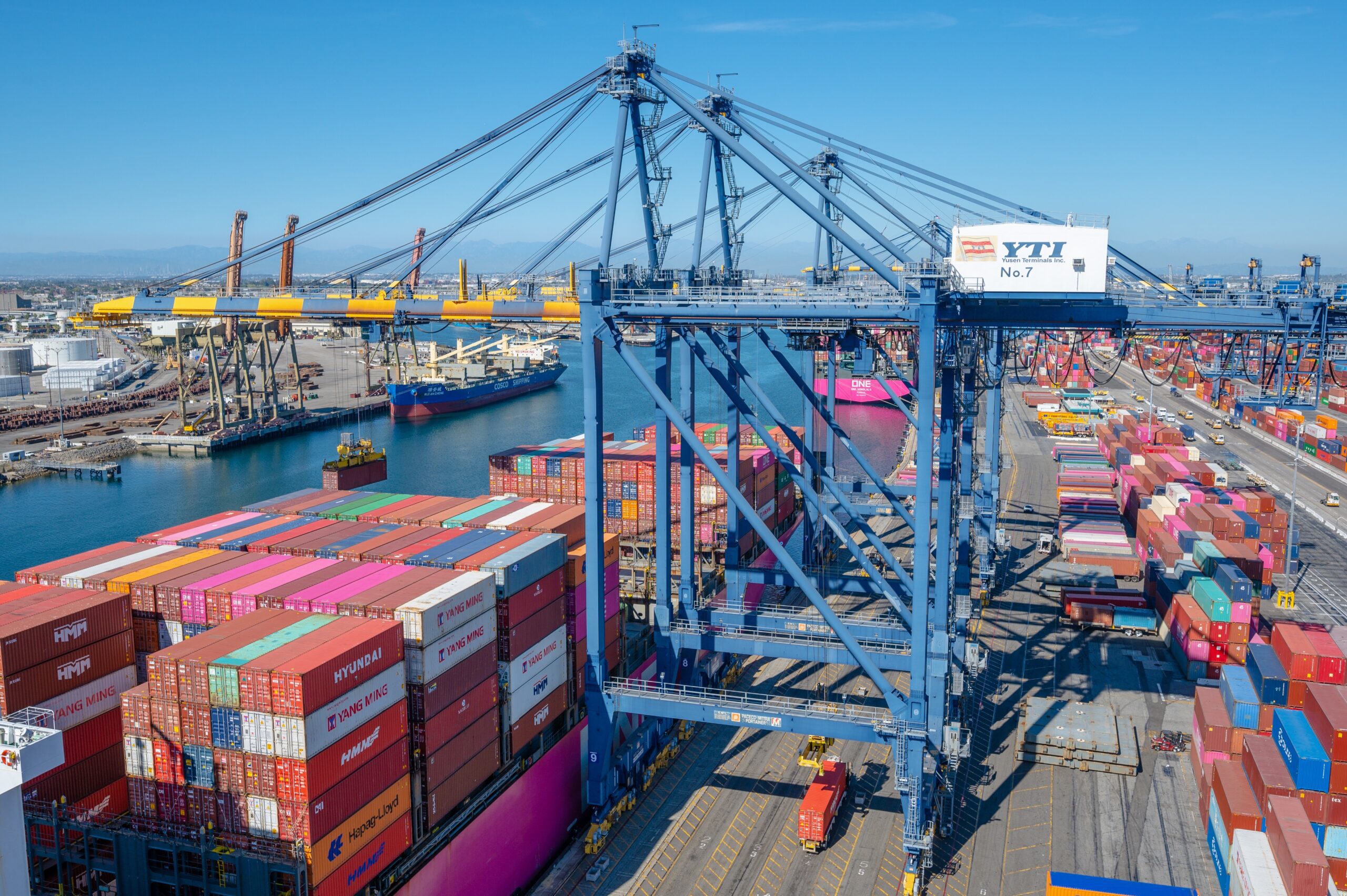
A shark surviving more than a month inside a South Korean port canal exposes a fundamental design failure in coastal industrial infrastructure rather than a simple tale of animal resilience. Standard coverage treats a marine predator trapped in a commercial waterway as a human-interest oddity, focusing on suspense, onlookers, and a triumphant return to open water. That framing misses the structural mechanics that draw apex or mesopelagic predators into engineered channels in the first place, keep them confined for weeks, and complicate extraction without harming either the animal or maritime operations.
To evaluate why a shark enters a port canal and remains there for over thirty days, analysts must separate four interacting systems: hydrodynamic attraction, physiological endurance, infrastructure friction, and operational triage. When these four elements align, an industrial corridor becomes an unintended ecological trap.
Hydrodynamic Attraction and Foraging Drift
Commercial port canals are engineered for vessel draft, berth protection, and cargo throughput, not ecological continuity. Yet the physical characteristics of a deep shipping channel or tidal basin routinely mimic or intersect with natural foraging cues.
Warm discharge plumes, concentrated schools of smaller fish seeking shelter around pilings, or dockside lighting that aggregates phototactic prey can pull mobile marine species inward from adjacent coastal waters. A predator following prey gradients does not perceive a boundary between natural nearshore habitats and artificial port basins until physical or environmental gradients shift.
Once inside, turning radius, channel walls, and narrow mouths alter how an animal navigates. Unlike open coastal shelves where a predator can adjust course across broad spatial scales, a straight-walled canal concentrates movement along a linear axis. If incoming tidal flow or acoustic and visual disturbances from harbor traffic disorient the animal near the seaward exit, repeated ingress and hesitation can prolong residence far longer than an initial foraging excursion would imply.
Consider a hypothetical harbor basin linked to the open sea by a narrow training wall and commercial fairway. A small coastal shark enters on a flood tide chasing baitfish clustered beneath pier lights. By the time daylight rises, vessel noise increases, water exchange slows in an inner slip, and the animal's path back toward deeper, familiar water becomes less obvious.
Physiological Endurance Versus Confinement Stress
Surviving over a month inside a restricted waterway requires the shark to clear two physiological hurdles: meeting baseline metabolic energy demands and avoiding chronic stress or water-quality deterioration. Exact survival limits vary by species, body size, water temperature, and activity level, so analysts should evaluate mechanisms rather than assuming a single universal threshold.
Two primary physiological mechanisms govern multi-week survival in a confined port setting:
- Metabolic and energetic balance: An active swimmer that must maintain forward motion for respiration or buoyancy faces a continuous energy expenditure. If prey density inside the canal is sufficient—or if the species relies on lower routine metabolic rates—the animal can offset caloric burn over weeks. If prey is scarce, survival depends on stored energy reserves and reduced burst activity.
- Environmental and osmotic stability: Port canals often experience wider swings in salinity (especially near freshwater runoff or storm drains), dissolved oxygen, turbidity, and temperature than offshore waters. Prolonged exposure to degraded water quality or elevated cortisol from vessel disturbance wears down physiological resilience even when acute starvation does not occur.
A critical distinction separates known operational facts from educated hypotheses in cases where a shark exits after more than a month. The known facts are the window of confinement, the canal setting, and the eventual return to the sea. What remains a hypothesis—unless direct telemetry, tissue sampling, or continuous observation records it—is the exact feeding frequency during captivity, the precise stress load imposed by harbor traffic, and post-release survival probability.
Infrastructure Friction and Intervention Trade-Offs
When a large marine animal lingers inside a working port, authorities face a classic operational trade-off between ecological welfare, public and responder safety, and commercial port continuity. Port canals serve high-value shipping, tug operations, fishing fleets, and recreational waterfronts; halting traffic indefinitely carries steep economic costs, while rushing an uncoordinated net or tow operation risks severe injury to the shark or personnel.
The Cost Function of Harbor Intervention
Every intervention tactic imposes a distinct operational and biological cost. Herding with vessels or nets can exhaust a shark that is already energetically depleted, triggering capture myopathy or collision with sheet piling. Conversely, passive waiting preserves energy in the short term but extends exposure to boat strikes, entanglement in gear, and fluctuating canal conditions.
Effective port response therefore depends on sequencing low-disturbance actions before high-intensity measures. Mapping water depth, current direction, vessel schedules, and exit bottlenecks allows responders to align any release window with favorable tides and reduced marine traffic rather than fighting hydrodynamic currents.
Why Conventional Media Coverage Understates the Risk
Standard news accounts rarely examine what happens after the camera leaves the seawall. A headline celebrating a shark's return to the sea treats release as complete resolution, yet the operational and ecological ledger remains open.
The first limitation of celebratory release narratives is observational blindness. A shark swimming past a breakwater is not automatically restored to normal foraging and migration; post-release stress can impair recovery for hours or days.
The second limitation is systemic repeatability. A single successful exit does not fix the structural features—such as abrupt depth transitions, vertical concrete walls without refuges, or high-traffic chokepoints—that allowed entrapment to persist for over a month in the first place.
The third limitation is jurisdictional fragmentation. Port authorities, maritime police, fisheries agencies, and marine biologists often operate under distinct mandates and response protocols. Without a shared playbook, early days of confinement pass while agencies clarify authority, turning a short-term straying event into a multi-week standoff.
Tactical Framework for Port Authorities and Responders
Managing future canal entrapments requires treating wildlife incursions as a repeatable operational workflow rather than an ad-hoc spectacle.
- Establish a 24-hour containment and tracking log: Record first sighting coordinates, estimated size and morphology, tide state, water temperature, and vessel movements from hour one to distinguish transient visitors from stalled animals.
- Audit attractants and exit geometry: Identify localized baitfish aggregation points (such as bright dock lights or discharge outfalls) and map narrowing channels, sills, or high-traffic lanes that block seaward orientation.
- Gate vessel speeds and net deployment: Enforce slow-transit or no-wake zones in the affected sector and prohibit improvised netting or gaffing by untrained craft that increases trauma risk.
- Time egress operations to hydrodynamics: Coordinate any guided movement or channel clearance with outgoing tidal currents and low commercial traffic windows so the animal moves with natural flow rather than against resistance.
- Log post-exit outcomes where possible: Coordinate with marine research teams to document sighting trajectories outside the harbor mouth, building empirical baselines instead of relying on guesswork.
No protocol eliminates uncertainty in open-water wildlife incidents. Weather shifts, turbid water, elusive movement patterns, and species-specific behavior mean responders will always operate with incomplete information, and over-engineered physical barriers in commercial ports can create navigation hazards or maintenance burdens that outweigh ecological benefits.
Port operators and coastal managers should treat a month-long canal entrapment as an early-warning diagnostic for waterfront design and inter-agency readiness, embedding standardized slow-speed and tidal-release protocols into routine harbor operations before the next high-profile incursion disrupts shipping lanes.