The collective tech and fashion media recently lost its mind over the announcement that Prada is partnering with Axiom Space to design NASA’s Artemis III spacesuits. The headlines read like a sci-fi utopian dream: luxury meeting extreme engineering, haute couture conquering the lunar south pole. It is a beautiful story.
It is also an absolute lie. Don't forget to check out our previous post on this related article.
The lazy consensus across the industry is that this collaboration represents a cross-disciplinary triumph where luxury garment expertise will somehow optimize multi-layered pressure garments for a hostile vacuum. This narrative ignores the brutal, unyielding physics of aerospace engineering. Having spent years tracking industrial design pipelines and the ballooning budgets of government-adjacent aerospace contracts, I can tell you exactly what this is: a masterclass in brand laundering disguised as innovation.
Prada is not engineering a spacesuit. They are renting a billboard on the moon. To read more about the context of this, Gizmodo offers an informative breakdown.
The Illusion of Haute Couture Engineering
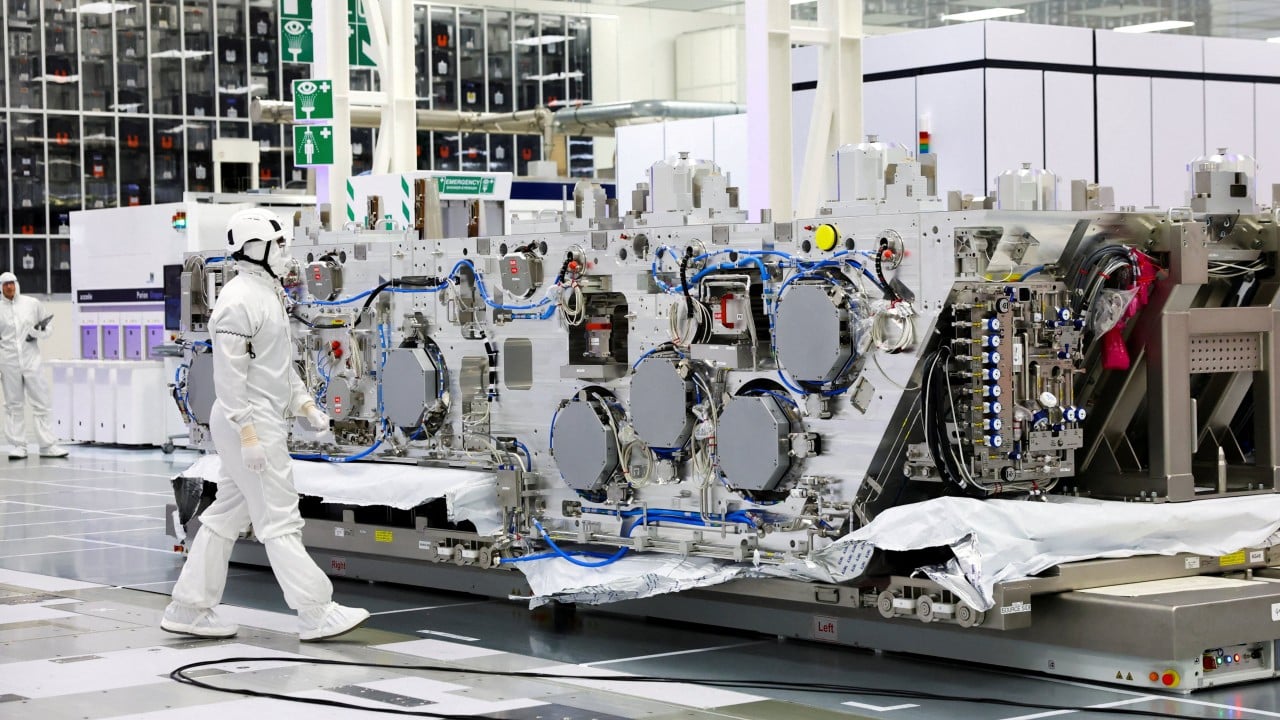
To understand why this partnership is fundamentally superficial, you have to look at what an Extravehicular Mobility Unit (EMU) actually is. A spacesuit is not apparel. It is a personalized, flexible, anthropomorphic spacecraft. It is a life-support system that must withstand temperatures swinging from -250°F to 250°F, block ionizing radiation, handle micrometeorite impacts, and maintain an internal pressure of roughly 4.3 pounds per square inch of pure oxygen.
The competitor articles gush about Prada bringing "material expertise" to the table. Let us parse that claim with basic logic.
Prada’s core competency lies in manipulating leather, nylon, silk, and wool for aesthetic appeal and consumer comfort on a terrestrial plane. Axiom Space, meanwhile, is tasked with delivering the Axiom Extravehicular Mobility Unit (AxEMU). The outer layer of a modern spacesuit requires materials like Ortho-Fabric, Kevlar, Nomex, and Aluminized Mylar. These are highly specialized, chemically engineered synthetics manufactured under strict defense-grade specifications.
Imagine a scenario where a luxury fashion house tells an aerospace engineer that a seam needs to be altered by three millimeters to better drape over the astronaut's hips. In high fashion, that is a stylistic choice. In a vacuum, that alteration creates a catastrophic stress concentration point that could cause a explosive decompression.
Luxury fashion prioritizes form, with function serving as a secondary constraint. Aerospace engineering treats form as an emergent property of absolute survival. The crossover potential here is practically zero.
The Economics of Vanity Metrics
Why would Axiom Space agree to this? Follow the money and the public relations metrics.
NASA awarded Axiom Space a task order valued at $228 million in 2022 to develop these next-generation suits. Building space hardware is a notoriously low-margin, high-risk endeavor. Public interest in space exploration has waned since the Apollo era, transformed into a background hum of billionaire rocket launches and endless schedule delays.
By bringing Prada on board, Axiom achieves two critical business objectives that have nothing to do with engineering:
- Global Media Real Estate: They hijacked the cultural conversation, securing coverage in Vogue, GQ, and mainstream lifestyle publications that would never otherwise cover an aerospace procurement contract.
- Private Capital Attraction: Axiom is a commercial entity aiming to build a private space station. To do that, they need ultra-high-net-worth individuals to buy tickets. What appeals more to a billionaire space tourist? Wearing a suit designed by a legacy government contractor like ILC Dover, or stepping out in a custom-engineered Prada garment?
This is a play for investor eyeballs. The downside, of course, is the dangerous precedent it sets. When we treat life-support equipment as a branding opportunity, we invite a culture of superficiality into an industry where minor mistakes result in fatalities.
Dismantling the Outer Layer Myth
The defense from the defenders of this partnership usually goes like this: "Prada is only helping with the outer layer and design features to improve mobility."
This defense reveals a profound ignorance of how spacesuit mobility works. Mobility in a pressurized suit is not achieved through clever tailoring or the bias-cutting of fabric. It is an intricate mechanical problem solved through constant-volume joints, sealed bearings, and complex cable-and-pulley restraint systems.
When an astronaut bends an elbow, the suit wants to balloon outward due to the internal pressure. The outer layer must restrict that ballooning without restricting the joint. It requires rigid structures and high-tensile materials mapped precisely to human biomechanics.
Spacesuit Construction vs. Luxury Apparel
| Attribute | Aerospace Reality (AxEMU) | Luxury Fashion Capability (Prada) |
|---|---|---|
| Primary Material | Nomex, Kevlar, Gore-Tex laminates | Saffiano leather, Re-Nylon, silk |
| Joint Mobility | Sealed ball bearings, load-bearing cables | Darting, pleating, pattern cutting |
| Testing Protocol | Thermal vacuum chambers, hyperbaric loops | Runway walks, fit-model testing |
| Failure Tolerance | Zero. Absolute life-support redundancy | Aesthetic replacement if damaged |
Look at that breakdown. The overlap does not exist. Prada’s design team working on the AxEMU is the equivalent of putting a Ferrari sticker on a Caterpillar excavator and claiming the sports car brand helped revolutionize earth-moving technology.
The Real Winner of the Lunar PR War
Prada is the undisputed winner here, escaping with a massive reputational upgrade without taking on any real liability. If the Artemis III mission succeeds, Prada claims credit for dressing the next generation of moonwalkers. If the mission is delayed, over budget, or suffers technical failures related to life support, the blame falls squarely on Axiom Space and NASA.
They have successfully insulated their brand from the brutal realities of aerospace execution while absorbing all of its halo effect. It is brilliant corporate strategy. But we must stop pretending it is a technological milestone.
Stop celebrating the convergence of luxury and space. Start demanding uncompromised engineering that treats the lunar environment with the terror and respect it deserves. The moon is a vacuum designed to kill humans within seconds; it does not care about the autumn/winter collection.
Drop the marketing deck. Focus on the life support.