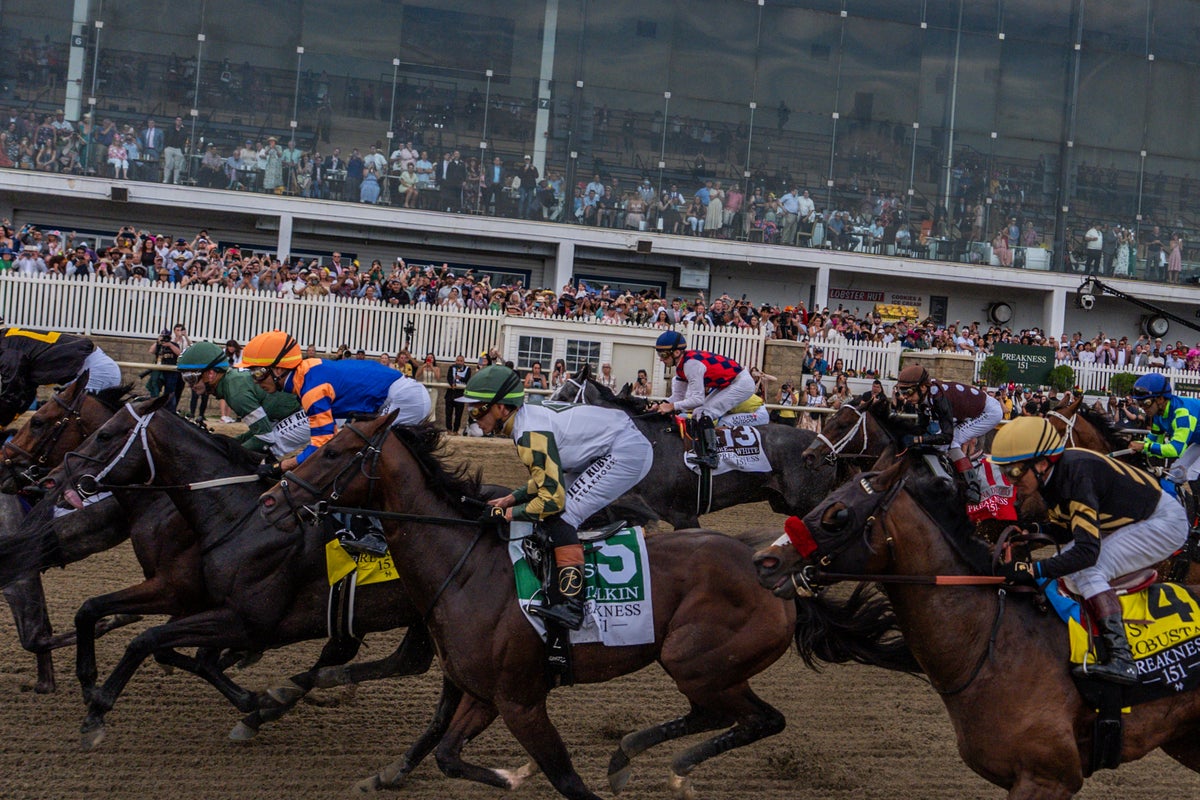
The historic rhythm of American horse racing is fracturing. When racing executives decided to push the Preakness Stakes further back on the calendar, creating a four-week gap between the Kentucky Derby and the second jewel of the Triple Crown, they did not just alter a date. They threw a match into a fragile, century-old ecosystem.
For generations, the compressed timeline of five weeks for all three races defined the ultimate test of an equine athlete. The Triple Crown was grueling by design. It favored stamina, tactical adaptation, and sheer physical durability. Stretching the schedule changes the math entirely. Trainers can now point horses directly to the Preakness with fresh legs, erasing the fatigue factor that historically separated legendary champions from ordinary competitors.
Industry veterans watched the announcement with a mixture of dread and resignation. This was never about horse welfare, despite what the marketing departments claim in their glossy press releases. This was about media windows, broadcasting rights, and the desperate scramble for stagnant television ratings. By giving the Preakness breathing room, tracks hope to capture a more lucrative audience segment. Yet in doing so, they dismantle the very narrative tension that made the Triple Crown appointment television in the first place.
The question nobody in the boardroom wants to answer is simple. If the historic spacing disappears, does the Triple Crown still mean anything at all?
The Economics of an Altered Calendar
Money talks loudest at the racetrack. Attendance figures and wagering handles have spent decades sliding from their mid-century peaks. Track operators face mounting pressure to modernize or face extinction. Spacing out the classic races appears, on paper, to be a sensible commercial adjustment.
Consider how television networks dictate sports calendars. When the Kentucky Derby occupies the first Saturday in May, it competes with major sports playoffs, early summer blockbusters, and shifting consumer habits. Pushing the Preakness deeper into late May or early June attempts to carve out a standalone entertainment window.
However, this commercial logic collides with competitive integrity.
- The Fresh-Legs Problem: Horses that skip the Kentucky Derby can now target the Preakness without facing a rival who ran hard just fourteen days prior. This devalues the grueling nature of Churchill Downs' signature race.
- The Triple Crown Disadvantage: A sweep becomes statistically less demanding from a physical recovery standpoint, yet culturally less impressive to traditionalists who value the brutal three-week gauntlet of old.
- Broadcasting Realities: Network executives want a clean narrative arc. When the Kentucky Derby winner skips Baltimore because the interval is too long, the broadcasting partner loses its primary hook.
Track owners operate under the assumption that casual fans tune in for the spectacle, not the tradition. They might be right about the short-term TV metrics. They are almost certainly wrong about the long-term health of the sport.
Logistics and the Trainer Dilemma
Ask any backstretch veteran how a stable operates during the spring, and they will tell you about controlled chaos. Barns run on strict conditioning schedules designed to peak a horse at precise biological moments.
When the calendar shifts, training regimens must bend. Trainers who spent forty years perfecting the two-week turnaround for the Preakness now find themselves in uncharted territory. Do they give the horse a prep race? Do they let them idle on the farm? Every choice introduces variables that can derail a multi-million-dollar animal.
Take the hypothetical scenario of a Derby runner aiming for Baltimore under the new rules. In the past, that horse had to bounce back physically within fourteen days, proving its constitution against fresh challengers who skipped Churchill Downs. Under an extended timeline, the physical penalty for running in Kentucky diminishes. Trainers can manage recovery with surgical precision.
Critics argue this makes the race fairer. They miss the point entirely. The Triple Crown was never meant to be fair. It was meant to be an insurmountable peak.
[Traditional Schedule]
Derby (Week 1) ---> Preakness (Week 3) ---> Belmont (Week 5)

[Modified Schedule]
Derby (Week 1) ---> Gap ---> Preakness (Week 5+)
The diagram above illustrates the structural erosion. By inserting empty weeks into the spring calendar, the connective tissue holding the three races together dissolves. They stop being a sequence and start becoming three separate, isolated events with a shared historical brand name.
The Belmont Park Factor
You cannot talk about the Preakness date change without examining the existential crisis facing the Belmont Stakes. New York racing officials spent immense capital rebuilding Belmont Park, forcing the third leg of the series to relocate temporarily to Saratoga.
Saratoga offered charm, historic crowds, and unique intimacy, but it also highlighted the logistical flexibility of modern racing schedules. If the Preakness moves, the Belmont must adapt its own timeline to maintain logical distance. The dominos fall down the line, affecting regional stakes races across the country that rely on the Triple Crown wake to generate interest and handle.
Owners of elite three-year-olds now evaluate the entire spring schedule as a buffet rather than a mandatory course. If the Triple Crown loses its mandatory sequencing, horsemen will cherry-pick lucrative individual races. Why risk a prized stallion prospect in three punishing events when you can target one or two with maximum rest and maximum purse value?
The sport relies heavily on the pursuit of immortality. Triple Crown winners command staggering stallion valuations upon retirement. Secretariat, Seattle Slew, Justify, and American Pharoah became household names because they conquered an impossible mountain. Make the mountain shorter, and fewer people will care when someone reaches the top.
The Fan Base Split
A deep cultural divide defines modern horse racing enthusiasts. On one side stand the purists, who view the sport through the lens of history, pedigree, and ironclad tradition. On the other side sit modern administrators, chasing younger demographics through social media integration, entertainment partnerships, and schedule optimization.
Neither side is entirely wrong. Purists ignore the economic rot eating away at secondary tracks and breeding operations. Administrators ignore the fact that horse racing's primary asset is its authenticity, an intangible quality that cannot be manufactured by changing a calendar date.
When you alter the Preakness date to accommodate television windows, you signal to the purists that commercial convenience trumps competitive heritage. When you refuse to adjust to modern economic realities, you signal to the market that the sport prefers to die with its traditions intact.
There is no clean compromise here. Every adjustment carries a hidden cost paid in historical currency.
The Road Ahead for Racing Administration
The decision is done. The dates are set, and the industry must live with the consequences of its choices. Yet the broader debate exposes a profound identity crisis within North American racing.
Without a unified governing body akin to European soccer associations or major American stick-and-ball leagues, horse racing remains a fractured confederation of regional tracks, state racing commissions, and independent ownership groups. The Preakness shift happened because Maryland officials and broadcast partners willed it into existence, independent of how it affected New York or Kentucky.
This Balkanized structure makes strategic evolution nearly impossible. One track alters its schedule to boost handle, inadvertently undercutting a historical partner three states away. Until the industry confronts this structural fragmentation, superficial calendar tweaks will only mask deeper systemic decay.
The horses will still run. The grandstands will still fill with patrons sipping expensive cocktails on Derby day and Preakness day. But the narrative thread binding them together grows thinner with every administrative compromise.
The sport continues to tinker with the clock, hoping time will heal what structural neglect has broken.