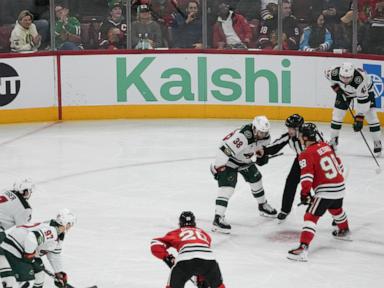
If you listen to the CEOs of major prediction platforms, they aren't running gambling dens. They'll tell you they're building the world’s most accurate "truth machines." They claim they’re providing a vital public service by aggregating collective intelligence to forecast elections, interest rates, and scientific breakthroughs. It sounds noble. It sounds intellectual. It also sounds like a massive load of marketing spin designed to keep regulators at bay while the platforms rake in billions in trading volume.
Let’s be real. If you’re putting $500 on whether a candidate wins an election or if a specific movie wins an Oscar, you’re betting. Whether you call it a "share price" or "odds," the rush is the same. The dopamine hit when the green bar goes up is identical to the one a gambler feels at the horse track. Prediction markets haven't invented a new way to find truth; they've just rebranded the oldest vice in history for a crowd that thinks they're too smart to sit at a blackjack table. Meanwhile, you can explore other stories here: Why Saudi Mediation in Lebanon is a Geopolitical Mirage.
The Big Lie of Information Discovery
The central argument for prediction markets like Polymarket or Kalshi is "price discovery." Proponents argue that because people have skin in the game, they provide more accurate forecasts than pundits or pollsters. They point to the 2024 election cycle as proof. While traditional polls showed a dead heat, the markets often leaned more decisively.
But here’s the problem. Prediction markets don't just reflect reality—they influence it. When a whale drops $45 million on a single outcome, the "price" moves. People see that movement and think, "The market knows something I don't." They follow the trend. It's a feedback loop. This isn't objective data analysis. It’s a herd mentality fueled by liquidity. To explore the bigger picture, we recommend the excellent article by Reuters.
Critics and gambling researchers often point out that these markets are prone to manipulation. If a candidate wants to look like a frontrunner, there’s nothing stopping a wealthy donor from buying up shares in their victory to create the illusion of momentum. In the world of sports betting, we call that "fixing the line." In the world of "information markets," they call it "market sentiment." It's the same thing with a more expensive haircut.
Why Your Brain Can't Tell the Difference
Neurologically, your brain doesn't care if you're predicting a Fed rate hike or the winner of the Super Bowl. The reward system is triggered by the uncertainty and the potential for a payout. Dr. Timothy Fong, a co-director of the UCLA Gambling Studies Program, has noted that the psychological mechanisms behind these trades are indistinguishable from traditional sports betting.
I’ve talked to people who lost everything on "sure things" in these markets. They didn't start at a casino. They started on Twitter, following "intellectuals" who told them that betting on geopolitics was a way to hedge against global instability. It feels like work. It feels like research. You spend six hours reading white papers and diplomatic cables, then you place your "trade." When you lose, you don't feel like a loser; you feel like an analyst who missed a variable. That’s a dangerous delusion.
The industry uses terms like "contracts" and "positions" to distance themselves from "wagers" and "bets." This linguistic gymnastics is purposeful. It targets a demographic that looks down on the person spending their paycheck on DraftKings but sees no irony in doing the exact same thing on an app with a sleek, minimalist UI and a dark mode interface.
The Regulatory Loophole Strategy
For years, the Commodity Futures Trading Commission (CFTC) has tried to keep a lid on this. They generally view these platforms as providing "event contracts" that look suspiciously like illegal gambling. The platforms fight back by hiring the best lawyers money can buy to argue that they are actually "derivatives markets."
In 2024, Kalshi won a major legal battle that allowed them to offer election betting in the United States. This opened the floodgates. The argument used in court was that these markets help people hedge against real-world risks. For example, if you own a business that would be hurt by a specific policy change, you can bet on that policy happening to offset your losses.
It sounds logical on paper. In practice, how many people are actually hedging? Almost none. The vast majority of users are speculators looking for a 10x return on a "hot tip." The "hedging" excuse is the "I read Playboy for the articles" of the 21st century. It's a legal shield, not a business reality.
Gambling Addiction in a Suite and Tie
The most sinister part of this shift is how it bypasses the stigma of gambling. If you tell your family you’re spending all night on a sports betting app, they might stage an intervention. If you tell them you’re "trading political volatility," they ask you for financial advice.
Gambling addicts who have transitioned to prediction markets often report that the "intellectual" nature of the platforms makes it harder to quit. You're not just fighting an urge; you're fighting your own ego. You tell yourself that if you just read one more report or analyze one more set of data, you’ll find the "edge."
- Accessibility: Most of these platforms are available 24/7 on your phone.
- Gamification: Leaderboards and "expert" badges turn financial ruin into a competition.
- False Expertise: Success in one trade convinces users they have a "system," leading to larger, riskier bets.
We’re seeing a rise in a new type of problem gambler. They aren't in the back of a smoky bar. They’re in mid-town offices and tech hubs. They’re using the same logic as "quant traders" to justify what is essentially a coin flip on things they have zero control over.
The Real Cost of "Truth"
If these markets were truly about truth, they wouldn't need to be incentivized with money. We have plenty of non-monetary forecasting tournaments, like those run by the Good Judgment Project. Those systems produce high-quality data without the risk of someone losing their house.
The reality is that "truth" is just the byproduct. The product is the action. The platforms need volume to survive, and volume comes from high-stakes speculation. When we prioritize the market’s "accuracy" over the social cost of creating millions of new gamblers, we’re making a grim trade-off.
The line between "investing" and "gambling" has been blurry for a long time. High-frequency trading and meme stocks already pushed the limits. But prediction markets have finally erased the line entirely. They’ve turned everything—wars, elections, deaths, and disasters—into a tradable asset.
How to Protect Yourself from the Hype
If you’re going to participate in these markets, you need to stop lying to yourself about what you’re doing. You aren't "forecasting." You aren't "contributing to the global knowledge base." You’re betting.
- Set a hard limit. Treat the money as gone the moment you deposit it. If you wouldn't spend $1,000 on a Vegas weekend, don't put $1,000 into a political "contract."
- Audit your time. If you’re spending more than an hour a day checking "prices" or reading forums about your "trades," you’re sliding into addiction territory.
- Recognize the house edge. These platforms take a cut. The "pros" you see on Twitter are often the ones who got lucky once and are now selling you the dream of a repeatable strategy.
- Check your ego. Most people lose. The "wisdom of the crowds" often turns out to be nothing more than a shared delusion that stays solvent longer than you can.
Prediction markets are here to stay. They’ve successfully lobbied their way into the mainstream. But don't let the fancy terminology fool you. Underneath the charts and the talk of "decentralized oracles," it's just another way to lose your shirt on a Sunday afternoon. If you want to know the "truth" about the future, read a book or talk to an expert. If you want to gamble, go ahead—just call it what it is.