The autumn air in Chiswick carried a grim finality when emergency services arrived at the west London address. Nicholas Brandram was dead at forty-four. What followed was not merely the unravelling of a personal tragedy, but an immediate collision between a grieving family and the institutional machinery of the Metropolitan Police. For years, the public imagination had fixated on a phantom figure dubbed the Putney Pusher. When police arrested Brandram, a multi-millionaire banker with a complex personal history, the case seemed hurtling toward a definitive courtroom reckoning. Instead, it imploded into a bitter dispute over police pressure, institutional defensiveness, and the devastating human cost of high-profile criminal inquiries conducted under the white-hot glare of modern media.
The Shadow Over Putney Bridge
To understand the weight that crushed Brandram, one must return to May 2017. A grainy closed-circuit television clip captured a morning jogger shoving a thirty-three-year-old female pedestrian directly into the path of a double-decker bus on Putney Bridge. The bus driver swerved with split-second precision, narrowly averting a catastrophic fatality. The jogger continued running, entirely indifferent to the chaos left in his wake. Fifteen minutes later, surveillance cameras caught him jogging back across the bridge, looking completely unfazed by the near-death experience he had engineered. The footage went viral across global news networks and social media platforms within hours. The public demanded an identity. The media supplied a sensational moniker. The Metropolitan Police threw vast resources at a wall of blank faces and conflicting tips.
For months, information poured in from around the globe. Detectives interviewed dozens of persons of interest, scrutinized local gym memberships, and analyzed stride patterns from forensic movement experts. Yet, concrete forensic leads stalled. By June 2018, Scotland Yard quietly shelved the inquiry, conceding that all actionable avenues had been exhausted. The case joined the grim archive of unsolved urban mysteries. The public forgot the daily updates. The victim healed in private. The anonymous jogger faded into an invisible ghost, leaving behind a persistent anxiety among London pedestrians who crossed the Thames each morning.
An Arrest That Triggered a Structural Crisis
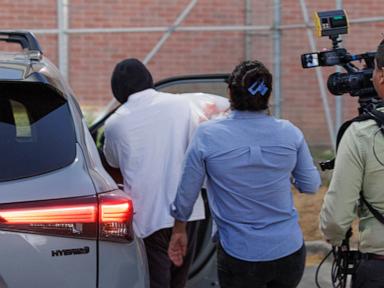
That silence shattered abruptly. In June of this year, officers moved in to arrest Brandram. They named him publicly as the focal point of the renewed investigation, slapping him with an arrest for attempted grievous bodily harm alongside drug possession charges. For a man who had previously moved in elite social circles and served as a British Army captain in multiple conflict zones, the plunge from private obscurity into the glare of international infamy was catastrophic. The stigma attached to the label of the Putney Pusher was absolute, instantly transforming his daily existence into an endurance test against public hostility and media intrusion.
Within months of his release under investigation, Brandram was gone. His family stepped forward with a fierce, uncompromising narrative. They stated unequivocally that he was entirely innocent of the Putney Bridge assault. More damningly, they accused Scotland Yard of driving him to take his own life through relentless pressure, psychological attrition, and a stubborn refusal to acknowledge exonerating evidence. According to his relatives, the police knew long before his death that the forensic alignment did not point to Brandram, yet they dragged their feet on clearing his name, leaving him trapped in a loop of anxiety, shame, and public humiliation.
The Psychological Purgatory of Release Under Investigation
The friction between the family's account and the official police stance exposes a deep structural vulnerability in how major criminal investigations operate under modern media scrutiny. When a case captures the public zeitgeist, the institutional incentive to secure a scalp multiplies exponentially. Police forces face intense pressure from the press, politicians, and taxpayers to resolve notorious cold cases that have damaged institutional credibility. When an arrest is finally made after years of public failure, the momentum behind that arrest can easily blind investigators to contradictory signals or weak evidentiary foundations.
Chief Superintendent Dan Knowles offered standard condolences, noting that the death was treated as unexpected but not suspicious. Behind the diplomatic language, however, the Independent Office for Police Conduct received a mandatory referral regarding prior police contact with Brandram. This regulatory step acknowledged that the force's actions, the necessity of the arrest, and the handling of the suspect required external scrutiny. The family argued that the arrest was an aggressive overreach designed to project competence rather than follow objective proof. They pointed to emails and digital correspondence, claiming that internal communications would reveal how close investigators were to recognizing their own error before tragedy struck.
The mechanics of being released under investigation create a distinct psychological purgatory. Unlike formal bail with strict termination dates and court-enforced oversight, release under investigation places suspects in an indefinite limbo without legal boundaries. For weeks or months, individuals live under the constant shadow of a pending charge, stripped of closure, unable to rehabilitate their reputations, and acutely aware that their professional and personal networks are quietly fracturing. For someone accustomed to military discipline and financial standing, the loss of control is total. Brandram's relatives asserted that he lived with the knowledge that the evidence did not support the state's theory, yet he was denied the administrative relief of formal exoneration.
Institutional Defensiveness Under the Media Microscope
Critics of Scotland Yard point to a recurring pattern of defensiveness when high-profile investigations face critical friction. The Metropolitan Police has weathered years of institutional scandals, cultural reviews, and demands for foundational reform. In that climate, admitting that a high-profile arrest was built on shaky foundations carries immense political cost. Acknowledging an error requires a degree of institutional humility that large police bureaucracies rarely exhibit. Consequently, statements issued after Brandram's death maintained that the investigation remained ongoing, a bureaucratic phrasing that kept the door open even as the primary suspect lay dead.
The historical trajectory of Brandram's life added complex textures to the narrative that emerged in the aftermath. Educated, wealthy, and connected to European royal lineages through his maternal family, he represented a stark contrast to the typical profile of a violent urban assailant. Yet, public sympathy was severely constrained by his prior legal troubles. Years prior to the Putney incident, he had been involved in a separate traffic collision involving a cyclist where legal accountability was minimal, a detail that internet sleuths rapidly resurrected. Social media commentary split cleanly into two irreconcilable camps. One side viewed him as a privileged figure who finally faced public reckoning; the other viewed him as a victim of a media-driven witch hunt and police overzealousness.
The Poisoned Ecosystem of Digital Sleuthing
This polarization underscores the toxic ecosystem surrounding high-profile criminal investigations in the internet era. When surveillance footage goes viral, the court of public opinion is convened instantly, operating without rules of evidence, presumption of innocence, or institutional safeguards. Detectives operating under the white-hot glare of online sleuthing face immense temptation to satisfy public hunger with an arrest, any arrest. When the suspect is a high-net-worth individual with a military background and a complicated private life, the story feeds directly into modern narratives of entitlement and justice denied.
The impending inquest will examine the precise sequence of events leading up to the evening Brandram missed a family meal and was found unresponsive by his brother-in-law. Coroners will dissect toxicology reports, medical histories, and the timeline of police interactions. Yet, an inquest cannot fully resolve the wider systemic questions hanging over the case. It will not heal the deep rift between a devastated family convinced that state overreach killed their relative, and a police force insisting that its procedures were proportionate and necessary.
Unresolved Echoes and Accountability
What remains is a sobering study in how criminal investigations can distort reality when public outrage intersects with state power. The public wanted a villain for the terrifying image of a pedestrian hurled into oncoming traffic. For a brief window, Nicholas Brandram filled that vacuum. Now, with his life extinguished and an oversight body reviewing police conduct, the true measure of accountability remains entirely unwritten. The physical files on the Putney Bridge push stay open, the original jogger remains unidentified, and the human wreckage of a botched institutional pursuit lingers in the cold London air.