The smell of roasted coffee beans can no longer hide the tension in downtown Cairo. In a small, narrow alleyway just off Talaat Harb Street, Tarek shifts a plastic chair and wipes down a wooden table for the fourth time in an hour. His cafe used to be a place of endless chatter, of loud arguments over politics, and the sweet, heavy smoke of shisha. Lately, it has grown quiet. People look at menus and order nothing but hot water with a mint leaf. The Egyptian pound has collapsed again. The price of lentils has doubled. Sugar is a luxury.
When survival becomes an equation you cannot solve, joy feels like a betrayal.
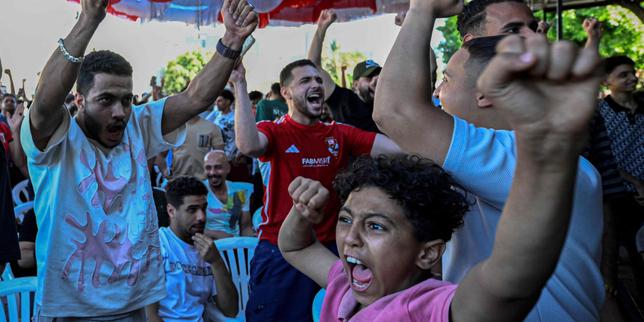
But tonight, the silence is broken. A massive, outdated flat-screen television is bolted to the crumbling brick wall of the alley. Its blue light washes over seventy faces, all packed tightly together, shoulder to shoulder. They are not looking at their bank accounts. They are not thinking about the price of bread. They are staring at a green pitch thousands of miles away in North America, where eleven men in red shirts are carrying the emotional weight of an entire republic.
Egypt is playing in the World Cup.
For outsiders, football is entertainment. It is a multi-billion-dollar industry of sponsorships, vanity projects, and tightly choreographed PR campaigns. But here, in a country suffocating under the weight of an unprecedented economic crisis, the national team—the Pharaons—is something entirely different. They are a psychological life raft.
The Currency of Hope
To understand why a ninety-minute match matters so much, you have to look at the numbers that define daily life in Cairo. Inflation has soared past thirty percent. The government has had to devalue the currency multiple times to secure international loans. For the average family, this isn't just a macroeconomic statistic; it means walking into a grocery store and realizing you can no longer afford the food you bought last week. Meat has become a memory for many. Parents lie awake wondering how they will pay for their children’s school supplies.
When a society is pushed to its absolute financial limit, collective anxiety becomes a physical presence. It sits on people's chests. It shortens tempers on the overcrowded metro.
Then, the referee blows the whistle.
Suddenly, the collective trauma of a nation is paused. When Mohamed Salah sprints down the wing, eighty million people hold their breath at the exact same second. When the ball hits the back of the net, the explosion of sound that rips through Cairo isn't just a celebration of a goal. It is a release of agony. It is a scream of defiance against a reality that has become too heavy to bear.
Consider what happens when a country loses its sense of progress. If tomorrow looks bleaker than yesterday, where do you find the energy to wake up? The Pharaons offer an answer, even if it is temporary. They represent an arena where Egypt can still win on the global stage, where the country is not viewed through the lens of debt or geopolitical instability, but through the lens of brilliance, speed, and resilience.
The Chemistry of the Crowd
In Tarek’s cafe, the social stratifications of Cairo melt away. A wealthy businessman whose Mercedes is parked three blocks over sits next to a street sweeper who hasn't earned enough to buy a new pair of shoes in two years. They share a pack of cheap cigarettes. They lean into each other. When Egypt misses a chance, they both bury their faces in their hands.
This is the invisible utility of the sport. It creates a temporary socialism of emotion.
In a world where everything has a price tag, the feeling of shared victory remains stubbornly free. You cannot buy the euphoria of an equalizer in the eighty-ninth minute. You cannot tax the pride of seeing your flag raised in front of a stadium of eighty thousand people in New York or Los Angeles.
The government knows this, of course. State media heavily promotes the team's successes, eager to channel the collective frustration of the populace into a harmless, patriotic fervor. It is an ancient tactic—bread and circuses. But right now, the bread is scarce, so the circus has to carry an impossible burden.
Yet, to dismiss the joy of the people as mere political manipulation is to misunderstand the human spirit. The people watching the screens aren't naive. They know that a victory on the pitch won't lower the price of cooking oil tomorrow morning. They know that the players are millionaires living in European villas. But for two hours, none of that matters. The illusion is more valuable than the reality.
The Morning After the Match
The game ends. Egypt wins. The alleyway erupts into a chaos of car horns, flying chairs, and tears. Strangers hug each other with a ferocity usually reserved for returning soldiers. For a few hours, the streets of Cairo belong to a victorious people, not a struggling economy.
But the lights eventually fade. The television is turned off. Tarek stacks the plastic chairs and counts the meager cash in his drawer.
Tomorrow, the market will open. The prices will still be high. The struggle will resume, exactly where it left off. But as Tarek locks the metal grate of his shop, his posture is slightly different. The heavy, defeated slouch from earlier in the evening is gone. He breathes in the cool night air, looks up at the smog-covered Cairo sky, and smiles.
They play again on Thursday. And for a nation holding its breath, Thursday is enough.