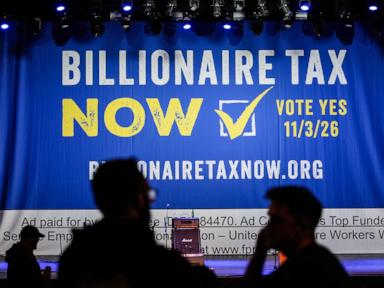
The fluorescent lights of a Sacramento union hall do not care about the sunset. Outside, the evening air carries the scent of dry grass and asphalt, the classic summer exhale of California's Central Valley. Inside, the air smells of stale coffee, cheap paper, and the distinct, heavy scent of exhaustion.
A handful of people sit around a folding table littered with printed spreadsheets. These are the strategists, the organizers, the people who spend their lives trying to move the levers of power on behalf of grocery clerks, home health aides, and classroom assistants. For months, they carried a golden ticket. It was a ballot initiative designed to do what lawmakers had avoided for a generation: force California’s jaw-dropping roster of billionaires to pay a direct, dedicated tax to fund the state’s crumbling social architecture.
Then came the phone calls.
The pushback wasn't just loud; it was surgical. It came from corporate boardrooms, from moderate Democrats terrified of losing campaign contributions, and from a coordinated blitz of public relations campaigns warning that the wealthy would simply pack their private jets and flee to Austin or Miami.
So, the organizers did what political realists always do when the ice begins to crack beneath their feet. They blinked. They reached for the red pen and began to cross out numbers, scaling back their grand vision in the hope of saving a fraction of it.
To understand how we arrived at this quiet retreat, you have to look past the top-line economic data and look at the daily friction of life in a state split cleanly in two.
Consider a hypothetical but entirely accurate composite of this divide. On one side of the ledger is Elena. She wakes up at 4:30 a.m. in a cramped two-bedroom apartment in San Jose that she shares with her sister’s family. She is a certified nursing assistant. Her days are spent lifting grown adults out of beds, changing bandages, and offering quiet dignity to people whom society has largely tucked away. Elena loves her work, but her rent devours sixty percent of her take-home pay. When her car’s alternator began to whine last month, a cold dread settled into her chest. A single mechanical failure can cascade into eviction with terrifying speed.
Now, drive forty-five minutes north into the hills of Woodside. Here, the driveways are hidden behind thick stands of redwood trees and security gates. This is where the architects of the digital age live. A single venture capital founder here might see their net worth fluctuate by ten million dollars in a single afternoon based entirely on the rumor of a new artificial intelligence chip. To them, the state budget is an abstract math problem, and taxes are an aggressive penalty on innovation.
The union’s original proposal was an attempt to build a bridge across this canyon. It was simple in its audacity: a small, fractional tax levied exclusively on the state’s ultra-wealthy, with the revenue legally locked into funding early childhood education, healthcare infrastructure, and affordable housing. It was meant to be the ultimate equalizer.
But raw ambition rarely survives the meat grinder of California politics intact.
The counter-offensive began almost before the ink on the petition signatures was dry. Business coalitions released studies predicting an apocalyptic exodus of capital. Op-ed pages hummed with warnings about the fragile nature of California’s tax base, which relies heavily on the capital gains of its wealthiest residents. The narrative was clear: press too hard, and the golden goose wouldn't just stop laying eggs; it would fly away entirely.
The pressure didn't just come from the right. It came from inside the house. Top-tier state leaders, conscious of a looming budget deficit and desperate to keep the tech sector happy, signaled that they would not support a measure that risked destabilizing the economy.
This is the vulnerability at the heart of the progressive movement in California. The state’s financial health is built on an incredibly volatile foundation. When Silicon Valley booms, the state treasury overflows with cash, leading to grand promises and expansive new programs. But when the tech sector cools, the floor drops out. Organizers know this. They live in fear of the next downturn, which is precisely why they wanted a permanent, structural tax locked into the constitution.
Yet, face-to-face with an opposition willing to spend fifty million dollars to defeat them at the ballot box, the union leadership chose compromise over a high-stakes gamble.
The revised proposal is a shadow of its former self. The thresholds have been shifted upward, the tax rates dialed down, and the scope of the funding narrowed. It is an acknowledgment that in politics, a partial victory that actually passes is worth more than a righteous defeat.
But out on the pavement, far away from the Sacramento Capitol building, that logic feels thin.
For people like Elena, a scaled-back proposal means the promised relief shifts further into the future. It means the local community clinic will continue to have a three-week waitlist. It means her nephew's school will keep using textbooks from a decade ago. The macro-economic arguments about capital flight and market stability are cold comfort when you are counting quarters at the laundromat.
The tragedy of the compromise isn't just the lost revenue. It is the cynicism it breeds. When the largest labor organizations in the wealthiest state in the nation feel compelled to retreat before a vote is even cast, it sends a quiet message to the working class: the boundaries of what is possible are still drawn by those who hold the checkbooks.
The strategists in the union hall will tell you this is how progress is made. You take a step forward, you take a half-step back, and you dig in for the next fight. They will polish the new, smaller proposal, write the talking points, and launch the campaign with as much enthusiasm as they can muster.
But as the night deepens in Sacramento, the spreadsheets are packed away into briefcases. The folding tables are collapsed and stacked against the wall. The lights go out, one by one, leaving the room in darkness, while out on the freeways, the late-shift workers begin their long drives home under the neon glow of a state that promises everything and surrenders nothing easily.