The physical safety of the United States Supreme Court is no longer a localized law enforcement task; it has transformed into a complex risk-mitigation operation with an escalating cost structure.
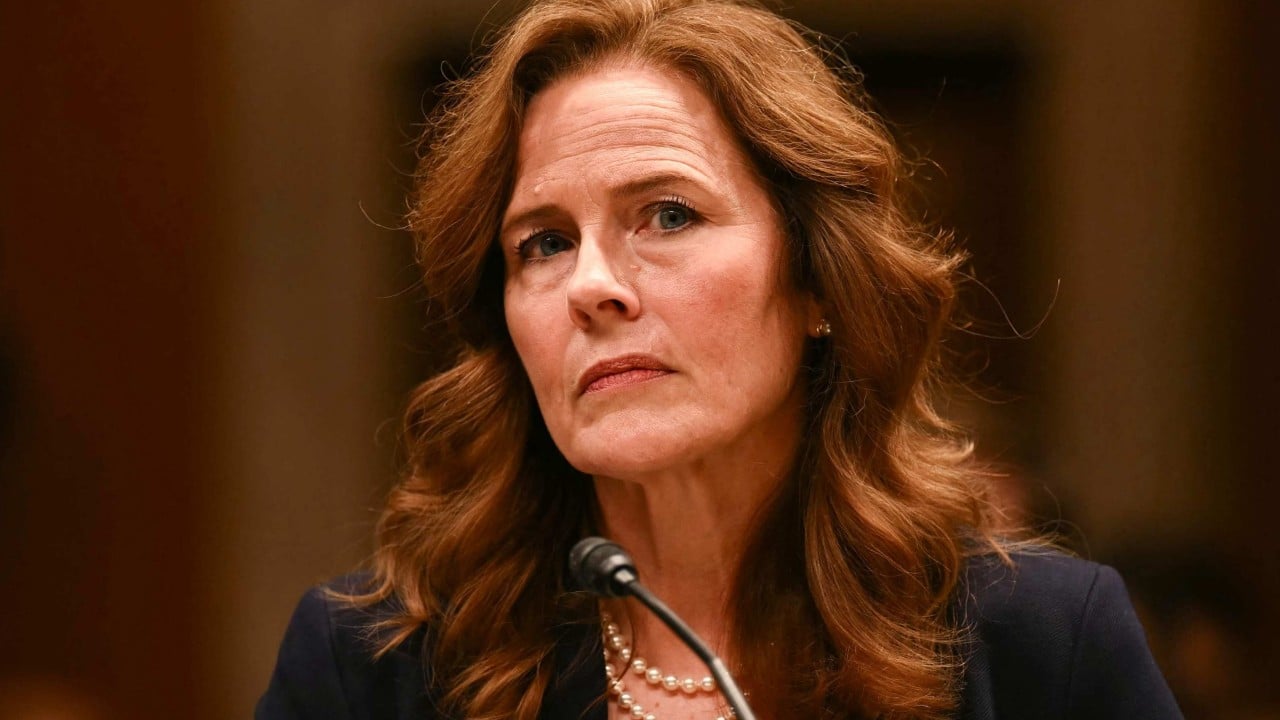
In rare congressional testimony, Justices Elena Kagan and Amy Coney Barrett presented a fiscal year budget request of $228 million—representing a 10% year-over-year expansion driven almost entirely by security overhead. This fiscal demand is a direct response to an exponential rise in threats: the Supreme Court Police projects a 38% increase in threats this year, compound-building upon a 25% surge the previous year.
To evaluate this shift, we must look past the emotional testimony of bulletproof vests and domestic swatting incidents to analyze the underlying structural drivers, the operational bottlenecks of judicial protection, and the systemic feedback loops between judicial decisions and physical exposure.
The Economics of Judicial Risk: Supply, Demand, and Threat Propagation
The rising cost of protecting the judiciary is not an isolated phenomenon. It is the direct output of a shifting risk environment. In security analytics, threat propagation against high-profile public figures can be modeled as a function of political polarization, information velocity, and the democratization of harassment tools.
                  [Institutional Rulings]
                            │
                            ▼
               [High-Velocity Media Loop]
                            │
                            ▼
              [Targeted Digital Mobilization]
               /                             \
              ▼                               ▼
    [Asymmetric Harassment]          [Symmetric Swatting & Hostility]
    (Low-cost, highly scalable)       (Resource-intensive mitigation)
The threat landscape has evolved through three distinct operational shifts:
- The Asymmetric Cost of Threat Generation: Creating a credible threat or executing an automated "swatting" attack requires near-zero marginal cost for a hostile actor. Conversely, defending against these threats demands highly resource-intensive physical infrastructure. This asymmetry creates a structural deficit for security agencies.
- The Velocity of Information Dissemination: High-velocity media coverage and instant digital communication compress the time window between a judicial ruling and targeted mobilization. The leak of the Dobbs draft in 2022 served as a historical inflection point, demonstrating how premature exposure of court deliberations can trigger immediate, persistent physical security threats.
- Decentralized Post-Ruling Retaliation: Threats are rarely organized by state actors or centralized groups. They are primarily driven by decentralized "lone actors" motivated by ideological grievances. This makes predictive intelligence gathering exceptionally difficult, forcing protective details to rely on blanket, perimeter-based defenses rather than targeted threat interdiction.
Operational Resource Allocation: The $228 Million Line Item
The Court’s $228 million budget request reveals where security planners are experiencing the greatest operational strain. Out of the requested $20 million increase over the previous fiscal year, $14.6 million is earmarked for personal protection, with an additional $2 million allocated to fund an off-site residential security post.
An analysis of this resource allocation highlights the primary bottlenecks in the current protective model.
The Personnel Scaling Problem
The core of the personal protection request is the addition of six personal protection agents per justice. Currently, justices are assigned between four and eight security officers.
A standard 24/7 protection detail for a high-threat individual requires a rotational shift structure to prevent personnel fatigue. This is a primary driver of the "burnout and exhaustion" cited during congressional testimony.
To maintain a continuous, vigilant presence of even three agents on-site at all times, a total pool of 12 to 15 agents is required per target to account for shifts, training, leave, and transit. Adding six agents per justice is a minimal baseline to transition details from a reactive footing to a sustainable, proactive rotation.
Residential Vulnerability and the Perimeter Challenge
Protecting public figures at their private residences is significantly more complex than securing a centralized, fortified facility like the Supreme Court building. Private residences lack standard access control, ballistic glass, and integrated early-warning systems.
The allocation of $2 million for an off-site residential security post represents a shift toward a decentralized command structure. Rather than relying entirely on municipal police or slow-to-mobilize federal marshals, this specialized hub is designed to coordinate rapid-response protocols and manage real-time perimeter monitoring.
The operational value of this setup was demonstrated during the swatting incident at Justice Barrett’s home. Because Supreme Court police were already stationed outside the residence, they intercepted arriving local police officers, defusing a potentially lethal tactical entry.
This incident illustrates that physical presence is no longer just about stopping an assassin; it is about managing the chaotic intersection of digital hoaxes and local law enforcement responses.
The Strategic Trade-off: Security vs. Judicial Independence
Expanding the security apparatus around the Supreme Court creates a deep institutional tension. The judiciary's legitimacy relies on its perceived role as an accessible, transparent branch of a democratic government.
As the physical distance between the public and the justices grows, the court faces distinct strategic challenges:
- The Barrier to Accountability: While physical protection is non-negotiable, the mechanisms used to secure the court can inadvertently shield it from healthy public accountability. A court that operates behind permanent security perimeters and rarely interacts with coordinate branches risks deepening the public perception of an isolated, insular institution.
- The Legislative Leverage Point: Because the Supreme Court relies on Congress to fund its security, budget hearings inevitably become forums for legislative oversight. During this funding cycle, lawmakers tied security concerns to broader debates over the court's voluntary ethics code and its reliance on the emergency "shadow docket". This creates an operational vulnerability where the physical safety of the bench is tied to political negotiations over judicial behavior.
- The Threat to Inter-Branch Comity: When political figures use inflammatory rhetoric to attack judicial rulings, they actively drive up the cost of judicial protection. As Justice Kagan noted, personal attacks from political actors across the spectrum create real physical risks. This dynamic sets up a dangerous feedback loop where political strategy directly compromises the physical safety of the judiciary.
Tactical Implementation: Next Steps for Judicial Protection
To address the current threat landscape without turning the Supreme Court into an entirely closed institution, the security strategy must evolve past simply hiring more bodyguards. A modern, data-driven protective posture requires a multi-layered approach:
- Deploy Decentralized Threat Intelligence: The Supreme Court Police must build dedicated digital threat-monitoring capabilities to detect and evaluate open-source, decentralized harassment campaigns before they escalate to physical action.
- Establish Standardized Swatting Mitigation Protocols: Federal authorities must collaborate with local law enforcement agencies to registry-tag the residences of high-risk federal officials. This ensures that any emergency calls targeting these addresses undergo rigorous verification before tactical units are deployed.
- Institutionalize Operational Resilience Funding: Security appropriations should be decoupled from annual political budget debates. Establishing a baseline, non-partisan protective fund ensures that the physical safety of the judiciary is never used as leverage for ideological court reforms.