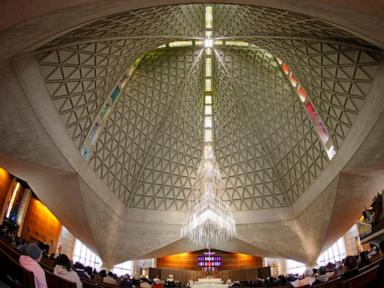
The Roman Catholic Archdiocese of San Francisco has agreed to a historic $395 million settlement to resolve hundreds of childhood sexual abuse lawsuits. This massive financial payout represents one of the largest single-diocese settlements in U.S. history, signaling a profound reckoning for the regional church infrastructure. By filing for Chapter 11 bankruptcy protection in August 2023, the archdiocese attempted to manage an overwhelming wave of legal claims brought forward under California’s Assembly Bill 218, which temporarily opened a window for victims to file older abuse claims. The resulting agreement aims to compensate more than 500 survivors, but the financial fallout will reshape the Catholic footprint in the Bay Area for decades to come.
The Financial Architecture of the Settlement
Securing a fund of nearly $400 million requires an aggressive liquidation of church assets. The archdiocese cannot simply write a check from its weekly parish collections. Instead, the funding mechanism relies heavily on a combination of insurance policy payouts, the sale of non-parish property, and contributions from various Catholic entities operating within the region.
Parish property ownership remains a complex legal shield in these proceedings. Under canon law and certain corporate structures, individual parish churches and school buildings are often held as distinct legal entities separate from the central archdiocese. This structural separation protects local houses of worship from being directly seized or sold off by bankruptcy courts. However, the central administration owns significant real estate, undeveloped land, and administrative facilities that are firmly on the auction block.
The reliance on insurance carriers introduces another layer of prolonged litigation. Insurance companies frequently dispute decades-old policies, arguing over the definition of occurrence limits and whether the archdiocese’s past administrative handling of abuse allegations voided the coverage. The San Francisco settlement hinges on complex negotiations with these carriers, meaning the actual distribution of funds to survivors will roll out in structured phases rather than a single lump sum.
The Chapter 11 Strategy and Its Limits
Bankruptcy is often viewed as a mechanism of corporate survival rather than accountability. When Archbishop Salvatore Cordileone announced the Chapter 11 filing, the official narrative focused on ensuring an equitable distribution of available funds among all claimants. Without the bankruptcy stay, the first few lawsuits to reach trial could have theoretically exhausted the church's resources, leaving subsequent victims with nothing.
The court protection halts all individual civil lawsuits, forcing survivors into a single collective bargaining forum. While this accelerates the timeline to a global financial resolution, it denies survivors their day in open court. The public registry of trials, cross-examinations, and the forced unsealing of internal personnel files are replaced by confidential mediation sessions. For many plaintiffs, this feels like a secondary systemic suppression, trading public truth-telling for a mediated financial conclusion.
Furthermore, bankruptcy reorganization allows the church to maintain its core operational continuity. The central administration emerges leaner, stripped of surplus real estate, but the underlying hierarchical power structure remains intact. The process effectively sets a hard cap on liability, allowing the institution to draw a legal line under its past failures and chart a path toward operational stabilization.
The Human Toll and Institutional Scars
No amount of financial compensation can erase the trauma documented in the files of the San Francisco courts. The survivors, many now in their fifties, sixties, and seventies, have carried the psychological burden of childhood trauma for decades. The opening of the legislative window allowed these individuals to step forward, but the legal process itself forces a grueling public re-examination of their deepest wounds.
The impact ripples deep into the local Catholic community. Everyday parishioners face a crisis of faith, not necessarily in their theology, but in the institutional leadership that managed the crisis. Weekly attendance and tithing have seen steady declines across metropolitan areas facing similar scandals. Regular churchgoers find themselves caught between their commitment to local parish life and the stark reality that their historical financial contributions helped sustain an organization that shielded abusers.
The institutional scars extend to ministries, social services, and educational programs. When a diocese sheds hundreds of millions of dollars, the peripheral budgets suffer. Catholic charities, food banks, and subsidized tuition programs at parochial schools face inevitable tightening. The institutional survival strategy prioritizes legal settlements and administrative preservation, often at the direct expense of the community-facing ministries that define the church's public mission.
The Regional Trend and National Precedent
San Francisco is not an isolated case. It follows a distinct pattern across the state of California and the wider United States. Neighboring dioceses, including Oakland and Santa Rosa, also sought bankruptcy protection facing similar surges of lawsuits under the state's revived statute of limitations.
Recent Major California Diocesan Bankruptcies
- San Diego: Filed for Chapter 11 after facing hundreds of millions in potential liabilities.
- Oakland: Entered bankruptcy restructuring to address over 300 abuse lawsuits.
- Sacramento: Announced intent to file as claims overwhelmed operational revenues.
This cascade of insolvencies illustrates the systemic vulnerability of the traditional diocesan model when subjected to modern legal scrutiny. For decades, the church operated under a presumption of insularity, handling internal misconduct through confidential reassignments and spiritual counseling. The modern legal landscape treats the diocese like any other corporate entity responsible for the systemic negligence of its supervisors.
The long-term consequence is a permanent contraction of the Catholic infrastructure in major urban centers. As real estate assets are liquidated to fund settlements, the physical presence of the church shrinks. Consolidated parishes, closed schools, and vacant archdiocesan buildings will serve as visible, physical reminders of this era of institutional reckoning. The San Francisco Archdiocese will survive this settlement, but it will operate as a fundamentally diminished institution, defined more by its financial recovery efforts than its historical influence.