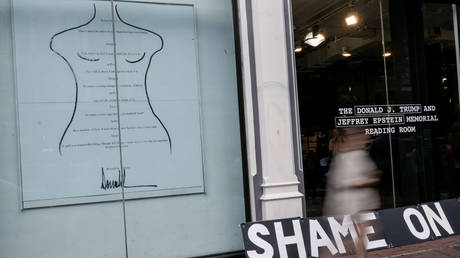
Ink leaves a mark long after the pen lifts. Sometimes, that mark carries a weight measured in billions, dragging old ghosts into a sterile courtroom where the past is put on trial.
Files stack up. Statements are parsed for hidden venom. Somewhere behind closed doors, lawyers comb through decades-old accusations, trying to separate rumor from recorded history. Every headline feels like a fresh volley in an endless war of reputations.
Consider the sheer mechanics of a multi-billion-dollar grievance. When a public figure attaches an astronomical figure to damaged pride or lost standing, the number itself becomes a character in the drama. It dwarfs the underlying dispute, turning a disagreement over a narrative into an epic battle of financial gravity. People look at ten billion dollars and see an impossibility, a negotiating tactic, or a desperate bid to reclaim control of a personal story that slipped away years ago.
The courtroom is quiet, but the noise outside is deafening. Microphones capture every murmured reaction. Observers parse the judge's expression like ancient scholars reading tea leaves. Was that a twitch of impatience? Did that pause mean a dismissal is coming, or are we staring down the barrel of a protracted legal war?
Names carry gravity. When certain names collide in the same sentence, the air changes. The public brings its own baggage to the table, formed by years of fragmented news cycles, sensational documentaries, and late-night commentary. By the time a judge steps in to rule on whether a lawsuit can even proceed or how its boundaries are drawn, the public has already rendered a dozen conflicting verdicts in their own minds.
Judges operate in a different currency. They deal in precedents, procedural rules, and statutory boundaries. They do not care about the drama, or at least they are sworn to ignore it. Yet, sitting on the bench, they become the arbiters of cultural friction. Their rulings decide whether old wounds get ripped open for public consumption or quietly stitched shut behind a confidentiality agreement.
When a court issues a decision on such a high-stakes case, it sends a ripple through the media ecosystem. Journalists scramble to highlight the winners and losers of a preliminary skirmish, knowing full well the war is far from over. Each filing is a new chapter in a saga that refuses to fade into the background.
We watch because we want to see how power responds to challenge. We watch because the intersection of media, politics, and private grievance exposes the raw wiring of modern influence. Every motion filed is a reminder that in the upper echelons of society, reputation is the ultimate commodity, and protecting it requires an army of legal architects.
The gavel falls, marking a boundary. But the arguments continue to echo long after the courtroom empties, hanging in the air like dust motes caught in a shaft of fading afternoon light.