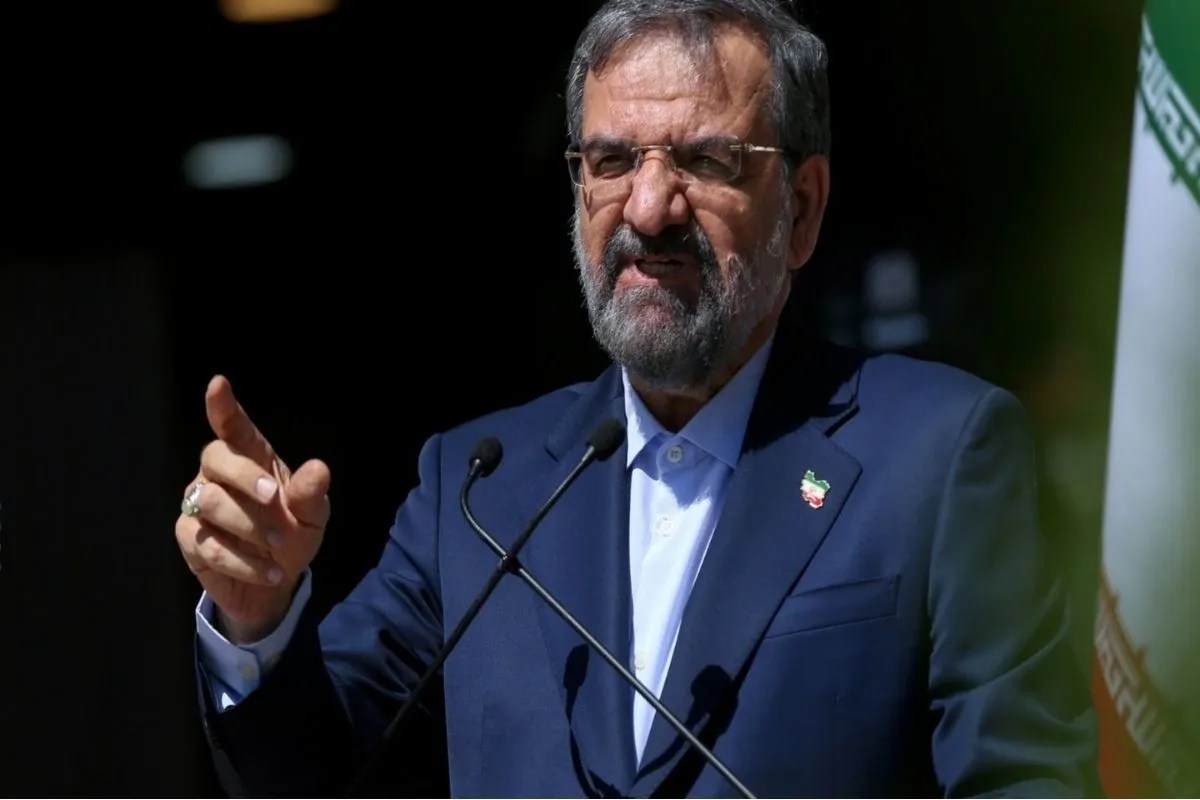
Headline warnings about "paying the price" compress complex strategic signaling into a single threat. When a security official such as Mohsen Rezaei frames retaliation against the United States in stark terms, basic news summaries often stop at quoting the warning and noting readiness for conflict or diplomacy. A rigorous strategic breakdown looks past the headline to map how cost is constructed, where claims diverge from verified facts, and what causal mechanisms govern escalation.
Deconstructing the Competitor Framing
Standard coverage of a warning like "कार्रवाई की कीमत चुकानी पड़ेगी" ("The price of action will have to be paid") typically follows a predictable arc: state the official's warning, repeat assertions of military readiness or diplomatic conditions, and note tension with Washington. That structure treats deterrence as a simple promise of punishment.
In practice, strategic warnings operate on several distinct levels at once. Treating them as a single monolithic threat obscures important differences between domestic messaging, regional bargaining, and operational feasibility. A stronger analysis separates the rhetoric into analytical components rather than repeating slogans at face value.
The Cost Function of Escalation
In security strategy, the "price" of military action is not a single number; it is a multi-variable cost function borne across several theaters and domains. When Iranian officials warn of consequences, those costs map onto distinct structural channels rather than a single linear punch.
- Geographic Expansion of Targets: Retaliation may be framed as moving beyond immediate regional bases toward more distant installations if aircraft or assets launch strikes from elsewhere. Extending the threat radius increases political friction with host nations and raises air- and missile-defense demands across wider theaters.
- Maritime and Trade Chokepoints: Pressure around vital waterways such as the Strait of Hormuz imposes global economic friction. Shipping delays, insurance spikes, and energy market volatility create indirect costs for third parties that can pressure Washington diplomatically even without direct strikes on US soil.
- Diplomatic and Negotiating Leverage: Threats of renewed or widened conflict are often paired with preconditions for talks, ceasefire terms, or sanctions relief. Raising expected escalation costs is an attempt to shift bargaining power before concessions are made.
- Domestic and Economic Blowback: Every external escalation interacts with internal constraints, including inflation, currency pressure, supply bottlenecks, and domestic political strain. A cost function that ignores domestic fragility overstates sustainability.
Facts Versus Hypotheses in Threat Assessment
Separating verified facts from unverified claims and analytical hypotheses is essential when evaluating wartime or high-tension rhetoric. Officials routinely use public statements to shape perceptions, project strength, or unsettle adversaries, which means statements themselves are evidence of intent or messaging—not automatic proof of capability.
Established Facts and Observable Actions: Senior figures such as Mohsen Rezaei have publicly warned of severe consequences for attacks against Iran and linked de-escalation or maritime access to specific conditions. Reporting around the conflict has also documented precautionary force movements, heightened alerts, and intense friction involving regional bases, shipping lanes, and diplomatic standoffs.
Unverified Claims and Counter-Assessments: Public boasts about electronic warfare captures, downed systems, or covert reach frequently lack independent verification and are often contested or downplayed by rival officials and intelligence assessments. Analysts should treat uncorroborated capability claims as hypotheses to test against observable behavior rather than settled facts.
Educated Hypotheses on Escalation Dynamics: A plausible hypothesis is that widening stated target sets is aimed at deterring coalition participation or raising political hesitation among US partners. Another is that tying chokepoint pressure to explicit conditions is designed to extract diplomatic leverage without triggering an all-out war of attrition that the state cannot easily absorb. Both remain conditional on adversary decisions and operational realities.
Cause-and-Effect Chains Standard Coverage Misses
Surface-level reporting often treats threat and response as a simple stimulus-and-reaction pair. In reality, second- and third-order feedback loops often drive the trajectory of a crisis more than the initial warning itself.
The first causal chain runs through alliance and host-nation politics. When a warning implies that bases in third countries could become part of a conflict equation, host governments face immediate domestic and security calculations. Even if long-range strike capability against distant bases is debated or constrained, the mere prospect of risk can complicate basing permissions, force posture, or political alignment.
The second causal chain involves miscalculation and signaling distortion. Public rhetoric designed for domestic audiences or hardline factions can lock leaders into rigid positions. If both sides interpret caution as weakness or routine posture shifts as imminent attack, the probability of unintended escalation rises even when neither side wants a wider war.
The third causal chain centers on economic feedback loops. Disrupting trade or prolonging confrontation imposes immediate costs on regional neighbors and global markets while straining the sanctioned or pressured economy at home. Over time, economic exhaustion can narrow strategic options rather than expand them.
Limitations of Threat-Based Leverage
Relying on escalation warnings as a primary instrument of statecraft carries built-in limits. Credibility depends on demonstrated capability and perceived resolve, yet overstating reach risks eroding credibility if subsequent actions fall short of the threat.
There is also an asymmetry problem. Adversaries with superior conventional power, intelligence reach, or escalation dominance can respond to broad threats with counter-pressure that inflicts heavy structural damage. Threats alone cannot substitute for economic resilience, air defense depth, or durable diplomatic off-ramps.
Strategic Play for Decision-Makers
Track observable posture changes—such as force movements, air defense deployments, maritime traffic patterns, and formal diplomatic text—ahead of rhetorical escalations. Anchor any risk assessment or contingency plan to verified capabilities and concrete bargaining demands rather than headline warnings alone, and pair deterrence measures with clear, verifiable de-escalation thresholds so neither side misreads a warning as an irreversible commitment to total war.