Cold coffee sits in a paper cup on a folding table in a basement room where the radiators clank like chains. Outside, sirens wail three blocks away, then fade into the dull thrum of generators. Inside, two exhausted aides stare at a map covered in red grease-pencil marks that no longer match the morning reports from the front.
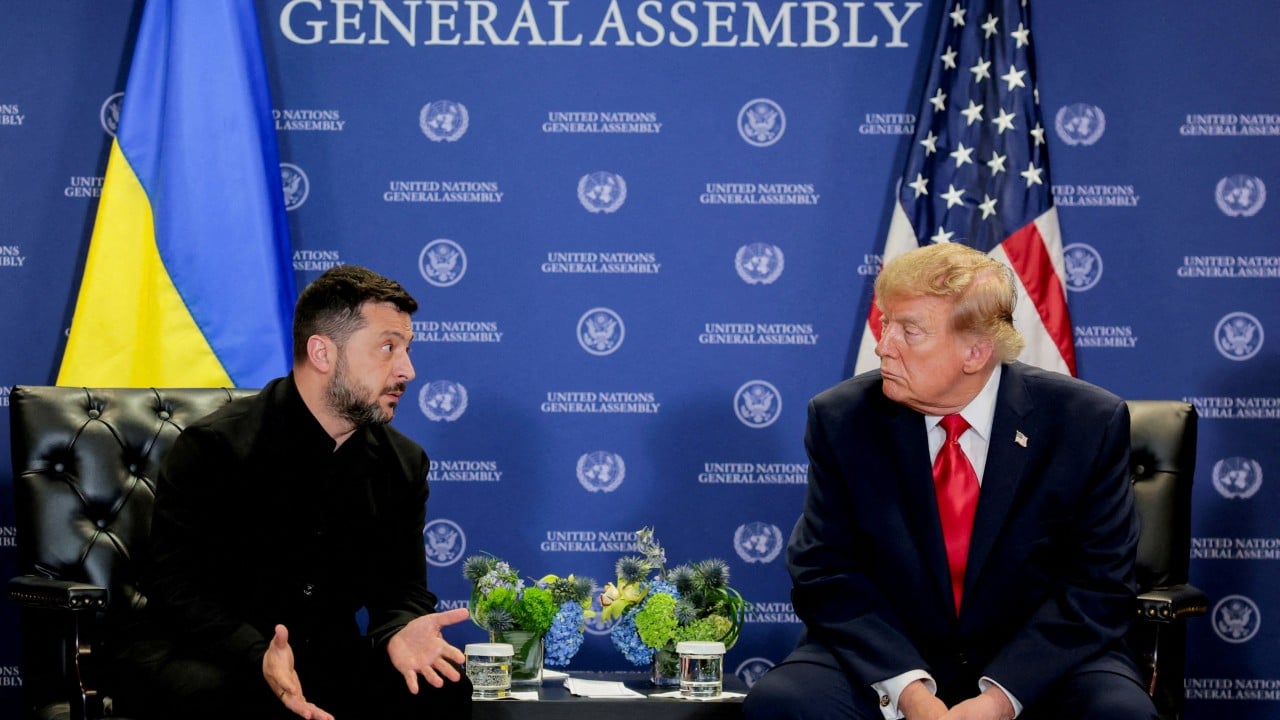
This is a hypothetical scene, though its ingredients are real enough to taste like ash. When Donald Trump suggests that Volodymyr Zelenskyy should hand off peace negotiations to "somebody else," the remark sounds like a brisk business note passed across a mahogany desk. Delegate the unpleasant meeting. Bring in a fresh face. Get a deal done. Read more on a related subject: this related article.
Easy to say from a podium thousands of miles from the trenches.
I have stood in rooms that smelled of wet wool and diesel while grown men argued over a crossroads whose name half of them mispronounced. You learn quickly that words spoken in capitals carry a different weight when they land near a school gymnasium turned into a shelter. Diplomacy is not a spreadsheet exercise where you swap out a project manager because the client finds him abrasive. It is a ledger written in graves, burned wheat, and fractured families. Further journalism by The New York Times delves into comparable perspectives on this issue.
Why a Stand-In Changes the Math
Consider what happens next when a leader steps back from the table and sends a surrogate in his place.
On paper, a proxy negotiator can look efficient. A seasoned envoy carries no personal grudges, no daily footage of shelled apartment blocks, no immediate memory of burying a colleague who was laughing over borscht two days earlier. A detached mediator can talk about "territorial adjustments" and "security guarantees" in the smooth, clinical cadence of international law.
Yet war is not merely a border dispute waiting for a clever surveyor.
Think of negotiation as a metaphor for surgery on a living limb. A skilled surgeon who has never met the patient can still cut cleanly, tie off vessels, and set bone. Sometimes detachment helps keep the hand steady. Still, the patient is the one who wakes up to the pain, the one whose body must survive the anesthesia and the infection afterward. If the surgeon and the patient do not share the same understanding of what is worth saving—and what loss would mean living half-dead—the cleanest incision can still leave the person ruined.
Zelenskyy sits at the center of a conflict where every concession touches a nerve. For him, the war is not an abstract geopolitical chess match between Washington, Moscow, and Brussels. It is his country's sovereignty, his citizens' survival, and his own political legitimacy—a legitimacy forged under fire, fragile as glass, and fiercely contested by critics both at home and abroad.
When Trump argues that Zelenskyy ought to let someone else handle the bargaining, he is tapping into a real frustration felt by many weary observers. Negotiations between parties steeped in mutual hatred often stall before they begin. Leaders who have staked their entire public identity on total resistance sometimes find it nearly impossible to utter the compromises required to stop the shooting.
I have watched talks collapse not because the maps were unreadable, but because neither man in the room could bear the humiliation of appearing weak in front of his own people. Pride is heavy. It sits on the chest like a sandbag.
Still, sending a stand-in carries a trap that seasoned diplomats know well. If the person across the table believes the negotiator lacks full authority—or worse, lacks the backing of the president who actually commands the troops and signs the decree—the talks can turn into theater. Worse still, a proxy can become a convenient scapegoat. If a deal fails, the envoy takes the blame. If a deal looks painful at home, the leader can claim his hands were tied.
The Ghosts in the Room
To understand why this suggestion sparks such fierce argument, picture Olena, a hypothetical schoolteacher from Kharkiv who now lives in a cramped flat in Lviv with her elderly mother and her eight-year-old son.
Olena does not read foreign policy white papers before bed. She listens to air-raid alerts on her phone and checks whether the power grid will hold through the night. When she hears talk of peace negotiations, her first instinct is relief—followed immediately by dread. Peace for whom? Peace on what terms?
For people like Olena, the negotiator is not just a diplomatic technician. He is a moral shield. If Zelenskyy steps aside and appoints another representative, millions of Ukrainians will ask a sharp, piercing question: Did our president step back because he sees a path to survival we cannot see, or because the pressure from outside became too heavy to bear?
Trust, once cracked in wartime, does not mend easily.
And what of Moscow? Russian officials have spent years casting Zelenskyy as an illegitimate or unreliable counterpart, while simultaneously testing every sign of division between Kyiv and its Western backers. A shift in who sits across from Russian negotiators would be dissected line by line in the Kremlin. Would Moscow see a fresh opening to extract deeper concessions? Would it treat a surrogate as a sign of Ukrainian exhaustion? Or would a new face simply be brushed aside as a messenger with no real power to bind the nation?
History offers no neat blueprint here, only cautionary echoes.
During the Vietnam peace talks in Paris in the late 1960s and early 1970s, arguments over who had a seat at the table, who spoke for whom, and what constituted genuine authority dragged on for months before substantive bargaining even hit its stride. Form and substance entangled each other at every turn. In the Balkans in the 1990s, progress only came when key figures with real leverage and real accountability were forced to confront the cost of continuing bloodshed—and even then, the agreements left scars that still ache decades later.
Negotiation works best when the person at the table has both mandate and realism. Mandate means the people back home believe you are fighting for their core survival. Realism means recognizing the hard limits of force, aid, and time.
What People Actually Ask When the Headlines Hit
Whenever a figure like Trump floats a provocative idea about ending the war, the public reaction splits fast. Some hear common sense. Others hear betrayal. Behind the noise sit a few straightforward questions that rarely get a calm answer.
Could a different negotiator actually get a faster deal? Possibly, in theory. A fresh envoy might lower the emotional temperature in the room and test formulas that a wartime president cannot publicly float without risking mutiny or collapse at home. Yet speed without durability is an illusion. A ceasefire signed by someone without full domestic buy-in can unravel the moment winter sets in or a border incident flares.
Does suggesting "somebody else" mean abandoning Ukraine? Not necessarily in the speaker's mind, though it often sounds that way to Ukrainians. Critics of endless war argue that fresh leadership at the negotiating table is a pragmatic way to break a bloody stalemate. Supporters of Kyiv counter that sidelining the elected wartime leader weakens Ukraine's hand before a single concession is even offered.
Why does who negotiates matter so much if the guns are still firing? Because the terms of a settlement decide whether a nation lives free, lives in chains, or merely pauses between rounds of slaughter. The person speaking for Kyiv shapes what is framed as a tragedy versus what is framed as a betrayal.
I admit something freely here: watching a grinding war stretch on year after year makes even hardened analysts grasp for any lever that might pry the door open. It is scary to see no clean exit. It is confusing when allies speak in contradictory tones, when budgets tighten, and when every diplomatic rumor feels like a trap. Doubt is honest. Pretending certainty in the middle of a war is not.
The Weight of Standing There
Imagine sitting in that basement room again. The cold coffee is gone. Someone has brought a thermos of bitter black tea.
If Zelenskyy stays at the table, he carries the full weight of every name on every memorial wall in the country. Every compromise he considers will be judged against the blood already spilled. That burden can paralyze a leader—or steel him to strike a hard bargain that only a leader with full moral authority can sell to a grieving public.
If Zelenskyy steps aside and names someone else, that envoy steps into a minefield. Without absolute clarity from Kyiv and firm backing from key allies, a stand-in risks becoming a figurehead negotiating over other people's lives while the real decisions happen behind closed doors.
Trump's remark cuts straight to a raw nerve because it forces a choice between two uncomfortable truths. Keeping the same bruised, deeply invested leader at the helm risks prolonged deadlock. Bringing in someone new risks diluting accountability at the exact moment stakes are highest.
Neither path is clean. Both carry a price tag that will be paid long after the cameras pack up and the headlines move on to the next crisis.
Outside the basement window, a truck rumbles past through the dark, headlights cutting twin pale beams across wet pavement, carrying supplies toward a front line that neither speeches nor slogans can move by a single meter.