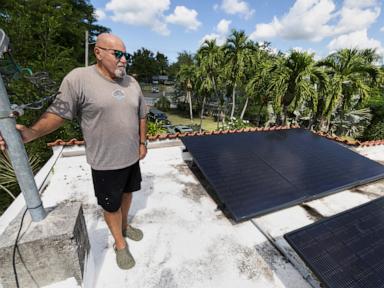
Waiting on a centralized utility company to fix a crumbling electrical grid is a losing game. Anyone who has spent time in Puerto Rico over the last decade knows this reality intimately. You buy groceries, the voltage drops, and suddenly you're throwing away spoiled milk while listening to the hum of a neighbor's diesel generator.
After Hurricane Maria devastated the island in 2017, millions were left in the dark for months. Even years later, following the privatization of transmission and distribution under LUMA Energy and generation under Genera PR, blackouts remained a weekly headache. Yet something remarkable happened while politicians argued over federal recovery funds and aging fossil fuel plants. Puerto Ricans stopped waiting for the main grid to save them and built their own distributed energy safety net. If you liked this article, you might want to check out: this related article.
Today, tens of thousands of homes and businesses across the archipelago keep their refrigerators running and air conditioners humming through rooftop solar panels paired with lithium-ion battery storage, virtual power plants, and community microgrids. It's one of the fastest grassroots energy transitions happening anywhere on earth, born out of sheer survival rather than environmental idealism.
Why the Traditional Grid Keeps Failing
To understand why residential batteries took off so quickly in Puerto Rico, you have to look at what's wrong with the legacy system. For decades, the Puerto Rico Electric Power Authority (PREPA) operated a centralized model built around massive, aging oil- and gas-fired power plants located mostly on the southern coast. For another angle on this development, refer to the latest update from The Washington Post.
Electricity had to travel across high-voltage transmission lines cutting straight over the rugged central mountain range to reach the densely populated San Juan metro area in the north. Every tropical storm, falling tree branch, or equipment failure along those mountain corridors threatened to sever power to hundreds of thousands of people at once.
Maintenance was deferred for years as PREPA sank into more than $9 billion in debt, culminating in a historic bankruptcy filing in 2017. When you combine fragile transmission lines with some of the highest electricity rates in the United States—often exceeding 25 to 30 cents per kilowatt-hour—the math changes completely. People weren't buying solar panels to feel good about carbon emissions. They bought them because paying a monthly loan on a solar-plus-battery system cost roughly the same as their unpredictable electric bill, except the solar system actually worked when storms hit.
The Rooftop Solar and Battery Boom
Walk through neighborhoods in Bayamón, Ponce, or Mayagüez today, and you'll spot white battery enclosures bolted onto exterior walls everywhere. According to data from the U.S. Energy Information Administration (EIA) and local industry trackers, Puerto Rico has installed well over 100,000 distributed solar systems, with the overwhelming majority paired with battery storage.
That battery pairing is what separates Puerto Rico from mainland markets like California or Texas. On the mainland, homeowners historically installed grid-tied solar panels without batteries to take advantage of net metering credits. If the utility grid went down, those solar panels automatically shut off to protect utility lineworkers from back-fed electricity.
In Puerto Rico, solar without a battery is practically useless. Because grid reliability is so poor, more than 90 percent of residential solar installations on the island include energy storage. When LUMA's grid trips offline, an automatic transfer switch isolates the home within milliseconds. The lights barely flicker.
How Virtual Power Plants Changed the Equation
Installing batteries on individual homes solves blackouts for the people who can afford the upfront cost or qualify for financing. The bigger breakthrough came when energy companies figured out how to network those individual home batteries together to stabilize the entire grid.
This is called a Virtual Power Plant (VPP). Instead of building a massive new fossil fuel power plant that takes years to permit and construct, utilities can pay thousands of homeowners to let them draw small amounts of stored electricity from their batteries during peak evening demand or sudden generator trips.
Sunrun, one of the largest residential solar installers on the island, launched Puerto Rico's first major VPP program. By aggregating tens of thousands of home batteries, the network can dispatch megawatts of clean power back onto the grid during critical stress events. When one of the island's big legacy thermal plants suddenly trips offline—a frequent occurrence—these networked home batteries inject power almost instantaneously, preventing cascading blackouts across entire municipalities.
Homeowners enrolled in these programs get compensated for sharing their stored energy, while retaining a guaranteed reserve in their battery in case an outage hits their specific neighborhood. Everybody wins except the companies selling imported bunker fuel.
Federal Programs Bridging the Affordability Gap
For years, the sharpest criticism of Puerto Rico's solar boom was inequality. Wealthier households and middle-class families with good credit could finance a $25,000 solar-and-battery setup, while low-income families were stuck with skyrocketing utility rates and dangerous, noisy gas generators.
Carbon monoxide poisoning from improperly ventilated portable generators killed more people in the immediate aftermath of Hurricane Maria than almost any other secondary hazard. Fuel shortages also meant waiting in six-hour lines at gas stations just to keep medical equipment like CPAP machines or refrigerated insulin working.
To fix this disparity, the U.S. Department of Energy (DOE) launched the Puerto Rico Energy Resilience Fund (PR-ERF), backed by $1 billion in federal funding authorized by Congress. Rather than funneling all that cash into the same centralized utility bureaucracy, the DOE directed funds straight toward residential solar and battery installations for the island's most vulnerable residents.
Programs like Programa Acceso Solar specifically target low-income households located in areas with frequent, prolonged outages and families with residents who rely on electricity-dependent medical devices. Eligible households receive rooftop solar and battery storage systems with zero upfront cost and affordable, capped maintenance structures. It directly bypasses the credit-score barrier that locked out working-class families during the first wave of solar adoption.
Community Microgrids in Isolated Towns
Rooftop solar works great for single-family homes with unshaded concrete roofs, which are standard across Puerto Rico. Concrete roofs actually make installation easier in hurricane zones because installers can anchor racking systems directly into reinforced slabs capable of withstanding 160-mph winds.
Still, individual rooftops don't cover entire commercial districts, schools, or remote mountain communities. That's where community microgrids step in.
Take Adjuntas, a mountain town in central Puerto Rico that went months without power after Hurricane Maria. Led by the local environmental and community organization Casa Pueblo, Adjuntas built a solar microgrid right in the town square. Solar panels installed across downtown rooftops feed shared battery banks that keep local businesses, pharmacies, hardware stores, and community centers running independently of the main grid.
When the rest of the region goes dark, the center of Adjuntas stays lit. Local merchants don't lose inventory, residents have a place to charge phones and store medications, and the town retains economic life during emergencies. Similar community-driven projects have popped up in places like Toro Negro in Ciales and on the offshore islands of Vieques and Culebra, where undersea power cables from the main island have historically been a single point of failure.
What Still Gets in the Way
It would be dishonest to pretend Puerto Rico has completely solved its electricity crisis. Plenty of friction remains, and pretending otherwise ignores the daily frustrations residents still face.
First, interconnection bottlenecks continue to slow things down. Getting a solar system installed on your roof can take a few weeks, but getting official permission from LUMA Energy to interconnect and activate net metering credits has often dragged on for months. Homeowners frequently find themselves paying both their solar loan and their regular electric bill while waiting for bureaucratic approvals.
Second, net metering policy remains a political battleground. Puerto Rico enacted Act 17 in 2019, setting an ambitious target of 100 percent renewable energy by 2050 and protecting net metering rates through at least 2030. Yet the federally appointed Financial Oversight and Management Board has repeatedly challenged net metering rules, arguing that solar customers shift fixed grid maintenance costs onto non-solar ratepayers. That tension between utility revenue models and customer independence isn't going away anytime soon.
Third, utility-scale renewables have lagged far behind. While homeowners and businesses have installed hundreds of megawatts of rooftop solar, large-scale solar farms and grid-scale battery projects procured by PREPA and LUMA have been bogged down by supply chain delays, land-use debates over agricultural soil, and contract renegotiations. Distributed energy succeeded precisely because individual citizens didn't wait for utility-scale procurement to clear red tape.
Practical Steps If You Are Evaluating Backup Power
Whether you live in Puerto Rico or anywhere else dealing with an aging grid and extreme weather, the lessons from the island's energy shift are clear. Relying solely on a portable gas generator is an expensive, loud, and temporary band-aid.
If you're planning to harden your own home or business against blackouts, focus on what actually works in the field:
- Size your battery for critical loads, not whole-home luxury. Trying to run central air conditioning, electric dryers, and pool pumps off batteries during a multi-day outage will double or triple your system cost. Wire a dedicated critical-loads subpanel covering refrigeration, Wi-Fi, lights, ceiling fans, medical devices, and one efficient mini-split AC unit.
- Verify islanding capability. Make sure any solar inverter you buy has true grid-forming capability with an automatic transfer switch. Standard grid-tied inverters without battery storage will shut down the second utility power drops.
- Prioritize lithium iron phosphate (LFP) batteries. LFP chemistry handles high ambient temperatures much better than older lithium-ion chemistries and offers significantly longer cycle life, which matters in tropical climates where batteries discharge every single evening.
- Check local VPP and incentive programs before signing contracts. If you're in Puerto Rico, check eligibility under the DOE's Puerto Rico Energy Resilience Fund or active VPP enrollment bonuses from certified installers before committing to standard financing.
Puerto Rico proved that you don't need to wait decades for a bankrupt monopoly to rebuild hundreds of miles of high-voltage transmission lines before achieving reliable power. By turning individual rooftops into self-sustaining power plants and linking them together, ordinary residents built a cleaner, tougher grid from the bottom up.