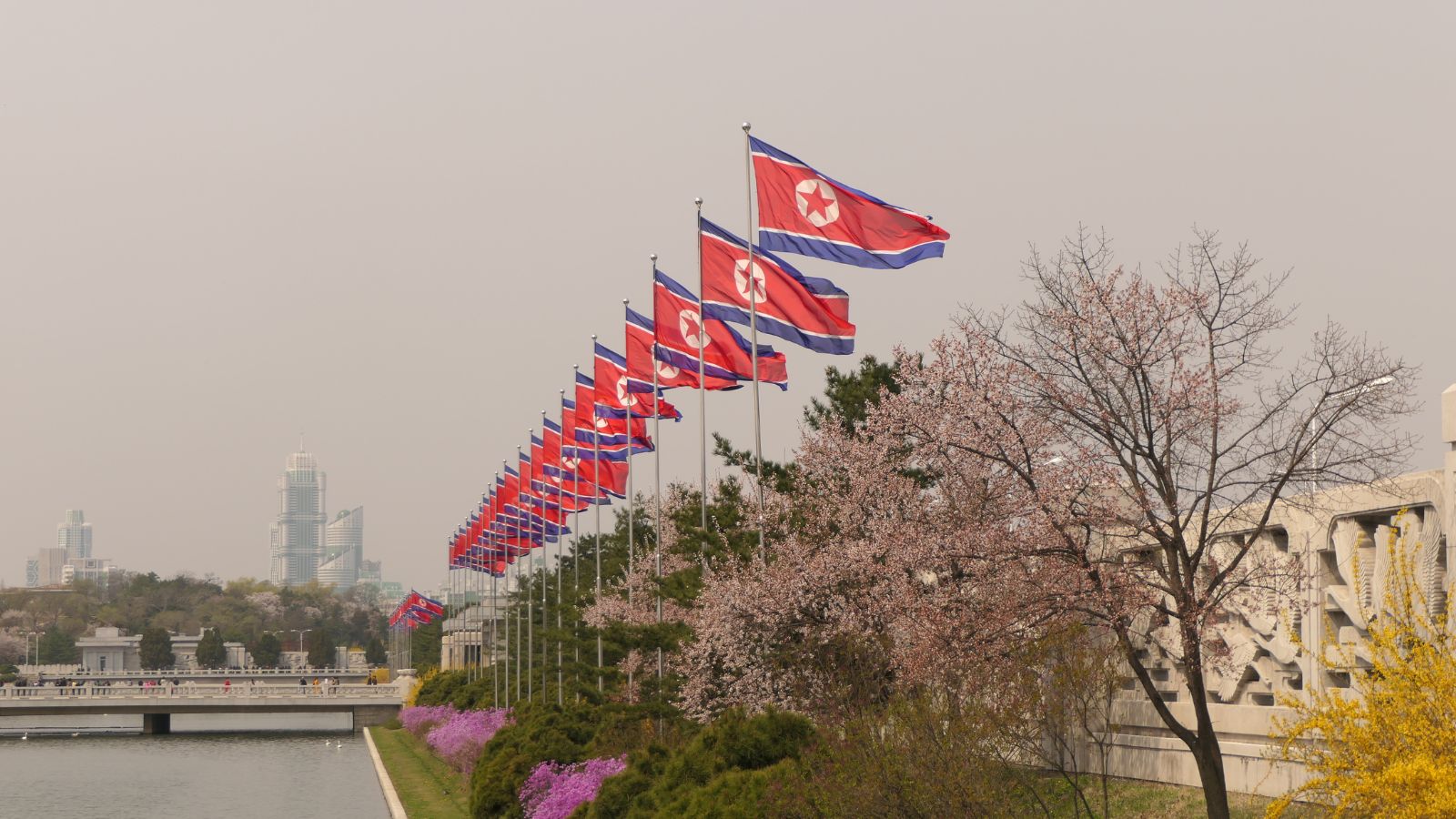
Pyongyang just released another sharp warning, declaring that South Korea risks becoming a decisive target for collective retaliation if it anchors a broader United States-led defense network in East Asia. It sounds like standard rhetoric from state media outlets like KCNA, but beneath the familiar threats lies a genuine structural shift in how regional security alignments are hardening.
If you look past the bluster, the underlying tension is about more than just routine military drills or cross-border propaganda leaflets. It is about how Seoul is slowly being pulled into a wider security architecture that connects Pacific defense strategies with global containment frameworks. North Korea isn't just reacting to yesterday's headlines; they are responding to an evolving reality where the Korean Peninsula functions as the primary friction point for major power competition.
The Reality of the Seoul Hostage Dilemma
Military analysts have long talked about the "Seoul hostage problem." Because the South Korean capital sits roughly thirty-five miles from the Demilitarized Zone, it remains within immediate range of thousands of conventional artillery pieces and rocket launchers. That geographic vulnerability has always shaped defense planning in Seoul and Washington.
When Pyongyang warns that South Korea will turn into a primary target for integrating into a wider collective defense apparatus, they are playing directly on that long-standing anxiety. Seoul is already heavily defended by roughly 28,500 American military personnel stationed across the country, alongside advanced missile defense batteries. But shifting from a bilateral alliance designed strictly for peninsula deterrence to an outward-facing hub for broader regional containment changes the math entirely.
Pyongyang views this integration not as a defensive measure, but as an encirclement strategy backed by Washington, Tokyo, and other regional partners. By framing South Korea as an active node in a wider coalition, North Korea attempts to justify its own aggressive posture and its deepening alignment with Moscow and Beijing.
How Great Power Triangles Shape the Peninsula
You cannot understand Pyongyang's recent posturing without looking at the broader geopolitical chessboard. North Korea has spent the past couple of years solidifying a de facto axis with Russia and China. Kim Jong Un has leveraged the conflict in Europe and broader global fractures to secure diplomatic cover, economic lifelines, and advanced military technological cooperation.
When state media warns about collective defense systems, they are reacting to trilateral security cooperation frameworks binding the US, South Korea, and Japan closer together. These diplomatic frameworks aim to share real-time radar data, streamline missile defense responses, and counter shared security challenges.
From Pyongyang's perspective, these institutional links look remarkably like an Asian counterpart to NATO. North Korea has consistently denounced any moves toward a unified bloc, knowing that a synchronized alliance of advanced technological democracies vastly outmatches its own isolated economy. By issuing severe warnings, North Korea tries to drive a wedge between Seoul and its foreign partners, hoping to exploit domestic political debates within South Korea over foreign policy alignment.
What This Means for Everyday Security
For people living in Seoul, these threats land differently than they do in international newsrooms. South Koreans have lived under the shadow of northern artillery and nuclear tests for decades. Markets don't panic every time KCNA publishes an aggressive commentary, because the baseline of tension is already high.
However, the debate inside policy circles is genuinely fierce. Some lawmakers and strategists in Seoul worry that anchoring too tightly to broad US containment strategies against distant adversaries risks dragging South Korea into conflicts far beyond the peninsula—such as flashpoints in the Taiwan Strait or South China Sea. Others argue that standing alone is suicidal, and that only a robust, interconnected alliance network can deter a regime that continues to expand its nuclear arsenal.
The truth is that South Korea doesn't have the luxury of isolation. Its economic survival depends on secure global sea lanes, and its physical survival depends on reliable deterrence. Balancing that alliance while managing the immediate proximity of a hostile, nuclear-armed neighbor requires an extraordinary level of diplomatic precision.
Pyongyang's latest warnings won't halt the evolution of regional security partnerships, but they highlight the razor-thin margins error leaves behind in East Asia. As long as the peninsula remains divided and major powers continue to compete for influence, these high-stakes warnings will remain a feature of daily life rather than an exception.