Political earthquakes rarely happen overnight. They build slowly under the surface until an election cracks the foundation wide open. When the Parti Québécois captured a provincial election victory with a renewed promise to hold another referendum on independence, political analysts across Canada immediately reached for their old playbooks. They thought the story was about a divided province or a repeat of 1995. They missed the actual point.
This isn't just about old grievances or linguistic pride anymore. It's about a calculated political strategy designed to exploit shifting national anxieties and economic pressures. If you want to understand what's actually happening in Quebec, you have to look past the nostalgic rhetoric and examine the mechanics of how minority governments operate under pressure.
The Reality of a Minority Win
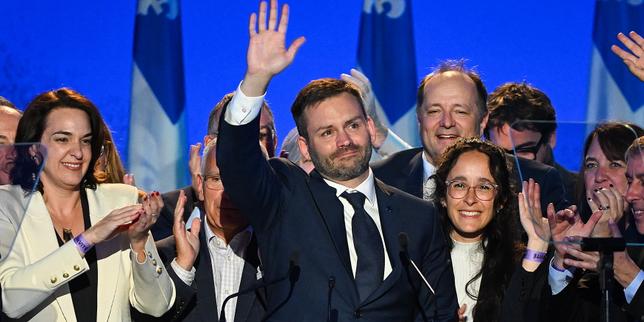
Paul St-Pierre Plamondon didn't secure the landslide majority he wanted. The Parti Québécois fell short of the seats needed to govern entirely alone, forcing them into a minority administration. That detail matters immensely.
Minority governments in Quebec don't have the luxury of ramming through constitutional uproars on a whim. Every single piece of legislation requires negotiation, compromise, and legislative horse-trading.
- The public narrative focuses on an impending referendum.
- The legislative reality focuses on day-to-day survival.
- The opposition parties hold actual leverage over how far the nationalist agenda can stretch.
Voters sent a clear message. They wanted a change in leadership, but they didn't write a blank check for separation. Ignoring that nuance is where bad political commentary goes to die.
External Pressures and Federal Calculations
Timing is everything in politics. The sovereignist movement isn't operating in a vacuum. Looming trade tensions with the United States and intense federal dynamics under Prime Minister Mark Carney create a complicated backdrop for any provincial leader.
When economic uncertainty runs high, voters typically retreat toward stability. Yet, Quebecers pulled off a sharp pivot, rejecting the incumbent Coalition Avenir Québec entirely. That wipeout wasn't just a vote for separatism; it was a punishment for economic fatigue and unfulfilled promises.
Ottawa is watching closely. A separatist government in Quebec City changes the federal calculus on everything from infrastructure funding to environmental policy. But the federal strategy relies on a simple truth: economic pragmatism usually beats ideological division when grocery bills and job security are on the line.
What Happens Next
Will there be a referendum? Not tomorrow. The political math doesn't support an immediate vote, and leadership knows it. St-Pierre Plamondon has to prove his party can manage provincial health care, education, and housing before he can convince a skeptical public to gamble on a new country.
The strategy now is normalization. By pitching independence as an inclusive project rather than an exclusionary club, the PQ is trying to soften the sharp edges that frightened undecided voters in past decades