Picture a glass-walled conference room in Singapore. Outside, the humid equatorial air hangs heavy over the Strait of Malacca, where container ships line the horizon like steel beads on a string. Inside, the air conditioning hums at a crisp sixty-eight degrees. Across a polished table sit engineers from the world’s most valuable semiconductor company and a small delegation from a little-known cloud startup called Megaspeed.
At the edge of that delegation sits a woman in her early forties named Alice Huang.
Witnesses who observed her in early meetings with Nvidia described her as unassuming and quiet. She did not pound the table or boast about conquering markets. She did not look like the central figure in an international espionage thriller, nor like the catalyst that would temporarily unseat the most powerful chief executive in modern technology.
Yet when United States Director of National Intelligence Jay Clayton stepped onto a Sunday television broadcast to confirm that federal investigators were actively probing both Alice Huang and Megaspeed, he was pulling back the curtain on a story far larger than corporate governance or personal scandal. He was exposing the central vulnerability of the twenty-first century.
We tend to think of national security in terms of aircraft carriers, hypersonic missiles, and encrypted satellites. Those things are loud. They are visible. They carry flags.
Modern power is quieter. It lives inside rectangular racks of silicon wafers that run hotter than a stovetop and compute faster than human comprehension. And as the investigation into Megaspeed reveals, the border walls Washington built to keep its most advanced artificial intelligence hardware out of Beijing’s reach were never designed to stop a quiet businesswoman with a gift for corporate camouflage.
The Illusion of the Export Wall
To understand why a single sentence from America’s top intelligence official sent shockwaves through Wall Street and Capitol Hill, you have to understand how export controls actually work—or fail to work—in the real world.
Consider a hypothetical scenario. Imagine you own the only bakery on earth capable of making a rare, nutrient-dense bread that gives whoever eats it an insurmountable advantage in an upcoming marathon. Your government passes a strict law: you cannot sell a single loaf to your fiercest rival across the river. So you lock the front door, post guards at the bridge, and check the passport of every customer who walks up to the counter.
Then a polite buyer arrives from a friendly town three miles downstream. She has clean paperwork, a legitimate storefront, and an anchor customer everyone recognizes. You sell her thousands of loaves. You never see the unmarked speedboats idling behind her warehouse at midnight, ferrying your bread straight across the water.
That is the architecture of a "neocloud" diversion network.
In the years following Washington’s sweeping restrictions on advanced semiconductor exports to China, the global market for graphics processing units—the engines of generative AI—fractured into two desperate halves. On one side stood American hyperscalers hoarding every chip they could buy. On the other stood Chinese tech giants and state-backed laboratories starved of the raw compute required to train frontier models.
Between them emerged a lucrative twilight zone across Southeast Asia.
Megaspeed was born inside that twilight. Originally incorporated in Singapore back in 2015 as 7Road International—an overseas arm of a Chinese video game business with ties to state-backed investors—the company underwent a sudden metamorphosis in early 2023. Rebranded as Megaspeed and placed under the control of an entity owned by Alice Huang, it pivoted overnight from gaming to high-stakes artificial intelligence infrastructure.
The transformation was breathtaking. By November 2023, Nvidia had designated Megaspeed an official cloud partner, granting the young firm priority access to scarce, high-end processors. By the end of 2024, Megaspeed’s reported assets had exploded from thirty-three million dollars to three billion dollars. Shipment records later analyzed by financial researchers indicated that a Malaysian subsidiary of Megaspeed imported roughly four billion dollars’ worth of hardware built around Nvidia’s technology.
Pause and absorb that number. Four billion dollars.
In an industry where legitimate startups beg for allocations of a few hundred chips, a newly rebranded Singaporean outfit was moving billions of dollars in computing power through ports in Malaysia and Singapore.
Who Is Huang Le?
Whenever a scandal erupts at this altitude, the public instinctively reaches for caricatures. Pundits want a femme fatale straight out of a Cold War paperback, or a faceless bureaucrat following orders from a bunker. The truth about Alice Huang—born Huang Le in China’s Hunan province in 1982—is far more nuanced, and infinitely more instructive about how modern influence actually operates.
Former classmates remember her as easygoing, well-liked, and fiercely ambitious, someone who wore designer labels and drifted easily through elite social circles. Early in her career, she worked as a television journalist in China before transitioning into high finance at institutions like HSBC and CITIC Securities. By 2015, she had joined Shanghai Hexi Investment Management, a firm founded by Kang Wei, a prominent Chinese investor who had once been the youngest hedge fund chief executive in the country.
The two married, and together they rode the wave of China’s technology boom. Long before Megaspeed became a household name in Washington intelligence briefings, Huang and Kang were building AI computing centers in Shanghai for domestic tech titans. They understood the exact pressure points of the Chinese tech ecosystem: what executives needed, how state-backed capital moved, and how corporate ownership could be layered through holding companies in Hong Kong, Singapore, and Indonesia until the ultimate beneficiaries vanished behind a fog of nominees.
When Huang transferred Megaspeed’s shares to another Singaporean entity in late 2023 and stepped off its formal corporate registry, it looked on paper like a routine executive transition. Yet when Singaporean and American investigators later looked beneath the corporate filings, they concluded she remained its chief executive and key controller. Even after the Commerce Department placed Megaspeed on a trade blacklist and federal agents conducted an in-person inspection of the company’s offices in June 2025, the paper trail refused to sit still.
In November 2026, loan documents filed by two Shanghai firms—Shanghai Shuoyao and Shanghai Kezhan—revealed something extraordinary. Serial numbers embedded in regulatory paperwork showed that Nvidia’s prized Blackwell platforms, specifically GB200 and GB300 racks, were actively operating inside a data center in Shanghai’s Yangtze River Delta project. A facility tied directly to the corporate orbit of Alice Huang.
The export wall had not merely been bent. It had been walked right through.
When Corporate Power Collides With Espionage
If Megaspeed were solely a story about customs violations and shell companies, it would have stayed on the back pages of trade journals. What detonated the story into a full-blown constitutional and market crisis was proximity.
Proximity to the man wearing the black leather jacket.
For more than a decade, Jensen Huang had been treated less like a corporate executive and more like an industrial folk hero. He built Nvidia from a graphics card maker into the foundational pillar of the global economy, adding trillions of dollars in shareholder value and dining with presidents and prime ministers. He seemed untouchable.
Then came the autumn of 2026.
Reports surfaced detailing an extramarital relationship between Jensen Huang and Alice Huang—a personal entanglement that overlapped with an extraordinary intelligence revelation. According to American officials, U.S. intelligence agencies had been tracking Alice Huang’s ongoing communications with an officer of China’s Ministry of State Security from the spring of 2025 through the fall of 2026, alongside contacts with China’s Ministry of Public Security.
Suddenly, the personal became geopolitical.
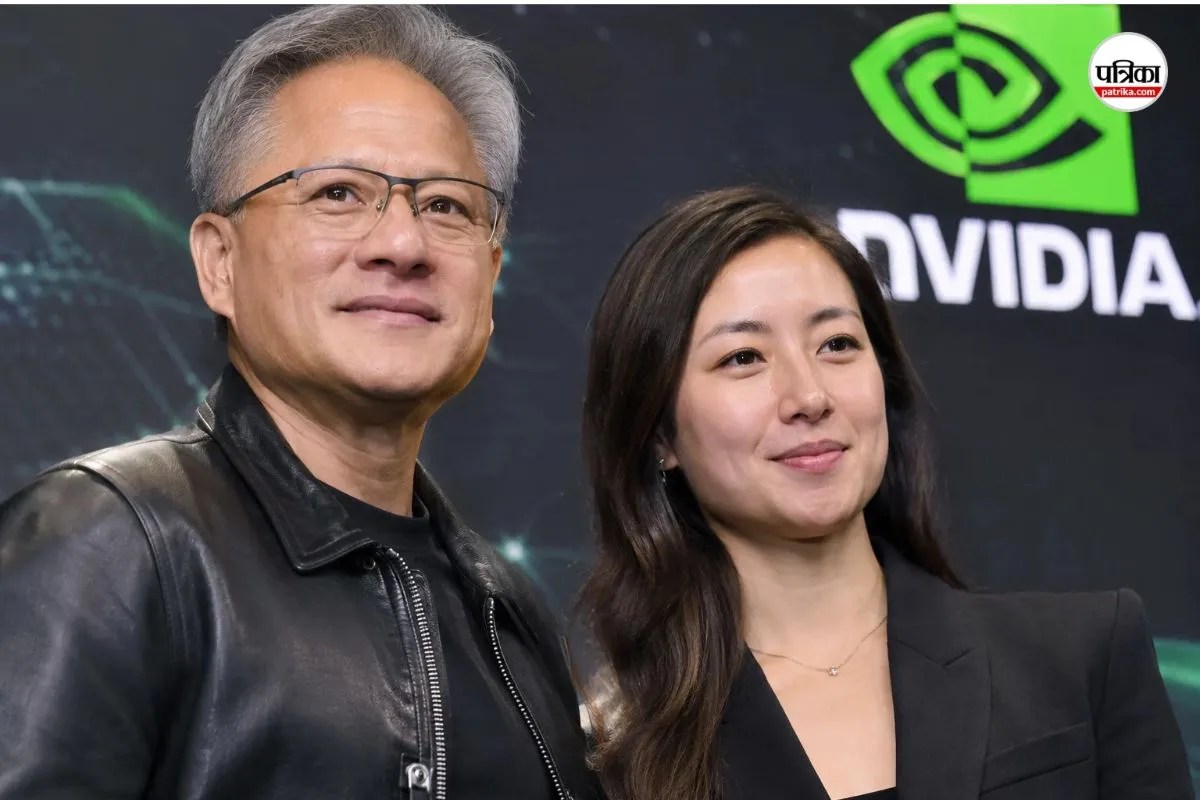
Imagine the shock inside Nvidia’s Santa Clara headquarters when board directors realized that the woman sitting across from their chief executive at private dinners—and photographed alongside him in Taipei—was the same executive whose company had been raided by federal export-control agents and suspected of funnelling restricted silicon to Beijing.
On November 12, 2026, amid swirling disclosures of his relationship with Alice Huang and a separate workplace affair, Jensen Huang abruptly resigned as chief executive, president, and board member. For eleven chaotic days, the world’s most consequential technology company operated under interim leadership while markets convulsed and Washington fractured along partisan fault lines.
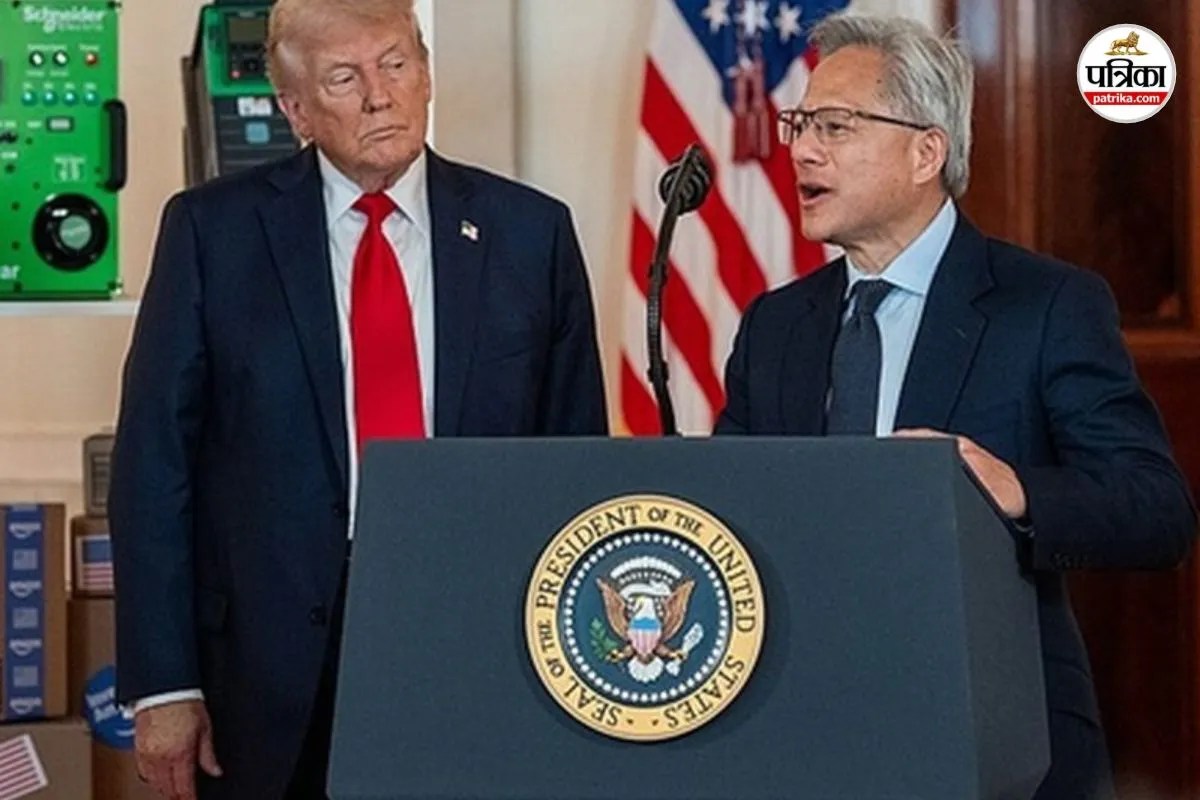
What happened next revealed just how deeply artificial intelligence has scrambled the traditional rules of American statecraft. President Donald Trump, who had been briefed on the intelligence surrounding Alice Huang, publicly defended the ousted chief executive, arguing that Jensen Huang was indispensable to American economic dominance and urging Nvidia’s board to bring him back. By November 23, the board reversed course and reinstated him, declaring that senior government officials had assured them his return posed no threat to national security.
Beijing dismissed the entire espionage narrative as a smear. Nvidia maintained that neither company secrets nor national security had been compromised.
And then Jay Clayton went on television.
The Meaning of Clayton’s Confirmation
In Washington, intelligence chiefs rarely speak plainly about active counterintelligence or criminal probes. They prefer hedged language, classified briefings behind scif doors, and strategic ambiguity. That is why Clayton’s on-air confirmation carried such unmistakable weight.
"There is an investigation into her company, and there is an investigation into her," Clayton stated flatly. He went further, signaling that regulatory proceedings were actively advancing and stating publicly that he expected Nvidia’s board of directors to scrutinize the situation thoroughly. His framing of the stakes stripped away every corporate euphemism: America intends to reserve its most exquisite computing capability for its own military and civilian applications.
Read between those lines.
Even as political leaders rushed to stabilize stock prices and restore a celebrated founder to his corner office, the permanent machinery of American intelligence and law enforcement refused to stand down. The Justice Department’s criminal investigation into Megaspeed—backed by witness subpoenas served on Nvidia itself—is not a political talking point that vanishes with a press release. Nor are the bipartisan demands from lawmakers insisting on knowing precisely what information passed between the chief executive of America’s premier chipmaker and a woman under counterintelligence surveillance.
We have to be honest about what remains unproven. Intelligence intercepts are notoriously fragmentary. Watching someone speak with a foreign intelligence officer does not automatically prove that blueprints were handed over in a manila envelope, nor does it prove that Jensen Huang knowingly aided an illicit supply chain. Courts have not yet weighed the evidence, and Alice Huang herself has largely vanished from public view—barred from entering Taiwan, questioned by authorities in Singapore, and operating through newly registered corporate shells in Hong Kong.
Uncertainty is uncomfortable. We want clean villains and tidy verdicts. Instead, we are staring at a mirror reflecting our own technological dependency.
The Invisible Stakes in the Server Racks
Why should an ordinary person—someone who doesn't own semiconductor stocks, never reads defense white papers, and wouldn't know a Blackwell rack from a kitchen radiator—care whether a Singaporean cloud company diverted chips to Shanghai?
Because we have entered an era where compute is destiny.
Every major breakthrough coming down the pipeline over the next decade—autonomous drone swarms, next-generation cyberweapons, biological pathogen modeling, real-time battlefield logistics, and sovereign economic forecasting—runs on the exact silicon architecture at the center of this dispute. A single cluster of advanced GPUs is no longer just commercial office equipment. It is strategic infrastructure, equivalent in geopolitical weight to enriched uranium in the twentieth century.
Yet unlike uranium, which requires massive, unmistakable centrifuges and leaves a radioactive signature detectable from orbit, AI chips fit inside standard shipping pallets. They can be leased remotely over fiber-optic cables without ever crossing a border, or routed through a maze of freight forwarders, shell companies, and overseas data centers until their serial numbers resurface on a loan filing thousands of miles from where they were supposed to live.
The Megaspeed affair exposes an uncomfortable truth about Silicon Valley’s culture. For thirty years, tech executives operated under a frictionless creed: move fast, trust your partners, maximize quarterly shipments, and let lawyers worry about borders. That worldview worked brilliantly when tech companies were selling smartphones and social media ads.
It breaks down completely when your product determines the balance of global military power.
You cannot verify a four-billion-dollar supply chain with a handshake at a Taipei bar or a polite presentation in a Singapore boardroom. When the financial incentives to bypass export controls reach into the tens of billions of dollars, trusting self-reported customer rosters is not just naive. It is an invitation to be exploited.
A Blinking Light in Shanghai
Think back to that regulatory loan document uncovered in China.
Buried inside pages of dry financial collateral tables sat rows of alphanumeric strings—the unique serial numbers stamped onto Nvidia’s most advanced hardware. Somewhere in the Yangtze River Delta, inside a climate-controlled hall humming with liquid-cooled servers, those processors are drawing megawatts of electricity right now. Fans are spinning. Data is flowing through copper and glass interconnects at the speed of light.
No border guard stopped them. No treaty recalled them.
Down in Washington, prosecutors are assembling timelines, intelligence analysts are cross-referencing travel logs, and congressional committees are drafting subpoenas. Up in Santa Clara, a reinstated chief executive walks back onto the campus he built, greeted by cheering employees and a nervous board of directors.
And half a world away, inside a dark server room in Shanghai, rows of tiny green status lights blink steadily in the hum, indifferent to who drew the borders, and faithfully computing whatever they are told.