Paint dries slowly in Washington.
Usually, that is the whole point. For more than two centuries, the American presidency has operated under an unspoken, strangely intimate ritual of transition: one leader moves out, taking the family photos, the favored busts of Abraham Lincoln or Winston Churchill, and the rugs, while the next leader moves in with a fresh swatch of wallpaper and a different philosophy of governance. You strip the room down to the plaster, hang new curtains, and tell the country—without saying a word—that a new chapter has begun.
Except now, according to recent reporting on Donald Trump’s post-midterm priorities, the goal isn't just to redecorate the Oval Office. It is to lock the doors behind him.
Think about the sheer audacity of trying to freeze an executive workspace in amber. When news broke that Trump’s immediate post-midterm agenda includes measures aimed at preventing future presidents from altering his changes to the Oval Office, the political press treated it like another quirky palace intrigue story. A footnote. A bit of gilded theater.
They missed the point entirely. Because when you look past the velvet drapes and the gold leaf, a fight over interior design is never actually about interior design. It is a fight over permanence, memory, and who gets to decide what America looks like when the cameras turn on.
The Room That Remembers Everything
Walk into the West Wing on a Tuesday morning—or imagine yourself as a hypothetical staffer named Elena, twenty-six years old, carrying a stack of briefing folders past the Secret Service detail—and you immediately feel the weight of the building's physical choices. The ceiling isn't that high. The hallway is narrower than it looks on television. Everything feels surprisingly domestic, almost fragile, until you step across the threshold of the Oval Office itself.
There, the geometry shifts. Four curved walls pull your eye toward the Resolute Desk. Every president since William Howard Taft has used that curve to project authority, yet every single one has quietly reshaped the space to mirror their own temperament.
History proves how fluid this room has always been. Franklin D. Roosevelt expanded the West Wing and moved the Oval Office to its current southeast corner in 1934, giving himself sunlight and direct access to the Rose Garden. John F. Kennedy ordered bright red carpets and crisp white walls just before his assassination, though he never lived to see the finished room; Lyndon B. Johnson inherited it in grief and quickly installed a bank of three television sets so he could watch all three networks simultaneously. Richard Nixon chose bright blue and gold. Jimmy Carter stripped out the ornate flourishes for a spare, understated aesthetic. Ronald Reagan brought in warm earth tones. Barack Obama swapped out the traditional floral rug for one woven with quotes from Martin Luther King Jr. and Abraham Lincoln, and replaced the wallpaper with striped wheat-colored fabric.
Each redesign took weeks of painstaking work by the White House curator’s office and the National Park Service. Each one cost hundreds of thousands of dollars, funded largely through the White House Historical Association—a private, nonpartisan nonprofit established by Jacqueline Kennedy in 1961 specifically to protect the mansion's integrity from political whims while allowing sitting presidents to make the workspace their own.
Notice the delicate balance in that arrangement. The building belongs to the public, held in trust by the National Park Service under the Presidential Residence designation, yet the living and working quarters adapt to the human being temporarily entrusted with the nuclear codes. It is an architectural metaphor for democracy itself: the structure endures, while the occupants change.
When Aesthetics Become Armor
So what happens when a president decides that temporary isn't good enough?
In his second term, Trump has treated the physical footprint of the White House less like a rental and more like a flagship property. Reports surrounding his post-midterm strategy indicate an effort to codify, restrict, or structurally insulate his Oval Office aesthetic—from the heavy gold accents and specific portraiture to the layout and furnishings—so that a successor cannot simply sweep them into storage on Inauguration Day.
Let's be honest about why this feels so jarring, even to people who care very little about upholstery. Most of us have experienced some version of this on a smaller scale. Think of the incoming CEO who tears down the founder's portraits on day one, or the new homeowner who paints over a previous owner's aggressive red dining room before unpacking a single box. Changing a space is how human beings claim agency. It is how we signal that the past no longer dictates the present.
To strip a future president of the ability to alter the Oval Office is to reach across time and place a hand on their shoulder before they have even taken the oath.
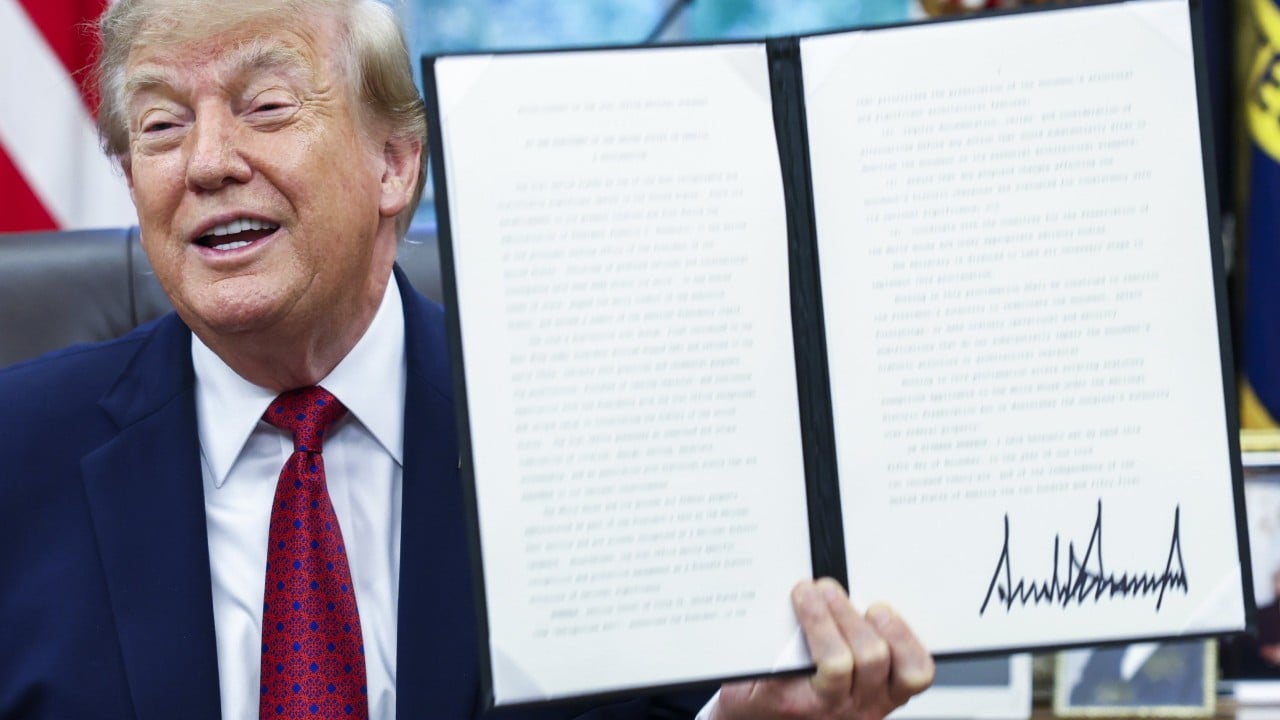
Critics and preservationists point out the obvious legal and practical hurdles. Under federal law and long-standing executive precedent, the sitting president holds broad authority over the internal arrangement of their immediate workspace, provided they do not damage the structural fabric of a historic landmark. Trying to bind a future chief executive through an executive order is like writing rules in wet sand; a successor can revoke an executive order with a single signature before lunch on January 20.
To make changes truly stick, an administration has to look elsewhere. They have to look at permanent structural alterations, statutory restrictions tucked into appropriations bills, or binding agreements with preservation bodies that classify specific installations as protected historic fabric rather than temporary decor.
That is where the story shifts from eccentric to consequential.
The Invisible Mechanics of Locking a Room
Imagine a hypothetical preservation architect—let's call him Marcus—sitting in a windowless office across Lafayette Square, reviewing blueprints at midnight. Marcus doesn't care about cable news panels. He cares about load-bearing plaster, historic easements, and the fine print of the National Historic Preservation Act.
If someone asks Marcus how you stop a future president from changing a room, he won't talk about politics. He will talk about friction.
You don't need an unbreakable law to stop a successor from redecorating; you just need to make the process so expensive, legally tangled, and politically toxic that no incoming administration wants to spend its first hundred days fighting over curtains. You bolt things into the architectural review process. You classify newly installed moldings, mantels, or permanent fixtures as historic restorations rather than personal decorations. You tie funding mechanisms to strict preservation covenants that require multi-year reviews by the Committee for the Preservation of the White House—a body whose members serve at the president's pleasure, unless their mandates are structurally altered or backed by congressional language.
Consider what happens next: a new president walks into the Oval Office in January 2029, eager to project a fresh vision to a divided nation, and discovers they cannot move a single sconce without triggering a statutory review, a preservationist lawsuit, or a public battle over defacing "historic" installations.
Suddenly, the backdrop of every televised address, every meeting with a foreign head of state, and every crisis briefing carries the unmistakable visual signature of the previous administration. The room itself becomes an argument that the past hasn't really left.
Why the Walls Matter More Than We Admit
It is tempting to dismiss all of this as vanity. Washington is a town built on monuments to ego, where politicians routinely name bridges, airports, and federal courthouses after themselves before their careers are even cold. Why should a fight over the Oval Office be any different?
Because the Oval Office is not a monument. It is a stage where the American public watches power operate in real time.
When you watch a president sign a bill or address the nation after a tragedy, your brain processes the background before you register a single word of the speech. The color of the rug, the faces staring down from the gilded frames behind the desk, the flags flanked against the curved wall—these details form a silent grammar of legitimacy. FDR understood this when he used the fireplace to anchor his Fireside Chats, transforming a formal office into a national living room. Kennedy understood it when he brought in modern art and bright light to signal a generational break from the Eisenhower era. Trump has always understood it better than almost any modern politician, having spent decades treating gold trim, marble, and branding as physical proof of dominance.
I admit, there is something oddly disorienting about watching the physical symbols of the presidency become another front in our endless partisan trench warfare. For most of my life, the peaceful transfer of power felt sturdy, almost automatic—a choreography so practiced that you barely noticed the stagehands moving the furniture between acts. Now, even the furniture has a political affiliation. Even the paint color feels like a territory to be conquered and held.
And once that precedent is set, where does it stop?
If one president successfully locks down the Oval Office, the next president—assuming they eventually break through the legal and structural barriers—will feel compelled to erase every trace of their predecessor and install their own fortified aesthetic. The room ceases to be a shared national inheritance and becomes a trophy passed back and forth between rival factions, stripped of continuity every four or eight years.
The Quiet Cost of Permanence
There is a reason the White House has burned, been gutted, and been rebuilt multiple times since James Hoban first drew its plans in 1792. In 1814, British troops torched the interior, leaving only scorched sandstone walls. In 1948, Harry Truman discovered the building was literally collapsing under its own weight—the floor joists were rotting, and Margaret Truman’s piano leg broke straight through the floorboards—forcing a complete gutting of the interior down to a steel frame while preserving the outer shell.
In both moments, Americans had the chance to turn the building into a rigid museum frozen in a single era. Both times, they chose instead to keep the exterior shell intact while allowing the interior to breathe, adapt, and serve the living democracy inside it.
The genius of that compromise lies in its humility. It accepts that no single leader owns the room. You sit behind the Resolute Desk for four years, or eight, and you leave your mark on the country through laws, appointments, and decisions. Then you pack your boxes, walk out across the South Lawn, and let someone else hang their own pictures on the wall.
At dusk, when the West Wing empties out and the security lights hum softly along the colonnade, the Oval Office sits quiet, its curved plaster walls catching the last amber glow from the Rose Garden—waiting, as it always has, for whoever comes next to turn on the lamps.