Picture a Tuesday morning in late November. The kitchen radiator in a terraced house in Leeds clanks to life, fighting off the damp chill creeping through the windowpanes. At the pine table sits Arthur. He is sixty-eight, a retired secondary school history teacher who spent thirty-seven years grading essays, breaking up playground scuffles, and paying faithfully into the Civil Service Pension Scheme.
Arthur is hypothetical, a composite sketch drawn from tens of thousands of real public servants across Britain, yet his kitchen table is painfully real. Spread across the wood are three brown envelopes, a magnifying glass, and a calculator with faded rubber buttons. His first pension payment—the money meant to cover his council tax, his winter heating bill, and the weekly shop at Aldi—is six weeks late. When he dials the helpline, the hold music loops for ninety-four minutes before the line goes dead.
Now, zoom out four hundred miles south to the glass-and-steel trading floors of the City of London.
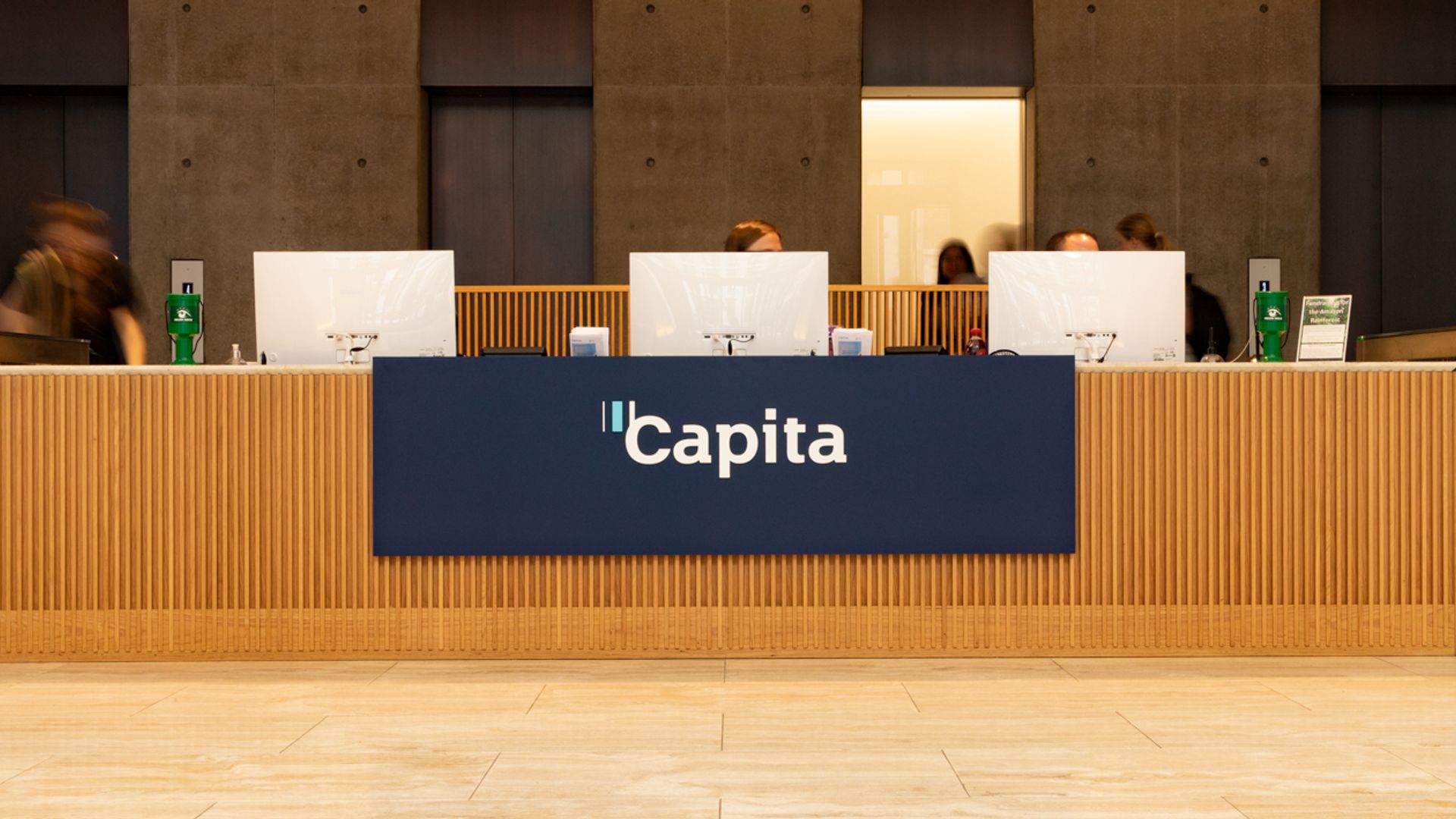
On those screens, red numbers are bleeding across tickers. Capita plc, one of the largest outsourcing giants in the United Kingdom, has watched its share price crater to a thirty-five-year low. Traders mutter about profit warnings, contract write-downs, and eroding investor confidence. Financial analysts scribble notes about the catastrophic rollout of a civil service pension administration contract. To the market, it is a balance-sheet catastrophe.
To Arthur, it is the reason he is wondering whether to turn the thermostat down to fifteen degrees.
The Architecture of an Invisible Promise
We rarely think about the plumbing of a modern nation until a pipe bursts behind the drywall. For decades, the British government operated on a quiet, seductive philosophy: hire private corporations to run the machinery of the state. They would do it cheaper, faster, and smarter than Whitehall bureaucrats ever could.
Capita became the undisputed titan of this era. From collecting the London congestion charge to managing military recruitment, from running BBC television licensing to administering local council tax systems, Capita wove itself into the daily fabric of British life. At its peak in 2015, the company was worth roughly eight billion pounds, a FTSE 100 heavyweight celebrated by politicians of every stripe.
Yet size is not the same thing as strength. Think of an outsourcing conglomerate not as a single, sturdy oak tree, but as a sprawling circus tent held up by hundreds of separate guy-ropes. Each rope is a multi-year government contract bid at razor-thin margins to beat out rivals like Serco or G4S. So long as the weather stays calm and every IT migration goes smoothly, the tent stands tall.
When the wind picks up, those thin margins snap.
The Civil Service Pension Scheme is one of the largest pension funds in the United Kingdom, safeguarding the retirement of roughly 1.5 million people. Teachers, border guards, museum curators, prison officers, tax inspectors, and ministry clerks rely on it. When Capita took over the administration of this colossal system, the promise was modernization. Legacy computer systems would be swept away. Digital portals would make retirement seamless. Taxpayers would save millions.
Instead, the plumbing burst.
What Happens When the Spreadsheet Breaks
To understand how a thirty-five-year stock low happens, you have to trace the friction between corporate accounting and human lives.
When Capita assumed responsibility for the civil service pension contract, the transition ran straight into a wall of technical debt and administrative complexity. Public sector pensions are notoriously intricate. Decades of shifting rules, partial retirements, bereavement entitlements, and inflation adjustments sit layered like geological strata inside ancient databases. Migrating that data is like trying to perform open-heart surgery while the patient is running a marathon.
Backlogs began to pile up. Not by the hundreds, but by the tens of thousands.
Consider what a backlog actually looks like outside a boardroom presentation. A widow in Cardiff submits a death certificate and waits months for her survivor benefits to be calculated, burning through her modest savings just to pay for her husband's funeral. A retiring nurse in Manchester leaves her ward after four decades of night shifts, only to discover her lump-sum payout has vanished into an administrative black hole. Letters go unanswered. Automated portals throw up cryptic error codes.
The human toll quickly became a political liability, and political liabilities always find their way back to the balance sheet.
Regulators stepped in. Parliamentary committees demanded answers. The Cabinet Office scrutinized every missed service-level agreement, imposing financial penalties and forcing Capita to pour millions of unbudgeted pounds into emergency call-center staff and remediation teams. Money that was supposed to be profit evaporated into overtime pay, IT patches, and compensation payouts.
Investors hate surprises, and they despise open-ended liabilities even more. As the true cost of fixing the civil service pension mess came into focus alongside broader restructuring expenses and sluggish revenue growth, institutional shareholders headed for the exits. Selling begat more selling. Algorithms triggered stop-loss orders. Within days, Capita's valuation had tumbled back to levels last seen when Margaret Thatcher was still in Downing Street and the World Wide Web did not yet exist.
The Illusion of the Cheap Bid
I have spent years watching public-private partnerships unravel, and the anatomy of failure is always depressingly familiar. In the early stages of a major government tender, optimism reigns. Consultants present gleaming slide decks. Software engineers promise automated workflows that will slash headcount by thirty percent. Procurement officials, desperate to satisfy Treasury demands for austerity and efficiency, reward the lowest bidder.
Nobody puts a line item in the spreadsheet for institutional memory.
When a seasoned civil servant who has processed pension claims for twenty years takes voluntary redundancy during a corporate handover, they take something irreplaceable out the door in their cardboard box. They know the weird edge cases. They know why a file from 1984 has a handwritten margin note, or how to manually override a glitch when two different salary scales collide.
When you replace that veteran with an underpaid call-center worker reading off a rigid script in a bright, noisy room, efficiency dies. The first-line agent cannot solve the problem, so they escalate the ticket. The second-line team is overwhelmed, so the ticket sits in a queue for six weeks. Meanwhile, the pensioner calls back three times a week to ask for an update, tripling the call volume and clogging the phone lines further.
It is a doom loop disguised as a cost-saving measure.
And who pays for it? Everyone, twice. First, the public servant pays in anxiety, missed mortgage payments, and sleepless nights. Second, the taxpayer pays when the government has to bail out, renegotiate, or subsidize a failing contract because the service is too vital to let collapse overnight. Finally, ordinary pension funds—ironically, the very institutions managing retirement savings for millions of workers—take a hit when shares like Capita's plunge into the abyss.
Why This Collapse Matters Beyond the Trading Floor
You might not live in Britain. You might never have worked a day in the civil service, and you probably do not own a single share of Capita stock. So why should a thirty-five-year low for a British outsourcing firm hold your attention for more than ten seconds?
Because Capita is a canary in a global coal mine.
Across Western democracies, governments have hollowed out their own administrative capacity over the past four decades. Faced with aging populations, strained budgets, and complex digital demands, states outsourced everything from healthcare logistics and prison management to visa processing and welfare distribution. A handful of massive corporations became the invisible operating system of the modern state.
Now, that model is hitting a structural wall.
Inflation has driven up labor costs, squeezing the razor-thin margins these companies depend on. Artificial intelligence and cloud migrations—promised as magic bullets to cut administrative costs—have proven vastly more expensive and error-prone to deploy across messy public datasets than sales brochures claimed. And citizens, exhausted by automated phone trees and unaccountable corporate middlemen, are losing patience.
When an outsourcing giant stumbles this badly, it exposes a terrifying vulnerability: the state often no longer possesses the internal machinery to take the work back. You cannot simply fire a contractor administering 1.5 million pensions on a Friday afternoon and hand the keys back to a government department on Monday morning. The civil service team that used to do it was disbanded years ago. The software belongs to the vendor. The knowledge has scattered to the wind.
The government is trapped with a struggling partner, and the partner is trapped inside an unprofitable contract.
Clearing the Backlog, One Human File at a Time
So how do you climb out of a hole this deep?
For Capita's leadership, the path forward requires brutal honesty and painful surgery. Turning around a company bruised by a thirty-five-year share price nadir means abandoning the addiction to chasing every massive, low-margin government contract just to keep top-line revenue moving. It means shrinking to survive—selling off non-core divisions, paying down crushing debt loads, and focusing ruthlessly on fixing broken flagship accounts before bidding on anything new.
More fundamentally, fixing the civil service pension crisis demands shifting metrics from corporate speed to human resolution.
You do not clear a backlog of desperate pensioners with another glossy software update. You clear it by putting experienced human caseworkers back in charge of individual files from start to finish. You empower them to pick up the phone, speak plainly to a retired teacher in Leeds, verify their employment history without burying them in bureaucratic jargon, and authorize an interim emergency payment within forty-eight hours so the heating stays on while the final decimal places are audited.
Government procurement, too, must grow up. Ministries need to stop treating public administration like buying paperclips, where the cheapest unit price automatically wins. Contracts for essential citizen services require realistic pricing, strict transparency, and retained public-sector oversight—keeping enough internal expertise inside Whitehall so the state is never again held hostage by a vendor's failing IT rollout.
The Weight of a Brown Envelope
Back in the City of London, analysts will spend the coming months debating whether Capita's shares have finally hit rock bottom or if further write-downs lurk beneath the surface. Charts will be drawn. Earnings calls will be dissected for hints of stabilization. Eventually, the financial press will move on to the next corporate drama.
Back in Leeds, the late afternoon sun dips early behind the slate roofs, casting long shadows across Arthur's kitchen floor.
Tomorrow morning, the postman will walk up the garden path and push another batch of mail through the brass letterbox. Arthur will hear the familiar metallic clatter, walk out to the hallway in his wool slippers, and bend down to pick up the envelopes. He does not care about price-to-earnings ratios, market capitalization, or thirty-five-year trading lows. He simply wants to open an envelope, see a number that matches forty years of honest work, and know that the promise he kept to his country is finally being kept to him.