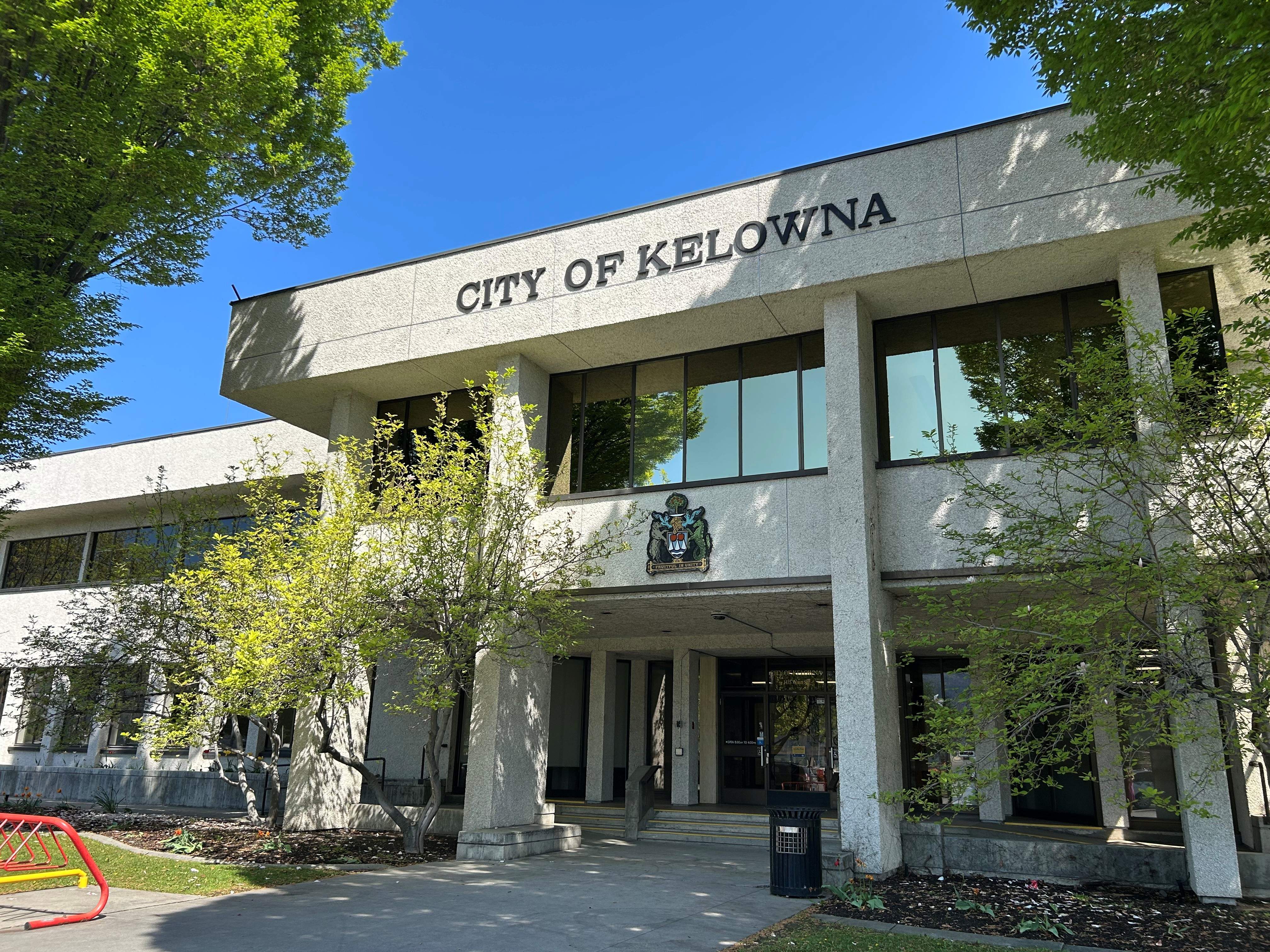
The fluorescent lights in a municipal council chamber hum at a frequency designed to keep people awake, yet lately, they have mostly illuminated a slow-motion train wreck.
Picture a Tuesday night in late autumn. Outside, the wind off Okanagan Lake carries the first sharp bite of winter, rattling the dry leaves along Water Street. Inside City Hall, the air smells faintly of damp wool, floor wax, and stale coffee. At the podium stands a resident—let’s call her Elena, a hypothetical composite of a dozen real people who have stepped up to that microphone over the last four years. Her hands are shaking. Not from the cold, and not even from the public speaking, though the room is packed. She is shaking because she knows what happens the moment she finishes her three-minute allotment on a proposed zoning variance for her neighborhood.
She knows her face will be clipped into a fifteen-second vertical video before she even reaches the parking lot. She knows someone in the third row is already typing a comment calling her a paid shill, or a heartless NIMBY, or worse. She knows the nuance of her actual concern—drainage runoff onto a sloped street where her elderly father walks his dog—will be flattened into a tribal war cry.
So she speaks fast, her voice tight, defensive before anyone has even challenged her.
Across the horseshoe dais, a row of newly elected Kelowna city councillors watches her. They see the tension in her shoulders. They also see the exhaustion in the eyes of the city staff seated to the side, and the simmering hostility radiating from the back rows. For years, local politics across North America—and acutely in fast-growing mid-sized cities like Kelowna—has been treated as a blood sport. The loudest voice wins the clip. The sharpest insult wins the algorithm. And the actual business of running a city—fixing pipes, approving housing, managing transit, balancing budgets—gets buried beneath an avalanche of performative outrage.
Now, a fresh cohort of Kelowna councillors is stepping into those leather chairs with a deceptively simple, radically difficult promise. They want to change how the city talks to itself. They intend to improve public discourse.
On paper, that sounds like the kind of polite, bloodless platitude politicians recite right before voting on a routine bylaw. In reality, it is an attempt to defuse a ticking bomb at the heart of local democracy.
The Anatomy of a Broken Room
To understand why a handful of municipal politicians focusing on tone and dialogue matters so much, you first have to understand how badly the machinery has jammed.
Kelowna is not a sleepy orchard town anymore. It is one of the fastest-growing metropolitan areas in Canada, a city caught in the violent friction between its laid-back lakeside identity and the harsh realities of rapid urbanization. When a city grows that fast, every decision hurts someone. Build higher, and someone loses their view of the mountains. Hold back development, and a young nurse or a line cook gets priced out of the valley entirely. Expand a bike lane, and a commuter loses five minutes; widen a road, and a neighborhood loses its quiet.
These are hard, zero-sum trade-offs. They require adults sitting in a room, looking at maps and spreadsheets, and negotiating compromises where nobody gets everything they want, but everybody can live with the result.
Instead, over the last decade, local governance absorbed the worst habits of national cable news and algorithmic social media.
I have sat in enough council chambers and community consultations to recognize the exact moment a room turns toxic. It is rarely a sudden explosion. It is a slow poisoning. It begins when people stop viewing their neighbors as fellow citizens with competing needs and start viewing them as villains in a morality play. Once you decide the person across the aisle is evil rather than merely wrong, listening becomes treason. Compromise becomes cowardice.
Consider what happens next.
Good people stop showing up. The retired civil engineer who actually understands watershed management decides he doesn’t need the abuse at seventy-two years old. The single mother working two jobs realizes that spending four hours at a public hearing only to be screamed at by activists is a terrible use of her Tuesday night. And gradually, the room empties of everyone except the extremes—the people with the most time, the loudest megaphones, and the least interest in finding middle ground.
Politicians, being creatures of incentive, react to the room in front of them. If the only feedback you get is fury, you start governing out of fear or mirroring the anger back to prove you’re "fighting" for your base. The feedback loop closes. Trust evaporates.
Why Civility Is Not Just Manners
There is a dangerous misconception that improving public discourse is about policing tone—telling angry people to use their "inside voices" while ignoring the legitimate pain driving their anger. If Kelowna’s new councillors treat this as an exercise in etiquette, they will fail before spring.
Think of public discourse like the electrical wiring behind the drywall of an old house. When the wiring is sound, you never think about it. You flip a switch, and the light comes on; you debate what color to paint the living room, where to put the sofa, how much to spend on the roof. You argue about the substance of living together.
When the wiring is frayed and corroded, every time you try to turn on an appliance, sparks fly. Soon, you stop trying to renovate the house at all. You spend all your time standing around with a fire extinguisher, terrified the whole structure is going to burn down.
That is where municipal politics has been stuck. The wiring—the shared rules of engagement, the baseline assumption of good faith, the belief that speaking up actually matters—has shorted out.
When Kelowna’s incoming councillors talk about restoring healthy discourse, they are really talking about rewiring the house. They are recognizing an uncomfortable truth: a city cannot solve housing affordability, homelessness, or infrastructure deficits if its decision-making process is a cage match. You cannot build a functional transit network out of spite. You cannot zone a resilient neighborhood out of panic.
And yet, admitting you want to fix the conversation carries its own political peril. In a polarized climate, the politician who preaches nuance is instantly attacked from both sides. One flank calls them weak; the other calls them naive. Watching these new councillors step onto that tightrope, it is hard not to feel a mix of admiration and genuine worry. They are walking into a storm armed with an umbrella and a sincere belief that people are tired of getting wet.
The Invisible Stakes of a Boring Meeting
Let’s look at what happens when local discourse actually works, because we have largely forgotten what it looks like.
Imagine a different Tuesday night in Kelowna. Same chamber. Same fluorescent hum. Same winter wind rattling the glass outside.
A hypothetical developer—let’s name him Marcus—is proposing a six-story infill apartment building near an aging commercial corridor. In the old model, this meeting is predestined for carnage. Neighbors show up with placards accusing Marcus of greed and the council of corruption. Housing advocates show up accusing the neighbors of selfishness and generational theft. Council members sit frozen, terrified of saying anything that will end up on a campaign flyer four years later. They either rubber-stamp the project without fixing its real flaws, or they kill it out of political cowardice, worsening the housing shortage.
Now, change the rules of engagement. Change the posture of the people behind the dais.
Before the formal hearing even begins, councillors have spent weeks actually explaining the trade-offs in plain language—not hiding behind dense planning jargon, and not pandering to easy slogans. When residents step to the mic, the chair sets a clear, firm boundary: attack the policy, question the data, challenge the design, but leave personal motives and insults at the door.
More importantly, councillors actually ask curious, non-defensive questions. When a neighbor raises concerns about shadow casting or parking spillover, a councillor doesn't roll their eyes or deliver a rehearsed stump speech about climate targets. Instead, they lean into their microphone and say, "That’s a fair point about the alley access. Let’s ask engineering if we can shift the loading zone twenty feet west."
Suddenly, the temperature in the room drops ten degrees.
The neighbor realizes they aren't shouting into a void; they are being treated like a stakeholder whose lived experience has value. The housing advocate sees that addressing practical neighborhood friction doesn't mean abandoning the apartments—it means getting them built without triggering a decade of resentment. Marcus, the builder, realizes he has to actually solve a real-world problem rather than just lobby behind closed doors.
Nobody leaves the room throwing confetti. The neighbor still wishes the building were four stories instead of six. The advocate still wishes it were eight. Marcus still wishes the underground parking requirement were smaller.
Everyone is mildly dissatisfied.
In a healthy democracy, mild, mutual dissatisfaction is the gold standard. It means the system absorbed competing human needs, ground off the sharpest edges, and produced something durable.
The Courage to Be Unpopular
Of course, intention is cheap. Every newly sworn-in politician promises transparency, collaboration, and respect during the honeymoon weeks after an election. The real test arrives the first time a controversial issue hits the agenda and the gallery fills with people whose livelihoods, property values, or safety feel threatened.
History shows us that institutional culture is a heavy, stubborn thing. Municipal councils across British Columbia and beyond have tried "codes of conduct" and "civility pledges" before, only to watch them disintegrate the moment an election cycle heats up or a provincial housing mandate forces their hand. Rules on paper do not stop a councillor from grandstanding for local media, nor do they stop an anonymous account on Facebook from spreading half-truths about a staff report.
So if Kelowna’s new councillors want their intention to survive contact with reality, they have to model a specific, rare kind of political courage.
First, they have to disagree with each other in public without making it personal. Residents take their emotional cues from the dais. When councillors treat one another with genuine intellectual curiosity—saying, "I see why my colleague is prioritizing tax stability here, though I weigh the long-term maintenance cost differently"—it gives the entire community permission to disagree without hating each other. Conversely, the moment councillors start sniping, rolling their eyes, or leaking grievances to partisan blogs, they signal to the public that the chamber is a war zone.
Second, they have to stop rewarding the loudest voices. In local government, there is a chronic distortion known as the participation gap: the people who attend Tuesday night meetings are overwhelmingly older, wealthier, and more likely to own property than the city as a whole. Improving public discourse doesn't just mean making the council chamber more polite; it means actively dragging the quiet majority into the conversation. It means going to coffee shops in Rutland, community centers in the Mission, and transit hubs downtown to ask questions of people who would never dream of speaking into a brass microphone at City Hall.
Third, they have to tell the truth about constraints. Much of the public’s cynicism stems from feeling managed or patronized. When city leaders pretend a decision has no downsides, residents rightly smell a rat and respond with fury. When leaders stand up and say, "Here are the three options, every single one of them costs money we don't easily have, and here is why we are choosing the least bad one," something remarkable happens. People step up. They stop acting like angry customers demanding a refund and start acting like co-owners of a shared enterprise.
What Happens When We Listen Again
I think back to Elena, standing at that podium with her hands trembling, trying to cram three months of worry into one hundred and eighty seconds before the buzzer cuts her off.
We have built a public square that punishes vulnerability and rewards cruelty. We have convinced ourselves that anger is the only currency strong enough to buy attention in a crowded world. And in doing so, we have made our cities harder to govern, harder to afford, and lonelier to live in.
A handful of city councillors in Kelowna cannot fix the internet. They cannot rewrite the algorithms that profit from our outrage, nor can they heal the deep economic anxieties pressing down on families from the valley floor to the surrounding hills.
What they control is one room. One horseshoe table. One set of microphones.
Yet in a democracy, one room is where everything begins. If you can prove that two hundred strangers with wildly different bank accounts, histories, and priorities can sit under the same fluorescent lights, argue fiercely about the future of their streets, and walk out into the cold night air without viewing each other as enemies, you haven't just passed a bylaw. You have restored a muscle the community forgot it had.
The next time a resident steps up to that microphone in Kelowna, the true measure of this new council won't be found in the minutes of the meeting or the wording of a press release. It will be visible in the smallest of physical shifts: a pair of shoulders dropping an inch, a breath taken without rush, and the quiet, radical realization that someone across the room is actually listening.