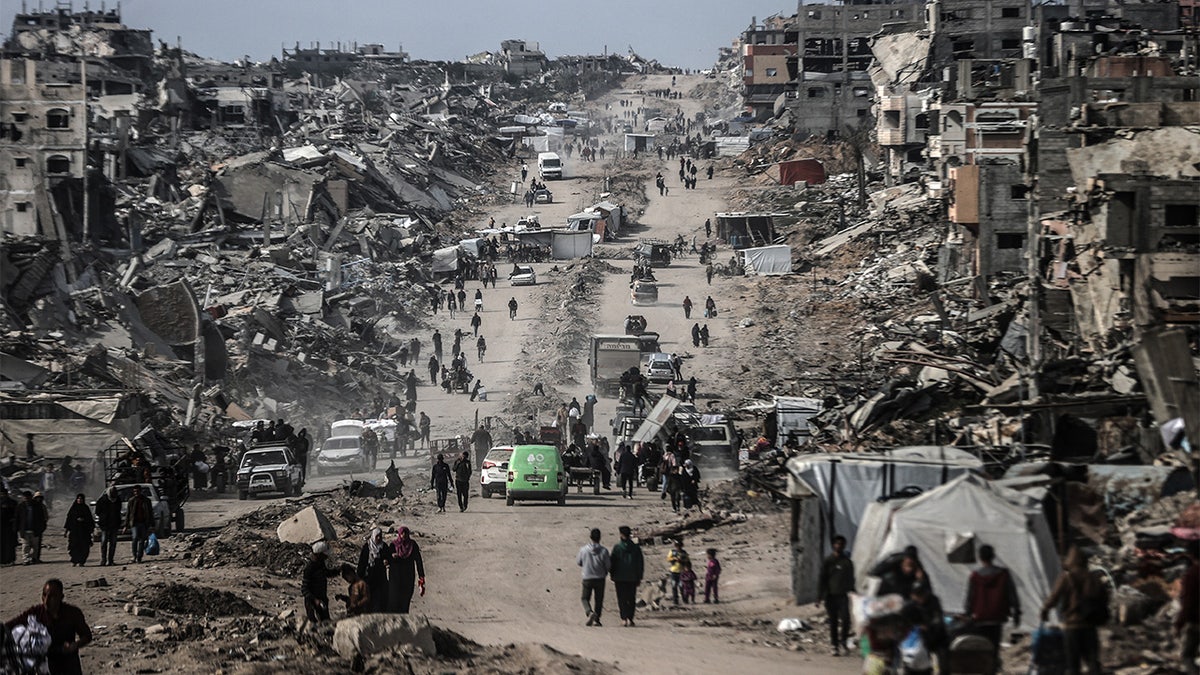
The closure of the United States’ flagship humanitarian mission in Gaza marks the end of a chaotic experiment in offshore diplomacy. While official channels point to shifting logistics and the expiration of temporary mandates, the reality is far more clinical. The maritime corridor, once heralded as a symbol of American ingenuity and commitment to civilian relief, has been dismantled because it no longer serves a political purpose for an administration facing a deadlock in peace negotiations. Washington is effectively pulling the plug on its most visible aid artery at a moment when the regional stability it was meant to preserve is at its most fragile.
The pier was always a stopgap. It was a $230 million piece of political theater designed to bypass the gridlock at land crossings while keeping American boots off the sand. But the infrastructure was never a match for the Mediterranean’s temperament or the complexities of a war zone where aid is often treated as a tactical commodity. By shuttering the mission now, the U.S. is signaling a retreat from direct humanitarian management, leaving a vacuum that neither the local authorities nor international NGOs are currently equipped to fill. Expanding on this idea, you can find more in: Mali Internal Purge Is Not Justice It Is Survival.
The Logistics of a Failed Ambition
Military engineers will tell you that the sea is an unforgiving partner in warfare. The Joint Logistics Over-the-Shore (JLOTS) system was designed for calm waters and permissive environments, not the high-energy coastline of Gaza. From the start, the mission was plagued by mechanical failures and structural breakages caused by heavy swells.
But the physical collapse of the pier was only a symptom of a deeper strategic misalignment. The U.S. military was tasked with delivering food and medicine to a shoreline where it had no security partners it could officially acknowledge. This created a paradoxical situation where tons of supplies sat on the beach, unable to be distributed because the "last mile" of the journey remained a gauntlet of active combat and civil collapse. Analysts at USA Today have shared their thoughts on this trend.
Experts in maritime logistics argue that the resources spent on the pier could have powered a massive expansion of land-based convoys. Land routes are cheaper, more reliable, and capable of moving ten times the volume of a floating dock. The decision to prioritize the sea route was a choice to prioritize optics over efficiency. It allowed Washington to claim it was taking action without having to exert the necessary pressure on regional allies to open the gates at Rafah or Kerem Shalom.
The Trump Factor and the Policy Freeze
The timing of this closure cannot be divorced from the looming shadow of the upcoming U.S. election. The "Trump Plan," or the remains of the Abraham Accords framework, has created a secondary gravity well that is pulling at current State Department efforts. Foreign diplomats in the region are increasingly hesitant to commit to long-term American-led initiatives because they are betting on a radical shift in U.S. foreign policy by next year.
This "wait and see" approach has paralyzed the current administration’s ability to secure a sustainable ceasefire or a "day after" governance plan. If regional players believe a different American leader will offer a more favorable deal in six months, they have no incentive to compromise today. The flagship mission in Gaza is being sacrificed because it has become a liability—a visible reminder of an administration that is struggling to project influence in a theater it once dominated.
The stalling of these diplomatic efforts means that the humanitarian mission was operating in a vacuum. Without a political horizon, aid is just a way of managing a catastrophe rather than solving it. The closure suggests that the U.S. has reached the limit of its willingness to manage that catastrophe through direct, high-profile military intervention.
The Intelligence Gap and Distribution Chaos
Beyond the political and the physical, there was a fundamental failure in intelligence regarding the internal dynamics of Gaza’s distribution networks. The U.S. assumed that once aid hit the beach, the existing humanitarian machinery would take over. They were wrong.
The social fabric of the territory has been shredded to the point where "humanitarian aid" is often seized by local gangs, desperate individuals, or diverted by combatants. By placing the delivery point in a specific, high-visibility coastal area, the U.S. inadvertently created a focal point for conflict.
Why Land Crossings Remained the Real Battleground
- Reliability: Trucks don't wash away in a storm.
- Volume: A single land crossing can handle 500 trucks a day; the pier struggled to hit a fraction of that consistently.
- Cost: The per-ton cost of maritime aid in this mission was astronomical compared to standard terrestrial shipping.
- Security: Land routes allow for established checkpoints and more predictable security corridors.
The insistence on the maritime route was a tacit admission that the U.S. could not, or would not, compel its partners to facilitate a land-based solution. It was an expensive workaround that ultimately proved that there are no shortcuts in a conflict of this scale.
The Human Cost of Strategic Withdrawal
When a mission of this magnitude shuts down, the immediate impact is felt in the calories consumed by children in northern Gaza. The "flagship" status of the mission meant that other NGOs and international bodies adjusted their planning based on the expected flow of American maritime aid. Now that the tap is being turned off, there is a scramble to find alternatives.
The closure isn't just about a pier. It’s about the message it sends to the rest of the world: the United States is narrowing its scope of responsibility. For decades, the U.S. has projected power through its ability to provide unmatched logistical support in times of crisis. Seeing that power stymied by a combination of bad weather and even worse politics is a watershed moment for American influence in the Middle East.
Critics of the withdrawal argue that the U.S. should have reinforced the mission, regardless of the cost, to prove its resolve. Proponents of the closure say it was a necessary "sunk cost" correction. Both sides miss the point that the mission's failure was baked into its inception. You cannot solve a political blockade with an engineering project.
The Vacuum of Authority
As the American presence recedes, the question of who will oversee the coastal security of Gaza remains unanswered. The dismantlement of the pier leaves a stretch of coastline that was briefly internationalized back in the hands of whoever has the most guns on any given day. This creates a new security nightmare for any future maritime efforts, whether they are launched by European partners or private contractors.
The mission’s end also leaves a massive hole in the data. The U.S. had been using the pier as a sensory post of sorts, gaining granular information on the flow of people and goods in the central strip. Without that "eye on the ground," Washington is flying even more blind than before.
The Shift Toward Private Contractors
One of the most overlooked aspects of this transition is the pivot toward private entities. As the U.S. military exits, there is a growing movement to replace official government missions with "commercial solutions." This is a dangerous path. Private contractors lack the accountability of a national military and often prioritize profit or specific client interests over neutral humanitarian principles.
The privatization of aid in Gaza would be the final stage of the mission’s degradation. It would move the crisis from a matter of international law and state responsibility into the murky world of corporate security and logistics. This is the "Brutal Truth" of the current situation: the U.S. isn't just closing a pier; it's offloading the moral and logistical burden of a starving population onto a global market that is fundamentally unequipped to handle it.
The diplomatic deadlock in Washington and the inability to move the needle on a ceasefire have turned Gaza into a laboratory for failed ideas. The maritime corridor was the most expensive of those ideas. Its disappearance won't just be a footnote in a news cycle; it will be the moment historians point to when they discuss the limits of 21st-century American power.
The removal of the last structural pieces of the pier from the Gaza shoreline is a literal and figurative dismantling of a specific brand of American foreign policy. It was a policy that believed technology and money could substitute for hard-nosed diplomacy and the exertion of real pressure on allies. With the pier gone, the U.S. is back where it started—staring at land crossings that remain closed and a political landscape that is more frozen than ever. The mission is over, but the crisis has only entered a more desperate, less visible phase.