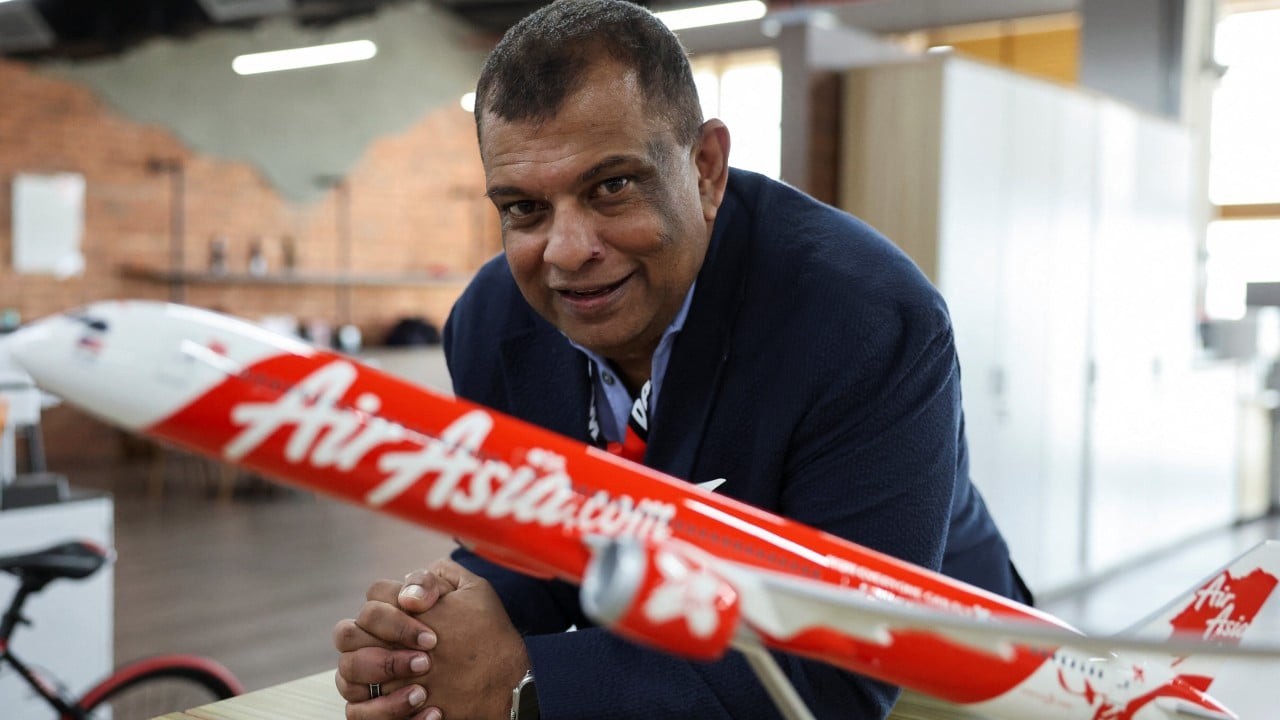
The air inside the cabin smelled faintly of stale coffee and recycled ozone. Outside, twenty thousand feet below, the asphalt arteries of Southeast Asia pulsed with a familiar, relentless rhythm. Somewhere down there, in the humidity of a tarmac terminal, a billionaire airline executive was leaning into a microphone, firing off a casual insult about a neighboring island's obsession with tiny metal boxes on wheels.
It was meant to be a joke. A bit of corporate theater between aviation moguls who treat national borders like trading floors.
Up here, looking down at the patchwork of concrete and emerald green, the joke felt hollow. Because while the executives were bickering over ego and market share, the ground beneath them was shifting. Literally.
Consider a man named Marcus. He is thirty-four, lives in Singapore, and spends his mornings calculating the precise angle of a MRT train door relative to his office lobby. For a decade, Marcus carried the heavy, debt-laden badge of honor that every ambitious urbanite in the region was handed at birth: a four-door sedan, polished to a mirror shine, depreciating the moment it crossed the causeway.
To own a car in Singapore is not merely to buy transportation. It is to purchase an albatross. You bid thousands of dollars just for the right to bid for a Certificate of Entitlement, a piece of government paper that costs more than a modest house anywhere else on earth. You pay steep ERP electronic road pricing tolls just for the privilege of sitting in a queue behind a lorry. You bleed money into parking, insurance, maintenance, and petrol, all to crawl at fifteen miles per hour down CTE during a tropical downpour.
Marcus lived that exhaustion. Every single month, forty percent of his take-home pay evaporated into a mechanical asset that spent twenty-two hours a day parked, gathering dust and pigeon droppings.
Then came the shift. It wasn't advertised with a grand decree. It arrived quietly, through aching calves and empty bank accounts.
The Cost of the Metal Box
We have built our modern cities around an expensive lie. We convinced ourselves that freedom looks like a steering wheel, that autonomy is measured in horsepower, and that dignity has four wheels and a leather interior.
In dense urban environments across Asia, that illusion is shattering. The math simply refuses to work anymore. When population density hits a certain critical mass, the private automobile stops being an instrument of liberty and becomes a mutual torture device.
The aviation chief’s jab—aimed at Singapore’s aggressive pivot toward public transit and pedestrian-first infrastructure—was a symptom of an older worldview. It belonged to an era where mobility was synonymous with private ownership. If you didn't own the engine, the narrative went, you were somehow less of a person.
Yet, walk through the heart of Singapore today, or look closely at the urban migration patterns rippling outward toward Kuala Lumpur, Bangkok, and Jakarta, and you see a different story unfolding. People are waking up to the math. They are trading the stress of the vehicle loan for the frictionless flow of the train network.
They are going car-lite.
It sounds clinical. A bureaucratic buzzword cooked up by urban planners in grey suits. But on the ground, car-lite is deeply visceral. It smells like fresh rain on sheltered walkways. It sounds like the synchronized hiss of sliding MRT doors. It feels like waking up on a Tuesday morning without the paralyzing dread of finding a parking spot or checking the COE bidding results.
The Anatomy of a Pivot
Let us be honest about why this transition is so terrifying to the old guard.
For decades, the automotive industry and its allies in aviation and real estate sold a lifestyle package. You grow up. You graduate. You get a job. You buy a car. The car signifies that you have arrived. It is the ultimate adult milestone, wrapped in clear-coat paint and financed over seven years at punishing interest rates.
When a populace begins to reject that package en masse, the shockwaves hit every corner of the economy.
Take the recent regional highlights that flashed across news screens last week. Alongside the aviation CEO’s public sparring match were quiet reports of soaring public transit ridership, exponential jumps in micro-mobility adoption, and radical redesigns of city streets to favor the pedestrian over the sedan.
These are not just policy adjustments. They are cultural rebellions.
When Marcus finally sold his car last autumn, he felt a momentary panic. The empty space in his driveway felt like a missing limb. His father looked at him with a mixture of pity and confusion. How do you get around? How do you show success?
Marcus tested the alternative. He downloaded the apps. He learned the bus routes that bypassed the highway bottlenecks. He bought a lightweight folding bicycle for the last-mile stretch from the station to his apartment complex.
Within a month, the panic dissolved. It was replaced by something entirely unexpected: time.
Instead of white-knuckling his steering wheel while staring at the brake lights of a Mercedes truck, Marcus started reading books on the train. Real books. Paperbacks with dog-eared pages. He started noticing the way the morning light hit the Angsana trees along the park connector. He arrived at his office with his pulse below ninety beats per minute, free from the toxic cortisol soup of morning gridlock.
The Invisible Stakes
Why does any of this matter beyond the borders of a single island nation?
Because Asia is writing the playbook for the future of human habitation. By 2050, the vast majority of the world's population will live in hyper-dense urban centers. We cannot pave our way out of congestion. We cannot build enough multi-story parking garages to satisfy an endless appetite for personal metal boxes. The physical laws of geometry forbid it.
When leaders mock the transition away from car ownership, they are whistling past the graveyard of an unsustainable past. They are clinging to a twentieth-century definition of progress that relies on burning fossil fuels to move two tons of steel so one person can carry a laptop to a coffee shop.
The human element here is about reclamation.
Every square foot of concrete reclaimed from a multi-lane highway is a square foot returned to human life. It is a pocket park where children can scrape their knees. It is a wider sidewalk where neighbors can stop and talk without shouting over the roar of idling engines. It is clean air filling the lungs of people who have spent too many decades coughing through haze and exhaust.
When we look at the seven major highlights making headlines across the continent right now—from aviation spats to shifting commuter habits—we are watching the friction between two worlds.
There is the old world of high status, high debt, and high friction.
And there is the new world, quieter, harder to measure in quarterly earnings reports, but infinitely more sustainable for the human spirit.
Marcus doesn't miss his car. When asked about it now, he just smiles and taps the small plastic card in his pocket. It opens gates. It bridges neighborhoods. It connects him to a city that is finally remembering what it means to move together, rather than apart.
The executives can keep their microphones and their traded insults on the tarmac. Down here, on the ground, the future is moving on two feet, two wheels, and rails of steel. And it is moving fast.