Five o’clock on a Friday used to have a very specific sound.
It was the sharp, metallic hiss of an aluminum tab breaking a seal, followed immediately by the soft clink of ice cubes settling into a heavy glass. For decades, that acoustic ritual was the undisputed national anthem of American decompression. You worked until your eyes burned, you survived the commute, and then you poured a drink to draw a thick, chemical line between the person who answers emails and the person who gets to exhale.
Listen closely at five o’clock today. The sound is different.
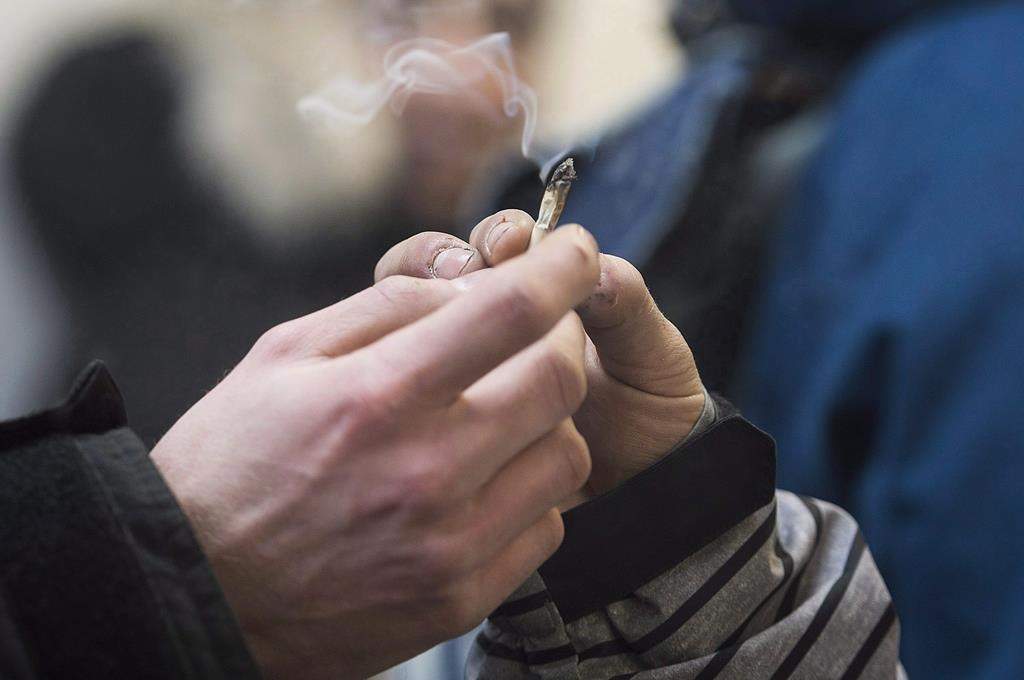
Now, it is the crinkle of a child-resistant Mylar pouch. It is the faint, electronic click of a battery-powered vaporizer heating up, or the quiet pop of a tiny aluminum tin holding two-milligram fruit chews. The clink of glass is fading into background noise, replaced by a silent, amber-lit exhale.
We are living through one of the sharpest behavioral pivots in modern public health, and almost nobody noticed it happening because it didn't arrive with a parade. It arrived in living rooms, on back porches, and in the quiet hours right before bed. According to landmark analysis of data from the National Survey on Drug Use and Health, led by cannabis policy researcher Jonathan Caulkins at Carnegie Mellon University, the number of Americans using cannabis daily or near-daily has officially surpassed the number of people drinking alcohol every day.
Stop and let that sink in.
In 2022, roughly 17.7 million people reported using marijuana daily or near-daily, compared to 14.7 million daily or near-daily drinkers. Thirty years ago, back in 1992, the numbers looked like an inverted universe: fewer than one million people used cannabis daily, while nearly nine million drank every day. Over three decades, daily cannabis consumption didn't just creep upward—it multiplied by more than fifteen times.
Numbers on a spreadsheet rarely capture what it feels like to change a habit that has defined human civilization since the invention of agriculture. To understand what is actually happening beneath those seventeen million data points, you have to look at the kitchen counters and bedside tables of ordinary people.
The Architecture of a New Ritual
Consider a hypothetical composite of the modern thirty-something professional—let’s call her Maya. Maya is thirty-four, works in logistics, and spent her twenties believing that unwinding meant splitting two bottles of Sauvignon Blanc with friends on a Thursday night and spending Friday morning nursing a dull throb behind her eyes.
A few years ago, Maya noticed the math stopped working. Two glasses of wine no longer delivered a warm buzz; they delivered fragmented sleep, a racing heart at three in the morning, and a sluggish fog that lasted until noon. She didn't have a dramatic rock-bottom moment. There was no intervention, no shattered glass, no tearful vow of sobriety. She simply got tired of borrowing happiness from tomorrow at a predatory interest rate.
So, one Tuesday evening, she walked into a brightly lit dispensary that looked more like an Apple Store than a back-alley headshop. She bought a tin of low-dose gummies formulated with CBN and five milligrams of THC. That night, instead of pouring a glass of cabernet while making pasta, she ate half a gummy. Forty-five minutes later, the sharp edges of her workday softened. She slept eight uninterrupted hours. She woke up at six, drank her coffee, and went for a run.
Maya is not a counterculture rebel. She is not chasing a psychedelic peak. She is using a plant the way her parents used a gin and tonic: as a blunt instrument to turn down the volume on a noisy brain.
I remember the exact moment I realized this shift had swallowed my own social circle whole. A few summers ago, I hosted a backyard dinner for eight friends—people in their late thirties and forties, mostly parents, teachers, and mid-level managers. I bought two cases of craft beer and four bottles of decent red wine, following the standard hosting math I had used since college. By the time everyone left at eleven, three of the wine bottles were still corked, and nearly all the beer sat untouched in the melting ice. Meanwhile, a sleek glass pen and a tiny tin of sour watermelon chews had quietly circulated around the patio table all night. Nobody slurred their words. Nobody argued about politics at top volume. Everybody drove home safely, or walked down the block with steady feet.
We didn't have a policy discussion about generational shifts. We just stopped buying booze.
Why the Bottle Lost Its Grip
To understand why alcohol is losing its monopoly on human relaxation, you have to look at the collision of three massive forces: biology, cultural memory, and relentless marketing.
For centuries, alcohol enjoyed an unchallenged cultural immunity. It was woven into weddings, funerals, business deals, and religious sacraments. Even when we knew it was a literal poison—a Group 1 carcinogen linked to liver disease, heart failure, and seven types of cancer—we treated those risks as distant abstractions. The hangover was framed as a badge of honor, a comedic rite of passage celebrated in movies and country songs.
Then came the wellness boom, wearable sleep trackers, and a generation raised on real-time biometric data. When millions of people strapped Oura rings and Apple Watches to their wrists, alcohol’s PR campaign collapsed overnight. You cannot romanticize a glass of pinot noir when an app on your phone shows you a bright red graph proving that two drinks spiked your resting heart rate by fifteen beats per minute and destroyed your REM sleep. Data stripped alcohol of its glamour.
At the exact same time, the legal and cultural architecture around cannabis was being dismantled. Between 2012, when Colorado and Washington became the first states to legalize recreational marijuana, and the mid-2020s, access went from a felony risk to a five-minute errand. As legal markets expanded, the stigma evaporated. Once a substance becomes regulated, taxed, and sold in well-lit storefronts with QR codes linking to lab tests, the human brain stops categorizing it as a dangerous vice and starts categorizing it as a consumer good.
Think of it like the transition from bootleg moonshine during Prohibition to canned beer in the grocery aisle, except compressed into a single decade and supercharged by modern branding.
Yet there is a profound catch hidden inside that convenience, and pretending otherwise would be dishonest.
The Invisible Escalation
Here is where the story gets complicated, and where the triumphant narrative of "clean, hangover-free relaxation" runs straight into biological reality.
When Jonathan Caulkins and his team analyzed those four decades of federal survey data, they didn't just find that more people were using cannabis. They found that the intensity of use had transformed. Today, roughly forty percent of current cannabis users consume it daily or near-daily. Compare that to alcohol, where only about eleven percent of current drinkers consume it every day.
Read those two percentages again.
Most people who drink alcohol do so occasionally—a beer at a ballgame, a glass of champagne at a wedding, a cocktail on Saturday night. Alcohol has a built-in, agonizing alarm system. If you drink too much on a Tuesday, your body punishes you violently on Wednesday morning. Nausea, dehydration, anxiety, and pounding headaches act as natural speed bumps that keep millions of casual drinkers from turning a weekend habit into a daily dependency.
Cannabis lacks that physical hangover. You can use it on Monday night, wake up on Tuesday feeling clear-headed, and repeat the cycle on Wednesday, Thursday, and Friday without ever hitting a physical wall.
Because there is no immediate punishment, the slide from "I use this to unwind on weekends" to "I cannot fall asleep without it" happens silently. It is like turning up the thermostat one degree a week; you never feel the sudden blast of heat, until one day you realize you cannot survive without the air conditioning cranked to maximum.
Let’s look at another hypothetical scenario—call him David, a twenty-six-year-old software developer living in a legal state. David started using high-potency vape cartridges during the pandemic to cope with isolation and screen fatigue. Unlike the ditch weed of the 1970s, which hovered around two to four percent THC, modern concentrates regularly pack eighty to ninety percent THC. Within a year, David wasn't just taking a puff before bed. He was hitting his pen before making breakfast, before logging into Zoom calls, and before going to the gym. He never missed a deadline. He never got a DUI. On paper, he was thriving.
Internally, his baseline had shifted. Food tasted bland unless he was high. Movies felt boring. Minor frustrations triggered waves of irritability. When he finally tried to take a week off for a family trip, he couldn't sleep for three nights, drenched his sheets in sweat, and felt a crushing, hollow anxiety he didn't recognize as withdrawal because nobody had ever told him cannabis withdrawal was real.
The Shadow Side of Potency
This is the blind spot in our current cultural celebration. We spent fifty years enduring hyperbolic, wildly inaccurate scare tactics—Reefer Madness propaganda claiming one puff would drive teenagers to insanity—so when those lies were exposed, the pendulum swung completely to the opposite extreme. A massive segment of the public convinced itself that cannabis is entirely benign, completely non-addictive, and incapable of causing real harm.
Science tells a much more nuanced story.
Cannabis Use Disorder is not a moral failure or a relic of the War on Drugs; it is a measurable neurochemical adaptation. When you flood the brain’s endocannabinoid system with high doses of THC day after day, the brain responds by downregulating its own CB1 receptors. In plain English, your brain stops producing its own natural mood-stabilizing chemicals because it assumes the external supply will always be there. When you stop, you are left running an emotional deficit until those receptors slowly grow back.
Furthermore, medical emergency rooms across North America have seen a sharp rise in cases of Cannabinoid Hyperemesis Syndrome—a bizarre, agonizing condition affecting heavy daily users that causes cycles of severe nausea and uncontrollable vomiting, famously relieved only by scalding-hot showers. Ten years ago, most ER doctors had never heard of it. Today, it is a routine diagnosis.
Then there is the question of mental health. While researchers still debate whether heavy cannabis use directly causes psychosis in healthy brains or simply triggers it earlier in people with a genetic predisposition, the correlation between high-potency daily use and psychiatric episodes in young adults is too consistent to ignore.
Does this mean alcohol is somehow safer? Not even close. Alcohol remains vastly more lethal, driving tens of thousands of deaths every year through liver cirrhosis, drunk driving crashes, alcohol poisoning, and violent crime. If you swapped every daily drinker in America for a daily cannabis user tomorrow, hospital trauma wards and morgues would see an immediate, dramatic drop in business.
The danger isn't that cannabis is worse than alcohol. The danger is that we are treating a potent psychoactive substance as if it were herbal tea.
Rewriting the Rules of Escape
We are standing in the middle of a massive, unregulated public health experiment, and every single one of us is a participant.
Think about what humans actually want when they reach for a bottle or a gummy at the end of the day. Nobody wakes up craving ethanol or tetrahydrocannabinol for their own sake. What we crave is a state change. We want a reliable bridge out of the relentless pressure of modern life—the financial stress, the constant ping of notifications, the ambient dread of the news cycle, the exhaustion of performing competence for ten hours straight.
For generations, society handed us one legal bridge and told us to cross it responsibly, even though the bridge was missing half its planks and collapsed under millions of families. Now, we have built a second bridge right next to it. It is smoother, quieter, and doesn't leave you bruised the next morning, so naturally, millions of people are abandoning the old path and crowding onto the new one.
Yet a bridge is still just a way to get across a river; if you start living on the bridge, you forget how to walk on solid ground.
What makes this generational shift so fascinating—and so deeply personal—is that we no longer have a shared cultural script for moderation. Our grandparents knew the unwritten rules of drinking: don't drink before noon, don't drink alone, switch to water after two, never drive buzzed. Those rules weren't foolproof, but they existed as common wisdom passed down around dinner tables.
We have almost zero inherited wisdom for modern cannabis. Most parents don't know how to talk to their kids about the difference between a five-milligram edible and an eighty-five-percent THC dab rig. Adults who grew up sneaking joints behind bleachers in the nineties are completely unprepared for the pharmaceutical precision—and raw strength—of contemporary dispensary shelves. We are flying without instruments in a plane that moves ten times faster than the one we learned to pilot.
Look around any neighborhood on a Friday evening now, and you can see this quiet revolution unfolding in real time.
The bars aren't empty, and breweries aren't disappearing overnight, yet the gravitational pull has undeniably shifted. The ritual of intoxication is moving indoors, becoming quieter, more individualized, and deeply woven into the routines of ordinary, high-functioning life. Millions of people have traded the loud, messy crash of alcohol for the soft, steady hum of cannabis, convinced they have finally found a way to take the edge off without paying the price.
Maybe they have. Or maybe they have simply traded a loud debt collector for a quiet one who waits patiently at the door, counting the days until you try to walk away.