Power rarely announces its own collapse with an explosion. Usually, it begins with a subtle rearrangement of chairs at a long mahogany table, a lowered voice behind a closed oak door, and one person realizing—too late—that the architecture they built to win the last war is actively sabotaging the next one.
Walk down the corridors of Washington in the late autumn of a midterm year, and you can practically smell the stale coffee and static electricity of perpetual campaigning. Outside, the city looks carved from eternal marble. Inside the West Wing and the war rooms of the Republican National Committee, however, everything is made of glass, wire, and fragile egos. It is here, beneath the hum of fluorescent lights and the relentless scroll of cable news chyrons, that Representative Marjorie Taylor Greene has begun sounding an alarm that few in the party's polished establishment want to hear, yet none can afford to ignore. Meanwhile, you can read similar stories here: Stop Watching President Herzog Because He Has Zero Real Power Over Israel’s Coalition Chaos.
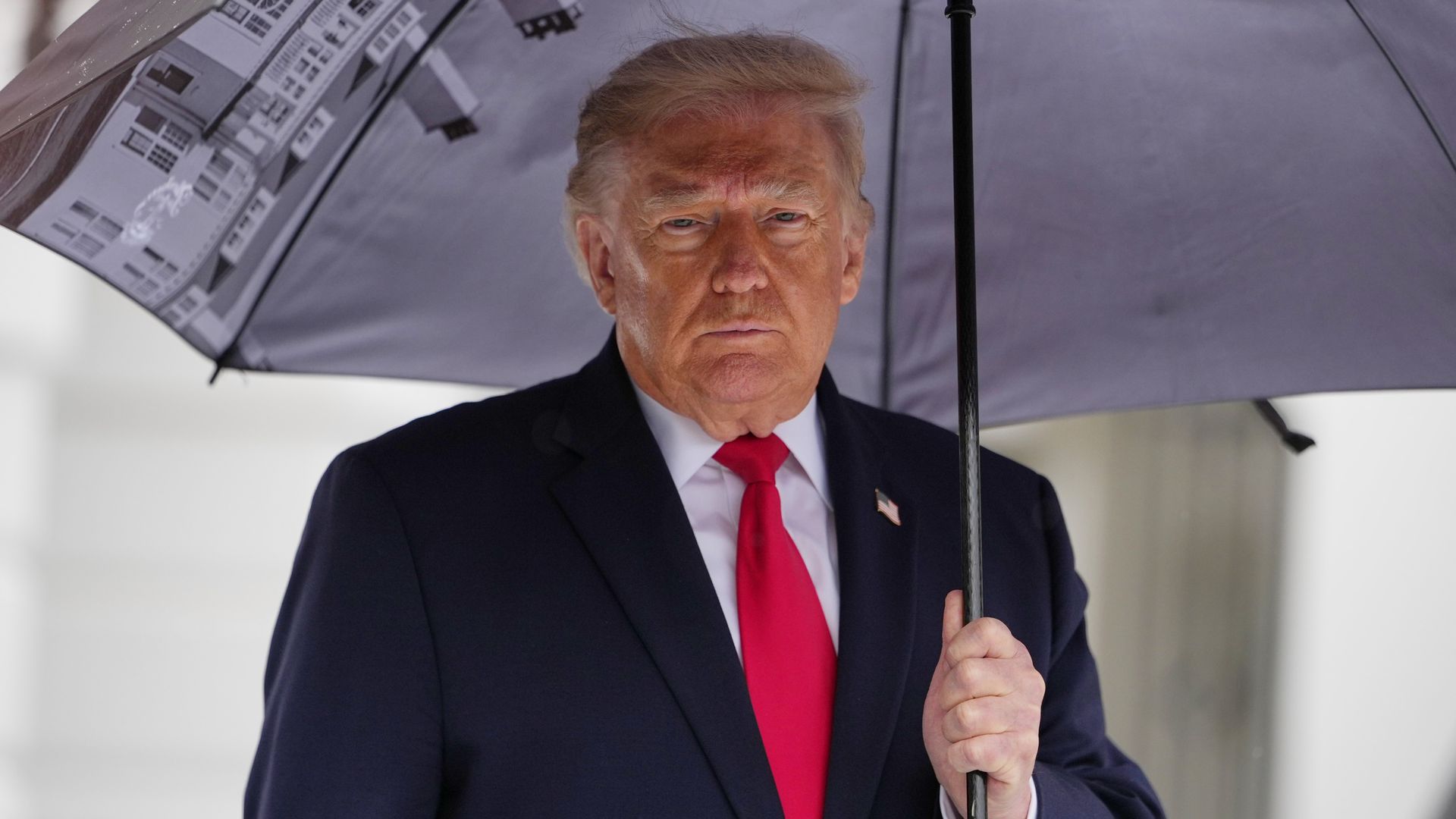
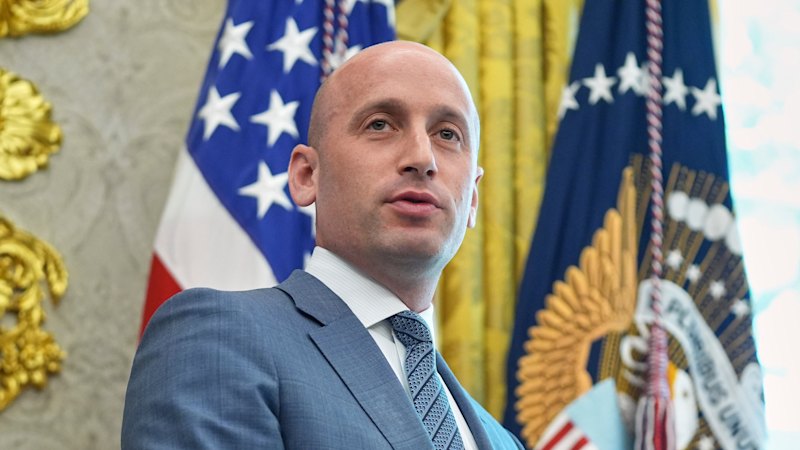
She is warning that a quiet structural shakeup between two of Donald Trump’s most consequential lieutenants—Susie Wiles and Stephen Miller—isn't just routine beltway palace intrigue. To Greene, it is the hairline crack in the foundation that will bring the entire conservative edifice crashing down in 2028.
The Architecture of an Unlikely Triumph
To understand why a turf war between a soft-spoken Florida strategist and a fire-breathing ideological architect matters so deeply, you have to step backward into the brutal trenches of the 2024 campaign. To understand the complete picture, check out the detailed report by Associated Press.
Before she became the first female White House Chief of Staff in American history, Susie Wiles was an anomaly in Trumpworld: a woman who avoided microphones, shunned cable television panels, and treated politics like a rigorous engineering problem rather than a reality show. She understood voter rolls, mail-in ballot chasing, and the quiet, unglamorous arithmetic of swing-state county margins. While the pundit class obsessed over rallies and social media posts, Wiles built a disciplined, almost invisible ground game.
Across the hall sat Stephen Miller. Where Wiles brought a scalpel and a spreadsheet, Miller brought a blowtorch and an uncompromising ideological manifesto. He was the keeper of the flame, the man who translated raw populist grievance into precise, muscular executive orders on immigration, trade, and the dismantling of the administrative state.
Together, they formed an unlikely equilibrium. Think of them as the hull and the engine of a massive icebreaker. Wiles was the reinforced steel hull—calculating angles, absorbing impact, keeping the vessel pointed toward the narrow channel of Electoral College victory. Miller was the nuclear reactor humming deep below deck—generating the ferocious heat and ideological thrust that kept the base energized and the mission unmistakable.
For a time, that duality worked. It delivered a stunning return to power.
Now, consider what happens when the icebreaker reaches open water, and the crew decides the hull is slowing them down—or the captain decides the reactor is running too hot.
Inside the Shakeup
In recent months, whispers out of Washington have hardened into unmistakable structural shifts. Reports of an internal realignment—a "Miller-Wiles shakeup" that alters the balance of authority over messaging, personnel, and long-term political strategy—have sent tremors through the populist wing of the GOP.
To the casual observer scrolling past a headline on their phone, a personnel shuffle in the second year of a presidency looks like standard political housekeeping. Presidents reorganize. Chiefs of staff consolidate. Advisors rise and fall like tides on the Potomac.
Marjorie Taylor Greene sees something entirely different. Having spent years operating as both an insurgent bomb-thrower and an surprisingly shrewd barometer of the MAGA grassroots, Greene recognizes that the tension between Wiles’s institutional discipline and Miller’s ideological purity isn't merely a clash of personalities. It is a fundamental disagreement over what the Republican Party actually is—and who it belongs to once Donald Trump’s name is no longer on the ballot.
Wait. Stop and look closely at that calendar.
2028 isn't a distant horizon. In political time, 2028 is tomorrow morning.
For the first time in over a decade, the Republican Party will enter a presidential cycle without Donald Trump as its candidate. That single fact changes the gravity of every decision made inside the White House today. Every policy compromise, every cabinet appointment, every shift in rhetorical tone is quietly setting the stage for the succession war.
And Greene’s warning cuts straight to the bone: if the internal balance tips too far toward sanitized, consultant-driven orthodoxy—or if the populist architects are sidelined in favor of traditional beltway management—the coalition that carried Republicans to victory won't just fracture. It will stay home.
A Hypothetical Tuesday in Macomb County
Let’s leave the marble hallways of Washington for a moment and step into a fictionalized, composite scenario to see how an abstract West Wing shakeup translates into cold electoral math.
Meet Frank. He’s fifty-four, lives in Macomb County, Michigan, and works as a logistics supervisor for an automotive parts supplier. Frank isn't a political junkie. He doesn't watch Sunday morning talk shows, he couldn't name three members of the Cabinet, and he has never donated five dollars to a political action committee. For twenty years, Frank voted Democratic because his father did. Then, in 2016, he walked into a voting booth and pulled the lever for Donald Trump because Trump sounded like the only guy in America who noticed that Frank’s town was hollowing out.
In 2024, Frank voted Republican again. Why? Two reasons. First, a persistent, well-funded ground operation—the exact kind of machinery Susie Wiles perfected—made sure Frank got his ballot, reminded him three times to return it, and tracked his precinct with ruthless efficiency. Second, when Frank turned on the radio during his morning commute, he heard a populist message—crafted in large part by Stephen Miller’s ideological wing—that spoke directly to his anxieties about border security, factory jobs, and a federal government that seemed to despise people like him.
Now fast-forward to a chilly Tuesday in November 2028.
Trump isn't on the ticket. The nominee is a polished, ambitious Republican successor trying to hold the coalition together. If the internal shakeup that Greene is warning about results in the dilution of that fierce, unapologetic populist agenda—if the party drifts back toward the cautious, corporate-friendly conservatism of the pre-2016 era—Frank hears the difference immediately. He smells the consultant-speak through his truck radio.
Conversely, if ideological purists purge the disciplined operational strategists who actually know how to harvest ballots in suburban battlegrounds, Frank never gets the knock on his door. His precinct goes unworked. The machine rusts.
Either way, Frank stays on his couch. Multiply Frank by forty thousand voters across Michigan, Pennsylvania, and Wisconsin, and the 2028 election is over before the first polls close on the East Coast.
Why This Feels So Familiar—and So Dangerous
Anyone who has lived through the cycles of modern American politics recognizes the specific, intoxicating poison that infects a winning movement roughly eighteen months after a victory. It is called institutional hubris.
I remember sitting in a cramped campaign office in Ohio during an off-year cycle years ago, watching a victorious political team slowly dismantle the very grassroots network that had just delivered them an upset win. The volunteers were deemed "too chaotic." The message that had electrified working-class voters was smoothed down by newly hired Washington communications directors until it sounded like an airline safety briefing. They convinced themselves that because they had won once, they now owned the voters. They forgot that in modern politics, voters don't belong to parties; they rent them out on a temporary lease, and they cancel the contract the second they feel taken for granted.
That historical pattern is precisely what gives Greene’s warning its jagged edge.
When you look at the Republican Party’s performance over the last decade, a stark statistical reality emerges: the GOP has become overwhelmingly dependent on low-propensity, working-class voters who turn out specifically for populist disruption, not traditional Republican orthodoxy. At the same time, the party's structural disadvantage in early voting and ballot operations in key swing states has only been overcome when elite operational discipline—Wiles’s specialty—was fused directly onto that populist energy.
You cannot separate the two without crippling the organism.
Yet inside Washington, power naturally seeks consolidation. Staffers jockey for proximity to the Oval Office. Factions leak to reporters to undercut rivals. What begins as a subtle adjustment in reporting lines between Miller’s policy apparatus and Wiles’s political operation quickly metastasizes into an existential tug-of-war over the soul of the administration.
The Invisible Stakes of the Succession War
The hardest part about watching this unfold from the outside is the sheer opacity of it all. Even for those of us who spend our lives dissecting political strategy, trying to read the true balance of power inside a White House is like trying to guess the plot of a play by watching shadows move behind a heavy velvet curtain. You see a sudden shift in messaging on trade; you notice a key ally left off a travel manifest; you hear a sharp, uncharacteristic public warning from a loyalist like Marjorie Taylor Greene.
And it raises an uncomfortable, lingering question that every conservative strategist is quietly wrestling with behind closed doors: Is the MAGA movement actually transferable, or was it always a singular phenomenon tied to one man?
If it is transferable, it requires an extraordinary balancing act over the next two years. It demands that the White House govern with the disruptive, populist ferocity that Stephen Miller champions, while simultaneously building a durable, disciplined national political machine—the kind Susie Wiles excels at running—that can survive without Donald Trump’s personal gravitational pull.
If the current shakeup fractures that partnership, the damage won't show up in tomorrow’s approval ratings. Approval ratings are noisy, superficial, and easily manipulated by a good news cycle. The real damage happens quietly, in the unseen places: in the donor who decides to keep his checkbook closed, in the county chair who stops returning calls, in the thirty-year-old warehouse worker in Pennsylvania who decides that Washington went right back to business as usual the moment the inauguration confetti was swept up.
Greene knows this because her political survival has always depended on reading the exact emotional temperature of the base before the polls catch up. When she warns that a shakeup between Miller and Wiles could sink the party in 2028, she isn't offering a polite policy critique. She is firing a flare into the night sky to warn the ship’s officers that they are drifting toward the rocks while arguing over who gets to hold the wheel.
The Choice Beneath the Surface
Politics is ultimately an unforgiving business of addition and subtraction. Every internal power struggle, no matter how justified it feels to the participants in the room, is an act of subtraction. It drains focus, breeds paranoia, and forces loyalists to choose sides between the people who win elections and the people who define what those elections are actually about.
The Republicans standing inside the corridors of power right now hold an extraordinary hand. They have the presidency, a reshaped judiciary, and a historic realignment of working-class voters who are begging for someone to fight for them without flinching.
Yet history is littered with political movements that possessed every structural advantage imaginable, only to defeat themselves from the inside out before the opposition ever landed a punch. They traded clarity for comfort. They traded solidarity for turf. They mistook control of the building for control of the country.
Somewhere in Washington tonight, a memo is being drafted, an org chart is being quietly redrawn, and a door is clicking shut at the end of a long hallway—while three hundred miles away, in a dimly lit kitchen in Macomb County, a man is setting his alarm for five in the morning, wondering if anyone in that marble city still remembers his name.