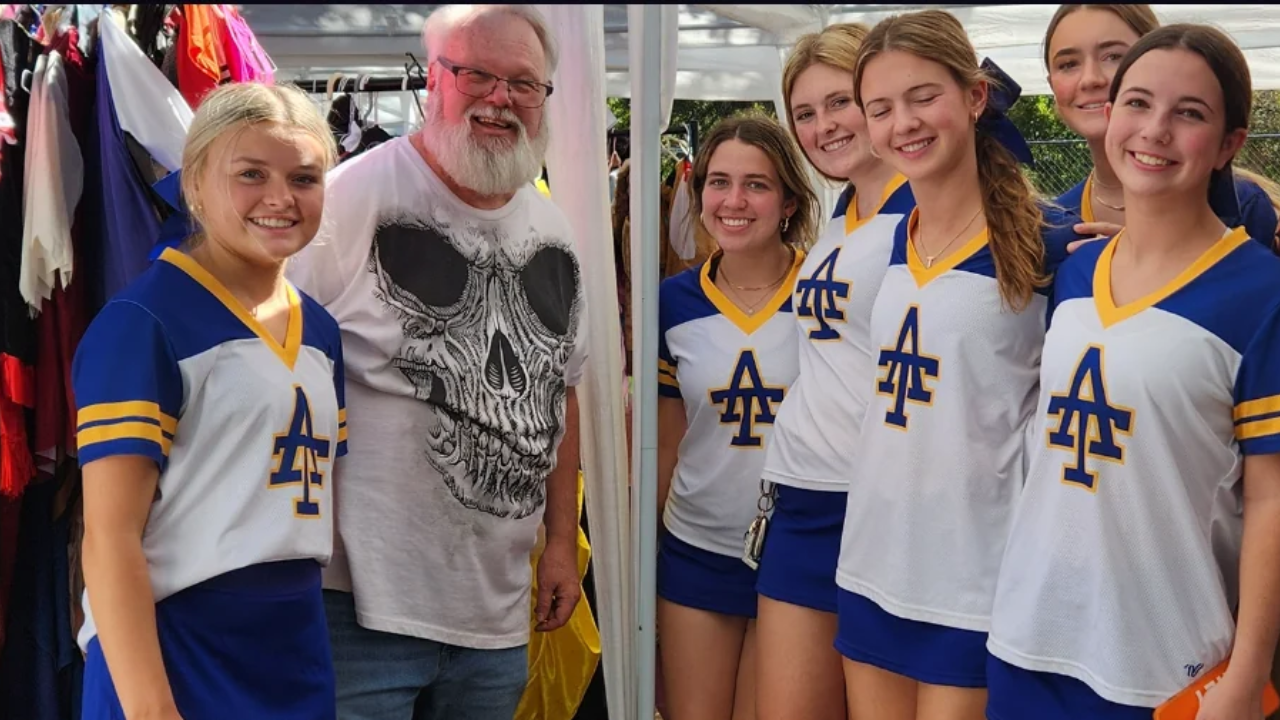
Since founding October's Child in 2017, Texas organizer Christophe Waggoner has distributed 8,000 free Halloween costumes to local families, with an ambitious target to give away another 4,000 in 2026. Most local news segments treat a milestone like this as a simple feel-good human-interest story. They show a smiling founder, a few racks of donated superhero capes, and a heartwarming quote about community spirit. That surface-level coverage misses the real story entirely. Moving twelve thousand seasonal garments across a sprawling state without the backing of a Fortune 500 supply chain is not merely an act of kindness. It is an intensive exercise in reverse logistics, seasonal inventory forecasting, and grassroots fiscal survival.
When you strip away the sentimental framing, October's Child operates in one of the most unforgiving retail sectors in North America. Halloween is a hyper-compressed economic event. Unlike winter coat drives or back-to-school backpack distributions, which enjoy multi-month utility windows and steady institutional funding, a Halloween costume has an expiration date measured in hours. By November 1, the perceived social value of a child's costume drops to near zero. Yet for a low-income family in October, the inability to afford a thirty-five-dollar polyester jumpsuit creates an immediate, acute social exclusion.
Waggoner recognized this friction point nine years ago. What started as a modest personal effort in 2017 has scaled into a multi-thousand-unit annual operation. Going from an average of roughly 880 costumes a year over nine seasons to a single-year jump of 4,000 units in 2026 represents a massive operational inflection point. Understanding how a grassroots initiative makes that leap reveals both the hidden economics of holiday charity and the structural vulnerabilities that threaten community nonprofits when they grow too fast.
The Hidden Economics of Seasonal Exclusion
To understand why October's Child exists, you have to look at the household balance sheets of working-class families in Texas. Inflation in grocery staples, utilities, and housing over the last several years has systematically wiped out discretionary spending for millions of households. In a tight budget, non-essential seasonal items are the first to go.
You cannot pay the electric bill with a plastic tiara. You cannot put a foam sword in the gas tank.
When a family is forced to choose between keeping the lights on and buying a costume for a school parade, the choice is obvious. However, the social cost to the child is significant. Childhood milestones are heavily commercialized, and Halloween is perhaps the most visible public display of peer inclusion in the elementary school calendar. Children who show up to school on October 31 in regular street clothes while their classmates wear elaborate outfits experience an immediate, visceral marker of economic disparity.
Standard charitable infrastructure rarely addresses this gap. Food banks focus on caloric survival. Clothing closets prioritize durable everyday wear like denim, cotton t-shirts, and winter outerwear. Traditional social safety nets are designed to keep people alive and employable, not to fund holiday magic. By stepping into that specific void, Waggoner targeted an emotional and social necessity that larger institutions routinely overlook.
The Retail Markup Trap
The pricing structure of the seasonal costume industry makes grassroots intervention almost mandatory for struggling families. Major pop-up retailers and big-box stores operate on high margins to offset the extreme risk of unsold inventory after October 31. A costume that costs less than four dollars to manufacture overseas routinely retails for forty to sixty dollars in a suburban strip mall.
For a family with three children, participating in a single night of trick-or-treating can easily exceed two hundred dollars once you factor in costumes, accessories, and candy. Thrift stores offer some relief, but secondary market inventory is notoriously picked over by mid-September. Resellers and early shoppers strip the racks of desirable sizes and popular characters weeks before paycheck-to-paycheck families have the spare cash to shop.
October's Child bypasses the retail markup entirely by capturing excess inventory, community donations, and bulk purchases outside the peak pricing window. By acting as a centralized clearinghouse, Waggoner's organization absorbs the logistical burden that individual families cannot afford to carry.
Inside the 4,000-Unit Scaling Challenge
Distributing 8,000 costumes over a nine-year span averages out to fewer than 900 units per season. That is a manageable volume for a dedicated founder working out of a garage, a rented storage unit, and a handful of community pop-up events. Jumping to 4,000 costumes in a single year changes the math completely.
Volume breaks informal systems.
When you scale a seasonal distribution model by more than four hundred percent in a single cycle, every minor inefficiency becomes a major bottleneck. Consider the physical reality of 4,000 costumes. Even compressed into plastic polybags, four thousand outfits occupy thousands of cubic feet of storage space. You can no longer store that inventory in a spare bedroom or the back of a personal SUV. It requires commercial warehousing, climate control to prevent mold and fabric degradation during hot Texas summers, and palletized organization.
The Sizing and Preference Matrix
Unlike canned soup or bottled water, costumes are not fungible commodities. If you have 4,000 cans of corn, you can feed 4,000 people regardless of their age, gender, or personal taste. If you have 4,000 costumes, you are fighting a brutal statistical battle against sizing and licensing trends.
A toddler size 2T princess dress is useless to a twelve-year-old boy who wants to be a superhero. Conversely, an abundance of adult-sized novelty outfits does nothing for a kindergarten class. To successfully match 4,000 costumes with 4,000 actual children, an organizer has to manage a complex inventory matrix across multiple variables:
- Age and Size Distribution: Toddlers, young children, tweens, and teenagers require distinct sizing blocks, with elementary school sizes (ages 5 through 10) experiencing the highest demand velocity.
- Character Relevance: Pop culture shifts rapidly. What was popular in 2017 is often unrecognizable to kids in 2026, meaning multi-year rollover inventory has a steep depreciation curve in desirability.
- Accessory Integrity: A donated costume missing its mask, belt, or headpiece requires manual inspection and repair before it can be gifted with dignity.
- Geographic Dispersion: Texas is massive. Moving 4,000 units requires either a centralized mega-event with heavy traffic management or a decentralized network of partner schools, shelters, and community centers.
The Dark Side of Donation Drives
Anyone who has ever run a clothing or toy drive knows an uncomfortable truth that rarely makes it into press releases. The public frequently treats charity drives as a guilt-free way to clean out their closets.
Roughly twenty to thirty percent of unsolicited clothing donations in typical grassroots drives are unusable. People donate torn fabric, stained garments, missing pieces, and items that smell of mildew or cigarette smoke. When a founder promises dignity to low-income families, they cannot hand a child a ripped costume with a broken zipper.
Sorting through thousands of donated items requires hundreds of hours of unpaid labor. Volunteers must inspect every seam, verify every size tag, launder soiled items, and repackage complete sets so they look presentable. If Waggoner's team is aiming for 4,000 distributed units in 2026, they likely have to process, sort, and inspect upwards of 5,000 to 5,500 raw garments to achieve that net yield.
| Operational Phase | Small-Scale (Under 1,000 Units) | Mass-Scale (4,000+ Units) | Primary Bottleneck |
|---|---|---|---|
| Acquisition | Local social media pleas and friend networks | Corporate liquidations, bulk wholesale, and city-wide drives | Cash flow for bulk purchasing |
| Storage | Residential garage or single self-storage unit | Commercial warehouse space or multi-unit facilities | Overhead rent during off-peak months |
| Processing | Founder and family sorting on weekends | Scheduled volunteer shifts and standardized inspection | Quality control and missing accessories |
| Distribution | Single weekend pop-up or porch pickups | Multi-site school partnerships and timed ticketed events | Crowd control and size matching |
To avoid drowning in unusable clutter, mature grassroots organizations eventually pivot away from relying solely on secondhand household donations. They begin cultivating direct relationships with liquidators, seasonal wholesalers, and corporate sponsors who can provide new-in-bag overstock. The trade-off is financial. Secondhand donations are free to acquire but expensive in labor. Wholesale overstock is clean and standardized, but it requires hard fundraising dollars upfront.
The Grassroots Burnout Trap
There is a well-documented lifecycle in founder-led community initiatives, and October's Child is sitting squarely in its most dangerous phase. In the early years, adrenaline and community praise fuel the operation. The founder does the driving, the sorting, the social media promotion, and the heavy lifting.
By year nine or ten, the novelty has worn off, while the expectations have compounded. When you publicly commit to doubling or quadrupling your output—moving from 8,000 cumulative costumes over nine years to 4,000 in a single season—you create a public accountability trap. Families expect the racks to be full. Local partners rely on your inventory to anchor their own fall festivals.
Yet grassroots charities rarely attract the multi-year operational grants that fund full-time executive salaries or administrative staff. Donors love buying a twenty-dollar costume because the impact is tangible and immediate. Donors hate paying for commercial liability insurance, storage unit rent in April, fuel reimbursements, or accounting software.
This dynamic starves small organizations of infrastructure just as their operational complexity peaks. Without paid logistical support or a deep bench of reliable middle-management volunteers, the entire weight of the 4,000-unit target rests on the founder's shoulders. One illness, one lost storage lease, or one shortfall in autumn fundraising can collapse the distribution pipeline weeks before Halloween.
Evaluating the Real Impact of Seasonal Charity
Critics of holiday-specific charities often argue that seasonal giving is a band-aid on systemic poverty. They point out, accurately, that giving a child a free Halloween costume does nothing to fix stagnant wages, inadequate healthcare, or underfunded public schools. From a strictly utilitarian macroeconomic perspective, seasonal gifting yields zero long-term return on investment.
That critique completely misunderstands human psychology and community resilience.
Poverty is exhausting. It is an endless grind of deferred desires, constant compromises, and quiet humiliations. When an organization like October's Child steps in to hand a child a brand-new costume with zero means-testing, zero judgment, and zero paperwork, it provides a brief, vital reprieve from that grind. For the parent, it removes a source of acute seasonal stress and allows them to say "yes" to their kid in a world that constantly forces them to say "no."
What Separates Sustainable Drives from One-Hit Wonders
If Waggoner and October's Child are going to sustain a 4,000-unit annual run rate beyond 2026, the operation has to evolve from a founder-driven passion project into a repeatable logistical system. Across the nonprofit sector, the grassroots drives that survive the ten-year mark share four distinct operational habits:
- Year-Round Acquisition Cycles: They do not wait until September to source inventory. They buy clearance stock on November 1 and November 2 at eighty to ninety percent off retail, storing it for eleven months to maximize every donated dollar.
- B2B Distribution Partnerships: Instead of trying to manage 4,000 individual family interactions in a single parking lot, they bulk-allocate inventory to Title I elementary school counselors, pediatric hospital wards, and domestic violence shelters who already know the exact sizes and needs of the children in their care.
- Strict Donation Guardrails: They publish rigid acceptance criteria—refusing unwashed, torn, or incomplete outfits—to protect their volunteer hours from being wasted on trash disposal.
- Dedicated Infrastructure Fundraising: They explicitly ask local businesses to sponsor the "unsexy" costs like warehouse space, box trucks, and garment racks, freeing up public cash donations strictly for hard-to-find sizes.
Christophe Waggoner's trajectory from a solo effort in 2017 to a 12,000-costume milestone proves there is massive, unmet demand for basic childhood normalcy across Texas. Pulling off a 4,000-unit distribution in a single season will test every seam of his operation, turning a neighborhood kindness project into a full-scale supply chain sprint against the calendar.