Rain hits the hot asphalt of Nathan Road at six in the evening, turning red minibus taillights into smeared crimson ribbons across wet stone. You stand beneath a concrete overhang in Mong Kok, feeling the hum of diesel engines vibrating up through the soles of your shoes, watching a junction lock up for the fourth time in ten minutes because a single double-parked van choked the left lane.
Chaos. Also making headlines in related news: AI Philanthropy is Mostly PR Theater Why Anthropic and Musk Miss the Real Threat.
That word is easy to toss around when you look at seven and a half million people squeezed into steep granite hills, narrow harbor tunnels, and some of the highest residential towers on Earth. Yet if you have spent enough late nights walking from Causeway Bay toward Happy Valley, or waiting at a bus stop when a sudden tropical downpour floods a low-lying road, you know Hong Kong does not suffer from a lack of motion. It suffers from friction. Too many moving parts bumping against one another in tight spaces, all at once.
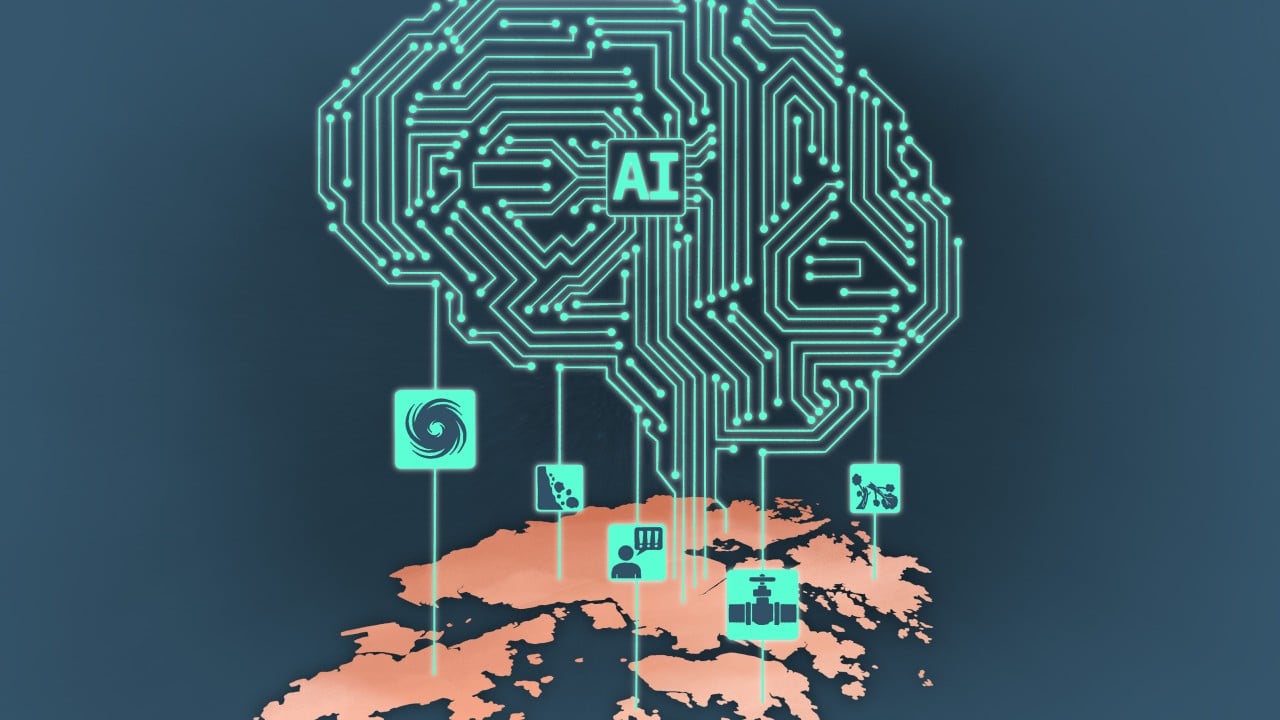
Now talk is turning toward an "AI city brain" for Hong Kong—a term that sounds like science fiction until you remember how cities actually work. A city brain is not a metal skull hovering above Victoria Harbour. In plain terms, it is an artificial intelligence system designed to pull live data from traffic cameras, road sensors, weather feeds, public transit logs, and emergency alerts, then spot bottlenecks and coordinate responses faster than human operators watching dozens of separate screens. Additional insights into this topic are explored by Gizmodo.
I will be honest with you: when I first hear phrases like "city brain," part of me feels a jolt of skepticism. We have watched grand digital promises trip over messy real-world streets before. A sensor gets blocked by scaffolding. A typhoon knocks out power to a junction box. A model trained on sunny Tuesday afternoons stumbles when a funeral procession, a sudden rain squall, and a Cross-Harbour Tunnel delay collide on a Friday night.
Still, if you care about how dense cities stay livable without turning every street into a gridlocked canyon, you cannot afford to treat this as mere tech jargon.
Why Tight Spaces Punish Old Habits
To see what is really at stake, let us use a hypothetical scenario—a composite of real pressure points thousands of commuters live through every week.
Picture Mei-Ling, a night-shift nurse trying to get from a clinic in Kowloon to a relative’s flat in Wan Chai before the harbor traffic swells. She checks her phone, steps onto a bus, and watches the minutes stretch while a minor fender-bender stalls traffic near the tunnel approach. Nothing dramatic happens—no sirens, no headlines—just twenty minutes of idling brake lights, rising blood pressure, and missed sleep before her next shift.
Now multiply Mei-Ling by tens of thousands of people across a compact geography where flat land is scarce and vertical density is extreme. In a sprawling low-rise city, a stalled truck might leave three open lanes around it. In Hong Kong, a single lane blockage can ripple through an entire district like a stone dropped into a small pond.
Historically, urban traffic and municipal management relied on fixed schedules, siloed departments, and reactive eyes. One team watched cameras; another managed street signals; another tracked buses or emergency dispatch. Humans are remarkable at reading context—an officer can see with one glance that a delivery driver is thirty seconds from pulling away—but human attention splits under pressure. When three incidents flare up across different corridors at rush hour, nobody has ten pairs of eyes.
This is where the smart city brain enters the story, not as a replacement for human judgment, but as an extra set of tireless nerves running along existing arteries. If an AI system can detect an abnormal slowdown within seconds, trace how it is feeding into neighboring intersections, and adjust signal timing or flag a hazard before gridlock hardens, the difference is measured in quiet minutes given back to ordinary lives.
Listening to the City Instead of Shouting at It
Think of a symphony orchestra playing without a conductor in a hall with tricky acoustics. Every section knows its notes, yet the brass rushes ahead while the strings lag behind the pillars.
A conventional city system is like musicians playing from separate sheet music in different rooms. An AI city brain—used here as a metaphor for a centralized, learning analytical layer rather than a literal mind—tries to hear the whole hall at once. It takes in streams of real-world signals: vehicle flow rates, pedestrian density, transit delays, rainfall intensity, and incident reports. Instead of treating each red light as an island, it looks for patterns across the network.
Let us separate reality from hype, because readers deserve straight talk rather than glossy brochures. Will an AI system magically create wider roads out of Victoria Peak? No. Concrete and steep hills do not bend for algorithms. Nor does data always arrive clean; cameras catch glare at dusk, construction alters lane lines overnight, and unexpected human behavior—a pedestrian stepping out, a taxi cutting across two lanes—defies tidy equations.
What a capable AI model can do is spot early drift. It can notice that traffic on a feeder road is backing up two minutes faster than usual on a rainy evening, predict where the tailback will reach in ten minutes, and help operators route alerts or tweak signal phases before the jam locks solid.
Those small adjustments sound modest on paper. Out on a wet street at dusk, saving five minutes of stop-and-go crawling means less exhaust trapped between high-rises, fewer frayed tempers at intersections, and a smoother handoff between buses, ferries, MTR stations, and sidewalks.
The Unseen Trade-Offs Under the Hood
Every system that watches a city closely carries quiet questions that never show up on a sleek dashboard.
Privacy is the first one that crosses my mind whenever cameras and sensors multiply. People walking down a busy street do not want their daily routines turned into a permanent dossier, nor do they want opaque automated decisions making life harder without clear human oversight. Real trust requires strict guardrails: clear limits on what data is collected, how long it is kept, how personal identifiers are protected, and who stays accountable when the software gets it wrong.
Resilience is the second question. Hong Kong knows weather that tests infrastructure to its limits—heavy summer downpours, landslip warnings, strong gusts sweeping across bridges and high-rise canyons. A smart system that works smoothly on calm mornings proves its real worth when fiber lines are strained, visibility drops, or emergency vehicles need clear corridors fast. If a city becomes overly dependent on fragile cloud links without solid local fallbacks, a digital hiccup can turn into a bigger headache.
And there is the human factor inside control rooms and maintenance crews. Algorithms do not fix a shorted traffic controller in pouring rain, and they do not comfort a shaken driver after a collision. When technology works best, it takes grunt work—sifting through endless feeds to highlight the one anomaly that actually matters—so people can make sharper calls.
What Makes a City Truly Smart
You can fill a metropolis with sensors and still leave people feeling crowded, rushed, and unheard. True intelligence in a city is quieter than that. It shows up when a parent gets home in time for dinner, when an ambulance cuts through a busy corridor without hitting a wall of stalled cars, when a rainy commute feels slightly less like a tug-of-war.
Hong Kong’s story has always been about making room where space is tight—stacking homes skyward, threading rail lines beneath harbor waters, finding rhythm inside relentless energy. An AI city brain is simply the next chapter in that long struggle with density, testing whether code and real-time awareness can ease the strain without losing the human warmth of the street.
Down on Nathan Road, the rain keeps falling, red taillights still streak across wet stone, and somewhere behind glowing monitors, lines of code try to read the pulse of seven and a half million lives—one green light at a time.