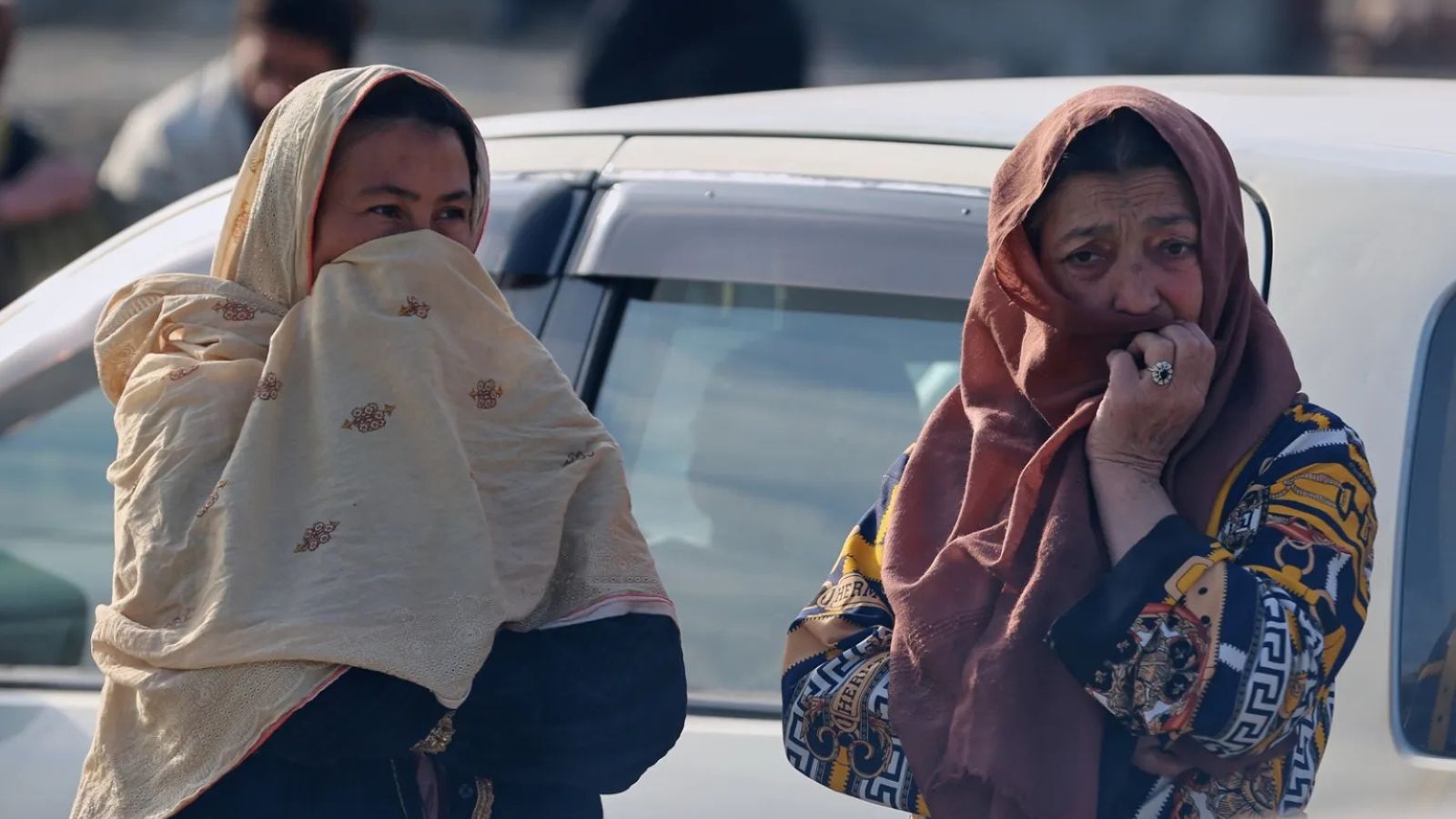
The push for a Uniform Civil Code (UCC) in India is often framed as a purely partisan brawl, a collision between secular statecraft and religious autonomy. However, this high-level political noise obscures a more profound shift happening on the ground. For decades, Muslim women in India have navigated a legal maze where their rights regarding marriage, divorce, and inheritance are governed by the Muslim Personal Law (Shariat) Application Act of 1937. This colonial-era framework leaves significant room for interpretation by local clerics and community leaders, often to the detriment of women. Today, a growing movement of women is not just asking for legal change but is actively dismantling the monopoly of patriarchal religious institutions.
The core of the struggle lies in the dual-track legal system. While criminal law and commercial codes are uniform across India, personal matters remain fractured along religious lines. For many Muslim women, the goal isn't necessarily the erasure of religious identity, but the elimination of legal uncertainty. They want a system where a sudden "Triple Talaq" (now criminalized but still practiced in shadows) or the threat of "Nikah Halala" cannot upend their lives without recourse to the constitutional protections afforded to every other Indian citizen. Also making news lately: The Velvet Trap and the Chancellor’s Warning.
The Failure of Informal Justice
For generations, the "Dar-ul-Qaza" or Shariat courts have functioned as parallel arbitration centers. While they lack the official backing of the Indian judiciary, their social weight is immense. In many conservative pockets, a woman seeking a divorce or claiming her share of a father’s estate is pressured to bypass civil courts in favor of these community panels.
The problem is systemic. These panels are almost exclusively male. Their rulings frequently prioritize family "honor" and community cohesion over the individual rights of the woman. I have spoken with women in the slums of Mumbai and the old quarters of Lucknow who describe these centers not as places of justice, but as instruments of control. When a woman enters these rooms, she is often told to be patient, to endure "minor" domestic abuse for the sake of the children, or to settle for a pittance in maintenance. Further details into this topic are covered by Associated Press.
The UCC debate provides a platform for these grievances to go mainstream. It isn't just about a new set of laws; it is about the "right to have rights." By advocating for a uniform code, these women are signaling that they no longer trust the community elders to be impartial arbiters of their fate.
The Economic Reality of Inheritance
Inheritance remains the most overlooked battlefield in the fight for religious law reform. Under current personal laws, a Muslim daughter typically receives half the share of a son. In a country where land and property are the primary vehicles for generational wealth, this disparity keeps women in a state of perpetual economic dependence.
The math of poverty is simple. If a woman cannot own the land she tills or the house she lives in, she has no collateral. She has no exit strategy from a broken marriage. The push for a uniform code is, at its heart, an economic movement. Activists are pointing out that while the Quran was revolutionary for its time in granting women inheritance rights when most cultures granted none, the 21st-century application of these rules has become a ceiling rather than a floor.
The Myth of the Monolith
One of the greatest mistakes outsiders make—including the Delhi-based analysts—is treating India’s 200 million Muslims as a single, uniform voting block. The reality is a complex web of class, caste (Pasmanda), and regional differences.
- Urban Professionals: Seeking a legal framework that mirrors international standards for ease of contracts and property transfer.
- Rural Workers: Looking for protection against arbitrary desertion and the assurance of basic alimony.
- The Pasmanda Community: Often feeling double-marginalized by both the state and the elite leadership within their own religion.
By framing the UCC as a "Muslim vs. Hindu" issue, politicians ignore these internal fractures. Many Muslim women are explicitly asking why their secular state allows them to be treated as second-class citizens in their own living rooms. They are tired of being the "other."
Reclaiming the Sacred
The most effective resistance isn't coming from those who want to discard religion, but from those who are re-interpreting it. Groups like the Bharatiya Muslim Mahila Andolan (BMMA) have been at the forefront of this. They have drafted a "Muslim Family Law" that aligns with both Quranic values of justice and Constitutional values of equality.
This is a tactical masterstroke. By rooting their demands in a feminist reading of the faith, they neutralize the "religion in danger" narrative used by conservative clerics. They argue that the current practices are actually "un-Islamic" distortions created by centuries of patriarchal culture.
The Political Minefield
There is a valid fear that a Uniform Civil Code could be used as a tool for cultural homogenization. Critics argue that if the UCC is simply a "Hindu Code" imposed on everyone else, it fails the test of secularism. This is the tightrope the government must walk.
For the law to be legitimate, it must take the best from every tradition rather than simply erasing the minority. It must address:
- Strict No-Fault Divorce: Removing the need for grueling character assassination in court.
- Equal Guardianship: Ensuring mothers have equal legal rights over their children.
- Mandatory Registration: Making every marriage a matter of public record to prevent bigamy and fraud.
The skepticism from the Muslim community isn't always about the law itself, but about the messenger. There is a deep-seated trust deficit. However, for the women who have been cast out of their homes with nothing but the clothes on their backs, the identity of the law-giver matters less than the protection the law provides.
Beyond the Courtroom
Legal change is a blunt instrument. It can change the rules on paper, but it cannot immediately change the social pressure exerted by a neighborhood or a family. Even if a UCC is passed tomorrow, a woman in a small village in Bihar will still face immense social stigma if she sues her brothers for her share of the farm.
Real change requires a shift in the "infrastructure of support." This means:
- Legal aid clinics specifically for women navigating personal law transitions.
- Safe houses that aren't just shelters but transition hubs.
- Financial literacy programs that teach women how to hold assets in their own names.
The resistance to reform often hides behind the veil of "protecting culture." But culture is not a static museum piece. It is a living, breathing entity that must evolve to survive. When a culture begins to harm its own members, it loses its moral authority.
The Irony of Modernity
We see a strange paradox in the current era. As India reaches for the stars with its space program and positions itself as a global tech hub, its domestic life is still governed by rules that feel medieval to those on the receiving end of a bad judgment. The digital divide is real, but the legal divide is deeper. A woman can code for a Silicon Valley firm from her home in Hyderabad, yet still find herself legally vulnerable if her husband decides to take a second wife without her consent.
This friction cannot last. The economic aspirations of a new generation of Muslim women are incompatible with the restrictive interpretations of the 1937 Act. They are entering the workforce in record numbers. They are becoming doctors, lawyers, and entrepreneurs. They are paying taxes. And as they contribute to the state, they are demanding that the state fulfill its end of the social contract.
The Cost of Silence
The high-born leadership of the religious boards often speaks of "preserving the fabric of the community." They rarely mention the cost of that preservation. The cost is the wasted potential of millions of women. It is the trauma of children caught in the middle of "Halala" disputes. It is the poverty of elderly widows who have been denied their inheritance.
The movement for reform is no longer a fringe element. It is a slow-motion earthquake. The ground is shifting because the women at the base are tired of carrying the weight of a "tradition" that does not carry them. They aren't waiting for a political savior to hand them equality; they are carving it out of the existing system, one court case and one protest at a time.
Justice in a democracy cannot be a buffet where you pick and choose who gets the full meal and who gets the crumbs. If the Indian Constitution promises equality before the law, that promise must extend into the home. It must reach the kitchen, the bedroom, and the inheritance register. Anything less is not a compromise; it is a betrayal.
The era of the community elder acting as the final word on a woman’s life is ending. The new arbiter is the Constitution, and the new advocate is the woman herself, standing in a courtroom she was once told she had no right to enter.