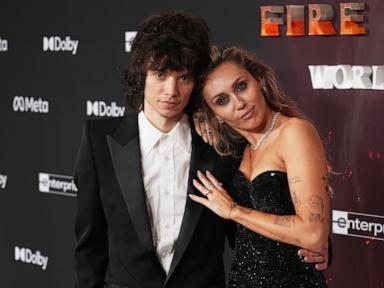
Silence.
In an industry engineered to monetize every breath, every heartbreak, and every stray glance captured by a telephoto lens, silence is the most expensive currency on earth. When Miley Cyrus married rock drummer Maxx Morando in an intimate Palm Springs wedding, she did not sell the exclusive rights to a glossy magazine, she did not livestream the vows to millions of followers, and she did not turn her personal life into a promotional rollout for an upcoming album. Instead, she walked into the desert heat, surrounded by a tight circle of family and lifelong friends, and chose a quiet room over a stadium. Discover more on a similar topic: this related article.
To understand why this single afternoon in the Coachella Valley feels like an earthquake in modern pop culture, you have to remember who Miley Cyrus has been to the public for nearly two decades. She grew up inside a glass box. From the moment she put on a blonde wig as Hannah Montana, her adolescence, her rebellions, her first marriage, and her public unravelling were treated as communal property. Every shift in her hair, her sound, or her romantic life became an immediate referendum on womanhood, fame, and excess. When she married Liam Hemsworth in 2018, even that private ceremony in Tennessee was quickly absorbed into the churn of public scrutiny, dissected frame by frame until the marriage collapsed eight months later under the weight of two incompatible lives colliding in full view of the world.
Consider a hypothetical observer watching from the edge of the desert—let us call her Clara, a veteran entertainment publicist who has spent twenty years orchestrating red-carpet romances and leaking guest lists to keep her clients relevant. To Clara, a celebrity wedding without a media partner is a wasted asset, a missed opportunity to dominate the news cycle for seventy-two hours. Yet as Clara watches the minimal, carefully guarded details of the Palm Springs ceremony emerge—no drone footage, no sponsored floral arrangements, no frantic press releases—she realizes the rules of celebrity survival have shifted beneath her feet. Cyrus did not hide because she was ashamed. She stepped back because she finally owned the frame. More analysis by Wall Street Journal highlights related views on the subject.
The Architecture of Choosing Peace
Palm Springs has always been a sanctuary for people running away from the noise of Los Angeles. Two hours east of the studio lots and the paparazzi staked outside West Hollywood restaurants, the desert offers a stark, uncompromising clarity. The light is harsh. The mountains do not flatter anyone. For decades, everyone from Frank Sinatra to Elizabeth Taylor retreated to its mid-century modern glass houses when the machinery of fame threatened to grind them down.
By choosing Palm Springs, Cyrus and Morando anchored their marriage in a geography designed for stillness rather than spectacle. Look at the timeline of their relationship, and a deliberate pattern emerges. They met on a blind date in late 2021—a setup that already defied the algorithmic, sliding-into-DMs culture of modern celebrity dating. They appeared together at Gucci’s Love Parade runway show in Los Angeles that November, standing side by side without performing for the cameras. When they finally went public at a West Hollywood club in April 2022, there was no grand announcement. There was simply a photograph, a quiet confirmation of something that had already taken root out of sight.
I have spent years reporting on the machinery of fame, watching young artists mistake noise for affection until they can no longer hear their own thoughts. You sit in green rooms backstage at arenas and see the toll it takes—the constant checking of phones, the flinch when a camera shutter clicks too close, the subtle erosion of trust when you realize even your closest confidants might trade a rumor for relevance. Watching Cyrus move from the chaotic, maximalist energy of her early twenties into the grounded steadiness of her thirties feels like watching someone finally turn down a deafening amplifier in a small room. The relief is physical. You can hear the melody again.
Who Is Maxx Morando?
To understand why this union works, you have to look closely at the man standing beside her at the altar. Maxx Morando is not a movie star chasing box-office returns, nor is he a pop idol competing for the same oxygen on the Billboard charts. Born in 1998, six years younger than Cyrus, Morando built his life behind the kit—first as the drummer for the punk-infused Los Angeles band The Regrettes from 2015 to 2018, and later with the indie rock outfit Liily.
Think of a band like a crowded highway at rush hour. The lead singer is the sports car weaving through traffic, drawing every eye, taking all the heat, absorbing every collision. The drummer is the suspension system—largely unseen, absorbing the shock of the road, keeping the rhythm steady so the entire vehicle does not shake itself apart.
That analogy explains almost everything about their dynamic. Morando is a musician’s musician, deeply embedded in the Los Angeles rock and visual art scenes, having even designed custom, cartoonishly surreal garments for Cyrus before they were romantically linked. More importantly, he collaborated with her creatively on her eighth studio album, Endless Summer Vacation, co-writing and producing tracks like "Handstand" and "Wonder Woman." When Cyrus won her first Grammy Awards in 2024 for "Flowers," she stood on that stage radiant and self-possessed, thanking her team and her loved ones with the ease of someone whose home life was no longer a battlefield.
When you spend your whole life being the center of gravity in every room you enter, finding someone who does not need to steal your light—someone who prefers keeping time in the back—is nothing short of salvation.
The Invisible Stakes of the Second Act
There is a particular kind of vulnerability that comes with marrying a second time, especially when your first divorce played out like a public autopsy. People carry ghosts into second marriages. You carry the memory of promises that broke under pressure, the quiet fear that maybe you are simply not built for permanence, and the exhausting need to prove to skeptics—and to yourself—that this time is different.
In a hypothetical scenario, imagine two people sitting across from each other at a kitchen table in Malibu late at night, months before the wedding. Outside, the Pacific crashes against the pilings; inside, there is only the hum of the refrigerator and a stack of unadorned guest names on a notepad. If they invite three hundred people, the wedding becomes a production. Security teams have to sweep the perimeter. Non-disclosure agreements have to be signed at the gate. Every toast becomes a performance for an audience of acquaintances. If they cut the list down to thirty—parents, siblings, the friends who showed up when the cameras were off—the wedding becomes a sacrament.
That choice carries real stakes. In Hollywood, visibility is equated with power. To deliberately shrink your guest list and lock the doors is to tell an entire industry that you no longer require its validation. Cyrus’s mother, Tish Cyrus, and her siblings were there to witness a daughter and sister who had spent years rebuilding her boundaries after very public family fractures. The presence of her inner circle signaled something far more profound than a bridal trend: it signaled reconciliation, maturity, and the hard-won wisdom that intimacy cannot survive under floodlights.
Why Pop Culture Needed This Moment
We live in an era of radical over-sharing, where engagements are choreographed for TikTok reveals and weddings are treated as brand activations. Audiences have grown cynical, trained to look for the sponsorship tag at the bottom of every romantic caption. When an artist of Miley Cyrus’s magnitude rejects that entire economy, it disrupts the script.
Consider the trajectory of her career over the past few years. With "Flowers," she turned the rubble of her past heartbreak into a global anthem of self-sufficiency—a song about buying yourself flowers, holding your own hand, and discovering that survival does not require a partner. For a moment, the public narrative framed her as the ultimate solo act, an artist who had outgrown the need for traditional romance altogether.
Yet true independence is not the refusal to love; it is the refusal to lose yourself when you do. Marrying Maxx Morando does not contradict the message of "Flowers." It completes it. You only learn how to stand beside another person without disappearing once you have learned how to stand entirely alone.
What happened in Palm Springs was not a retreat from the world, nor was it a PR stunt disguised as modesty. It was the logical destination of a woman who spent her twenties testing every boundary, burning down every expectation placed upon her, and finally discovering what remained when the smoke cleared. She did not need a castle, a couture sponsor, or a magazine cover to make the vows real.
Late that afternoon, as the sun dropped behind the San Jacinto Mountains and turned the desert floor from blinding white to deep violet, the music inside that private Palm Springs courtyard kept playing—a steady, unhurried beat, heard only by the people who were actually there.