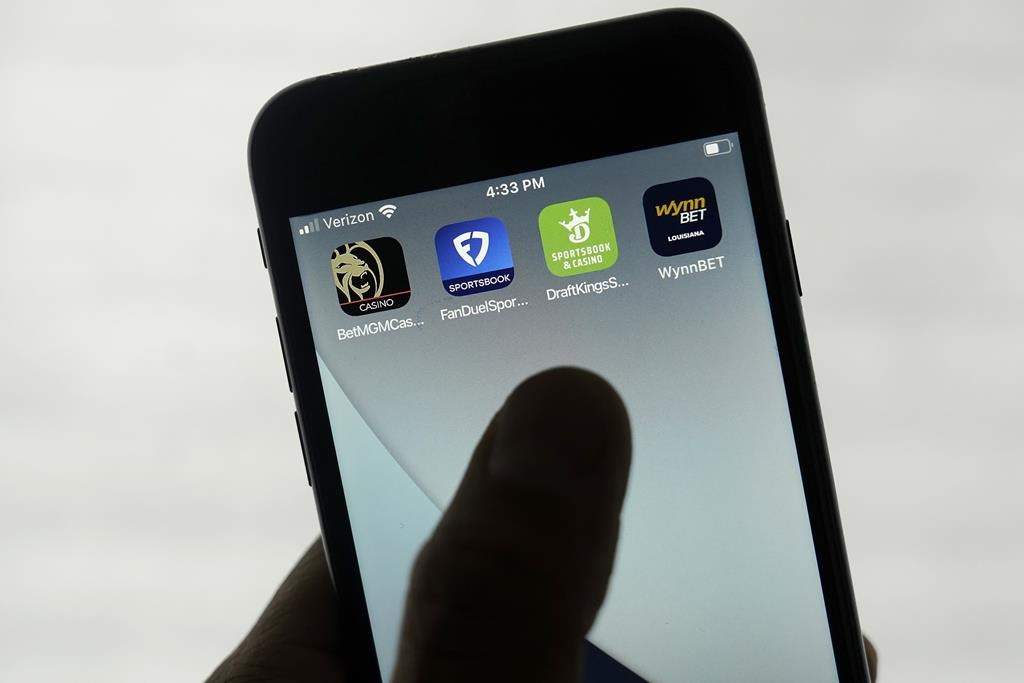
Two in the morning. The radiator in a cramped Plateau apartment hisses against the February chill, and the blue glow of a smartphone screen illuminates the ceiling.
Downstairs, Saint-Laurent Boulevard is quiet, swept clean by snowplows hours ago. Upstairs, a twenty-two-year-old university student stares at a live odds ticker for a late-night tennis match happening in Melbourne. His thumb hovers over a green button. A deposit takes four seconds. A wager takes two.
Ten years ago, placing that bet required walking into a fluorescent-lit convenience store, filling out a paper Mise-o-jeu slip with a stubby pencil, and handing cash across a counter to a clerk who looked you in the eye. Friction existed. Time existed. Shame, or at least social visibility, acted as a quiet guardrail against impulse.
Today, the casino sits inside the pocket of every winter coat on the Orange Line.
Recent public health research from Montreal reveals a stark reality that clinicians across Quebec have been warning about for years. Online gambling among young men in the city has more than doubled in a remarkably short window. The numbers are cold, clinical, and unambiguous. Yet behind every percentage point sits a living room, a dorm room, or a late-night shift break where an entire generation is learning to wire its nervous system to the rhythm of fluctuating odds.
The Architecture of a Pocket Casino
To understand how we arrived here, picture a hypothetical twenty-four-year-old named Marc. Marc lives in Verdun, works part-time in logistics, and watches every Montreal Canadiens game with his friends. He does not see himself as a gambler. He has never stepped foot inside the Casino de Montréal on Île Notre-Dame. To him, casinos are places with sticky carpets, cigarette smoke, and retirees feeding tokens into clanging machines.
Marc simply likes sports. And lately, watching sports without skin in the game feels oddly flat, like eating fries without salt.
This shift did not happen by accident. Following the legalization of single-event sports betting across Canada and the aggressive expansion of digital platforms—both provincial monopolies like Loto-Québec’s Espacejeux and an ocean of unregulated offshore sites—the relationship between fandom and wagering underwent a quiet mutation. Broadcasts no longer merely report the score; they feed live point spreads directly into the lower third of the screen. Podcasts pause every twelve minutes so hosts can read promo codes for "risk-free" first bets.
I remember the first time I noticed how completely the boundary had dissolved. Sitting in a packed pub on Crescent Street during a playoff overtime, half the table wasn't cheering for a goal. They were staring down at their laps, waiting for a specific player to register one more shot on net so a five-leg parlay would cash. When the puck went in off a defenseman's skate, half the room erupted in celebration while the guy next to me slammed his pint glass onto the wood in disgust. His team had won. His bet had died.
That is the invisible hook of modern digital wagering. It hijacks an existing social ritual—watching the game, hanging out with friends, belonging to a city that bleeds hockey—and turns every pass, foul, and timeout into a micro-transaction.
Why Young Men Carry the Weight
Epidemiologists and addiction researchers in Montreal consistently find that men aged eighteen to thirty-four represent the epicenter of this surge. Why this demographic? Why now?
Part of the answer lives in basic neurobiology. The human prefrontal cortex—the brain's braking system, responsible for weighing long-term consequences against immediate rewards—does not finish developing until roughly age twenty-five. Meanwhile, the mesolimbic dopamine pathway, which fires with electric anticipation when we encounter uncertain rewards, operates at full throttle during late adolescence and early adulthood.
Think of a slot machine or a live-betting app not as a financial tool, but as a Skinner box engineered by behavioral psychologists. When you pull a lever and win every time, dopamine levels eventually plateau; the reward becomes predictable. When you lose every time, you walk away. The magic—and the danger—lies in the variable ratio reinforcement schedule. When a reward arrives unpredictably, the brain releases its heaviest surge of dopamine not when you win, but in the breathless three seconds before you find out if you won.
Digital platforms have compressed that three-second window into an endless loop. You no longer bet on who wins the match. You bet on who scores the next point, whether the next pitch is a ball or a strike, or what color Gatorade gets dumped on the winning coach.
Add economic reality to neurobiology, and the pressure intensifies. Young men entering adulthood in Montreal today face a housing market that has drifted out of reach, stagnant entry-level wages, and an ambient cultural message that traditional paths to stability are broken. When saving five hundred dollars a month feels like trying to empty the St. Lawrence River with a teaspoon, turning fifty dollars into five hundred through a lucky Saturday afternoon parlay stops looking like entertainment. It starts looking like a ladder out of a hole.
The Silent Collapse
Unlike alcohol or substance use, online gambling leaves no physical trace. There is no slurred speech at dinner, no bloodshot eyes at nine in the morning, no empty bottles clinking in the recycling bin outside a duplex in Rosemont.
A young man can lose six thousand dollars between Tuesday and Thursday while sitting quietly across from his mother at Sunday supper, smiling and passing the salt.
Clinicians at Montreal’s specialized addiction centers—places like Centre de réadaptation en dépendance de Montréal—describe a distinct pattern among the young men walking through their doors. By the time a family realizes something is wrong, the financial damage is rarely a slow leak. It is usually a sudden, catastrophic structural failure. Maxed-out student lines of credit. Rent money vanished in forty-eight hours. Secret loans taken out through predatory payday apps at four in the morning to chase a loss from midnight.
The chase is where the psychology turns dark. In behavioral economics, loss aversion dictates that the pain of losing a hundred dollars feels roughly twice as intense as the pleasure of gaining a hundred dollars. When a bettor loses, the brain treats the deficit not as a sunk cost, but as a wound that must be closed immediately. The fastest way to stop hurting, the brain whispers, is to double the next wager and get back to even.
Consider what happens next in our hypothetical scenario with Marc. On Friday night, he loses two hundred dollars on a late-night basketball game. His chest tightens. Sleep refuses to come. He opens an offshore crypto-casino app—one that requires no identity verification and imposes no deposit limits—and puts four hundred dollars on virtual blackjack to win back his two hundred. Fifteen minutes later, he is down six hundred. By sunrise on Saturday, his entire month's rent sits inside a server farm in Curaçao.
I have sat across from men who lived that exact weekend. What haunts them afterward isn't merely the empty bank account. It is the vertigo of realizing how quickly their own judgment evaporated, and the suffocating isolation of carrying a secret that feels too shameful to speak aloud. Because society still frames gambling losses as a failure of willpower or basic math, young men swallow the panic alone. Depression follows. Suicidal ideation appears at rates significantly higher in gambling disorder than in almost any other behavioral addiction.
The Illusion of Control
Ask a twenty-three-year-old slot player if they can beat the house, and they will laugh and say no. Ask a twenty-three-year-old sports bettor or online poker player the same question, and you will often get a twenty-minute lecture on injury reports, expected goals per sixty minutes, and line movement.
This is the illusion of control, and it makes sports wagering uniquely seductive to intelligent, analytical young men. Because sports involve real human skill and statistical patterns, bettors mistake research for an edge. They build spreadsheets. They follow beat reporters on social media for lineup leaks. They convince themselves that they aren't gambling; they are "investing" in sports markets.
The math tells a mercilessly different story. Every sportsbook builds a commission—known as the vig or vigorish—directly into the odds. To break even over time against standard odds, a bettor must win roughly 52.4 percent of their wagers. Even professional syndicates using algorithmic models struggle to sustain a 55 percent win rate over thousands of bets. For a recreational bettor placing multi-leg parlays where the house edge compounds with every added selection, the mathematical expectation is a slow, guaranteed bleed toward zero.
Yet platforms feed the fantasy. When a user wins, confetti explodes across the screen, push notifications congratulate them on their "sharp pick," and VIP hosts reach out with personalized bonus credits. When a user starts winning too consistently—proving they actually do possess an edge—regulated books routinely limit their maximum bet to pennies or close their accounts altogether. The house does not want smart investors. It wants passionate fans who believe they are smart investors.
Breaking the Loop
If doubling the rate of online gambling among young Montreal men is a public health alarm, turning down the volume requires more than telling twenty-year-olds to "bet responsibly." That slogan—printed in microscopic font at the bottom of deafening television commercials—places the entire burden of restraint on the individual brain while multi-billion-dollar algorithms work twenty-four hours a day to bypass that restraint.
Meaningful protection starts with restoring friction.
In regions that have successfully curbed digital gambling harm, policy shifts focus on the architecture of the apps themselves. Mandatory, universal deposit limits across all licensed platforms—so a user cannot simply hop from one app to another after hitting a weekly cap—create a vital cooling-off period. Banning credit card deposits prevents young adults from wagering money they do not own. Stripping gambling advertisements out of live sports broadcasts removes the constant environmental triggers that turn casual viewers into active bettors.
On a personal level, young men and the people who love them can watch for the quiet early tremors before a collapse occurs. Notice when watching a game turns from joy into agitation. Notice when checking a phone becomes reflexive every ninety seconds during a conversation. Notice when lies—small ones at first, about how much a ticket cost or how a weekend went—begin stacking up like bricks between a person and their closest friends.
Tools exist right now for anyone feeling the pull of the current. Self-exclusion programs through Loto-Québec allow users to lock themselves out of digital platforms for months or years. Banking blocks—available through several major Canadian financial institutions—can automatically decline transactions coded to gambling merchants. Free, confidential support lines across Quebec connect callers with counselors who understand the specific mechanics of digital wagering without judgment or lecture.
Back in that Plateau apartment, the February night stretches toward dawn. The tennis match in Melbourne ends on a double fault. The screen flashes red.
Outside, the first city buses begin rumbling down Saint-Laurent, headlights cutting through the dark snow, carrying workers toward the morning shift. Inside, the room is silent save for the hiss of the radiator—and the faint, rhythmic tap of a thumb reloading the home screen, looking for one more game before sunrise.