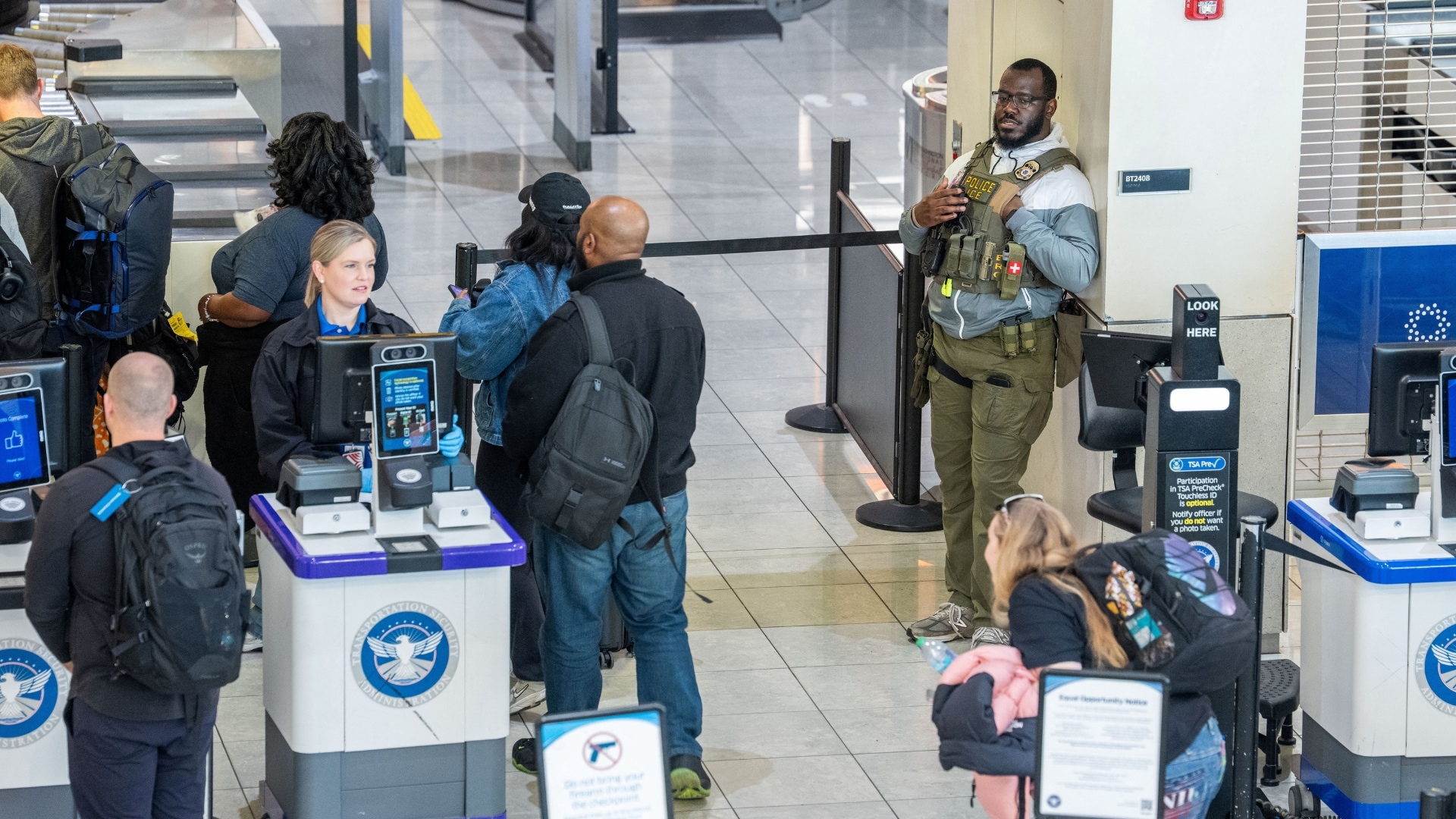
You've felt that spike of anxiety when the security line snakes past the baggage carousels and out the sliding glass doors. Now, imagine that line with 9,400 fewer people wearing blue shirts to move it along. That's the reality behind the White House's latest budget proposal, which aims to slash $1.5 billion from the Transportation Security Administration. It's a move that targets nearly 16% of the agency’s workforce, and if you’re a frequent flyer, it’s going to change how you travel.
The administration isn't just trimming fat here; they're trying to fundamentally shift how American airports function. The plan is built on two main pillars: forcing smaller airports to go private and squeeze "efficiencies" out of the remaining federal hubs. It's a bold gamble that bets on private contractors being more reliable than a federal agency that’s been plagued by morale issues and funding gaps. You might also find this similar story insightful: How to Secure Your Spot for the 2026 Kailash Manasarovar Yatra.
Privatization as the New Standard
For years, the Screening Partnership Program (SPP) was a niche option. About 20 airports, including San Francisco (SFO) and Kansas City (MCI), opted to use private contractors overseen by the TSA rather than federal employees. Under the new proposal, this wouldn't be a choice for smaller regional airports anymore. It would be a requirement.
The logic is straightforward. When the government shuts down—something that’s happened with frustrating frequency lately—federal TSA agents often work without pay. They call out sick. Lines stall. But private contractors? Their money is usually already in the bank via existing contracts. They keep getting paid, they keep showing up, and the lines keep moving. By shifting 4,500 jobs to the private sector at these smaller hubs, the administration believes it can insulate travelers from Washington’s political gridlock. As reported in recent articles by Condé Nast Traveler, the results are worth noting.
Where the Other 4,800 Jobs Go
The math for the remaining cuts is a bit more aggressive. The administration wants to eliminate another 4,800 positions by cutting what they call "redundancies." This includes a plan to stop staffing exit lanes with federal officers, handed the responsibility back to local airports and law enforcement.
It sounds like a minor tweak, but it’s a massive shift in liability and cost. If a local airport has to hire its own security just to watch a door where people exit, that money has to come from somewhere—usually your ticket fees or local taxes. The White House argues that the TSA has become a bloated "woke enterprise" that fails its own audits too often. They’re looking for a leaner, meaner version of the agency that focuses strictly on the checkpoint and nothing else.
The Safety vs. Savings Debate
You’ll hear two very different stories about whether this is a good idea. The American Federation of Government Employees, the union representing those 60,000 workers, is already sounding the alarm. They argue that a fragmented system of private contractors will lead to inconsistent security standards. In their eyes, 9/11 taught us that airport security shouldn't be a "lowest bidder" business.
On the flip side, supporters point to SFO as the gold standard. During the record 43-day shutdown a few years back, SFO’s private screening stayed remarkably stable while other major hubs were melting down. They argue that the TSA has spent decades implementing intrusive measures that don't actually catch much, and it's time to let the market try a different approach.
What This Means for Your Next Flight
If this budget passes Congress—which is a big "if"—the impact won't be overnight, but it will be felt.
- Regional travel might get weirder. If your local small-town airport is forced to privatize, you might see new faces and different procedures.
- Wait times are the big wildcard. Proponents say privatization fixes the "no-pay" call-outs. Critics say fewer bodies at the bins means longer waits during peak hours.
- Ticket prices could creep up. If airports have to take over exit lane security, those costs usually get passed down to the airlines and, eventually, to your seat price.
Honestly, the TSA has been a punchline for years, but it’s also the thin blue line between the terminal and the tarmac. Shaving $1.5 billion off a $7.8 billion budget is a massive haircut. It’s not just about saving money; it’s an attempt to dismantle the agency as we know it and return to a pre-2001 style of decentralized security.
Before your next trip, check your PreCheck status and maybe show up an extra 30 minutes early. Whether these cuts lead to a more efficient system or just more "security theater" with fewer actors remains to be seen. Keep an eye on the House and Senate hearings later this month. That’s where the real fight over your travel time will happen.
If you're worried about how this affects your specific local airport, look up if they're currently part of the SPP. If they aren't, and they're a "Category III" or "Category IV" airport, they're likely on the list for this mandatory shift. Get ready for a very different experience at the gate.