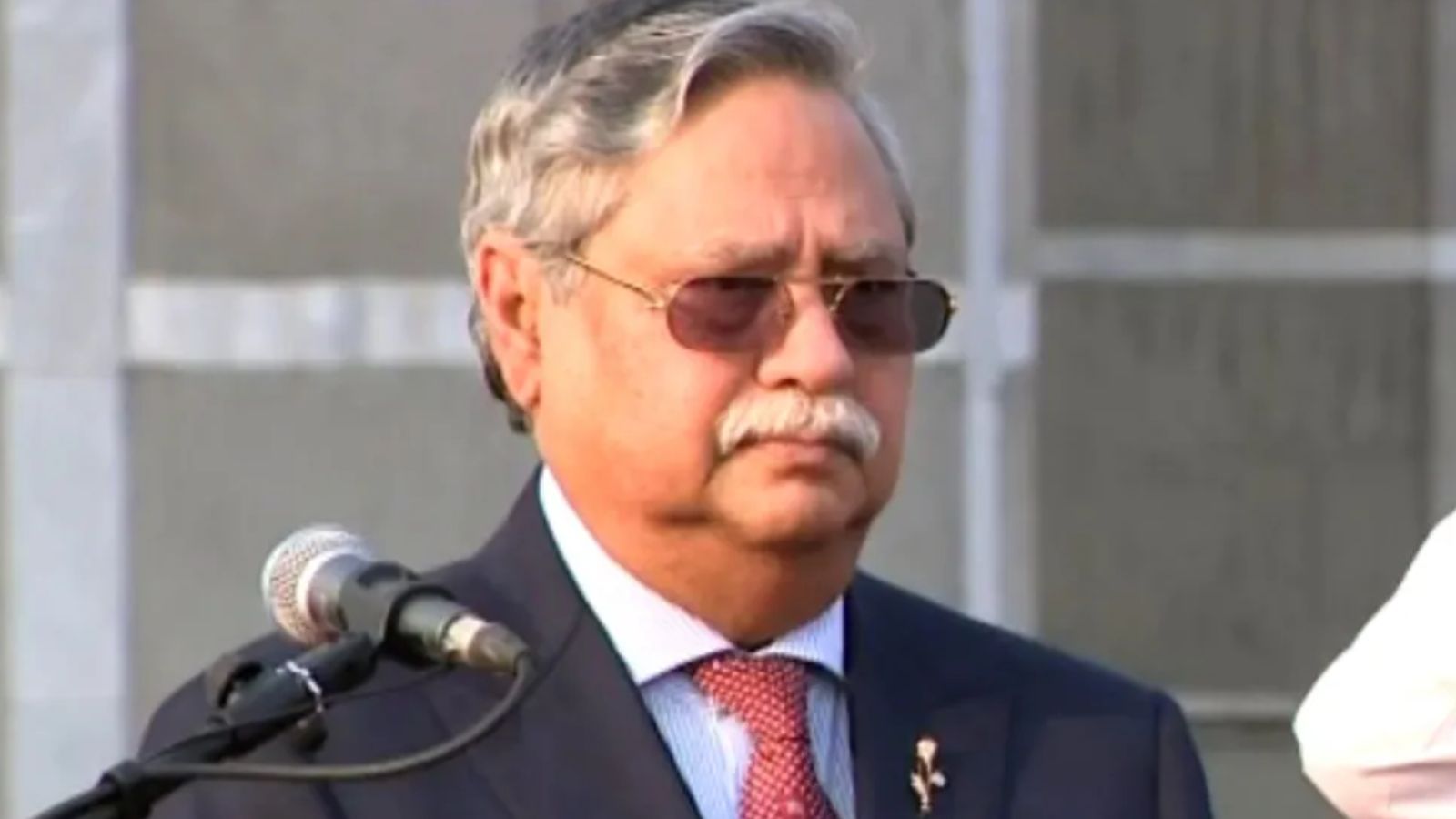
When rumors peaked that Bangladesh President Mohammed Shahabuddin would finally resign under pressure from student revolutionaries and political factions, the nation held its breath. Appointed during the iron-fisted rule of former Prime Minister Sheikh Hasina, Shahabuddin found himself surrounded at Bangabhaban, the presidential palace, by thousands demanding his immediate removal. Yet behind the public outrage lies a far more treacherous reality. Forcing Shahabuddin out risks unraveling the paper-thin legal thread holding the state together, exposing a constitutional paradox that neither the military nor the interim government knows how to fix.
The storm erupted when Shahabuddin dropped a political bombshell in a recorded interview with a local newspaper. He publicly stated that while he heard Hasina had resigned before fleeing to India on August 5, 2024, he never actually received or saw her written resignation letter. The backlash was instantaneous. Student leaders who led the bloody July Revolution accused the president of treason and lying to retroactively legitimise Hasina’s claim to power. Law advisers in the interim administration publicly declared that Shahabuddin had violated his oath of office.
Protesters marched on Bangabhaban, clashing with security personnel and demanding an immediate handover of power. Yet as night fell over Dhaka, the palace doors remained closed, and the president stayed put. To understand why Shahabuddin did not step down, one must look past the slogans on the street and examine the intricate, delicate legal architecture of Bangladesh’s post-authoritarian transition.
The Missing Resignation Letter and the Trap of Legality
The central crisis hinges on a missing sheet of paper. When student-led mass protests broke through military barricades and converged on Ganabhaban, Hasina was rushed to a waiting helicopter by her security detail. In the chaos of her departure, standard legal protocols vanished.
According to Article 57 of the Bangladesh Constitution, a Prime Minister must submit a signed letter of resignation directly to the President for it to take legal effect. In the days immediately following her flight, Army Chief General Waker-uz-Zaman announced to the nation that Hasina had resigned. Shahabuddin himself confirmed the resignation during a televised address to political party leaders and military officials, subsequently dissolving Parliament to clear the way for an interim administration.
Everything appeared settled until Hasina’s exiled supporters began floating a counter-narrative from India, claiming she remained the lawful prime minister because no resignation document existed. Shahabuddin’s casual admission that he lacked physical documentation was not an offhand remark; it was a spark thrown into a powder keg.
+-----------------------------------------------------------------------------------+
|                            THE CONSTITUTIONAL PARADOX                             |
+-----------------------------------------------------------------------------------+
|  1. Hasina flees without a formal written resignation letter.                     |
|  2. President Shahabuddin dissolves Parliament and swears in Interim Government.  |
|  3. President later reveals he never received a physical resignation document.    |
|  4. Revolutionaries demand President's immediate resignation or removal.           |
|  5. Removing President destroys the last legal link to the 1972 Constitution.     |
+-----------------------------------------------------------------------------------+
If the president lied, he committed perjury under his presidential oath. If he spoke the truth, then the legal basis under which he dissolved Parliament and swore in Nobel laureate Muhammad Yunus as Chief Adviser faces unprecedented vulnerability.
This is the exact wedge Hasina’s loyalists sought to drive into the new political order. By casting doubt on the transition, they hope to frame the current administration not as a legitimate post-revolutionary authority, but as an unconstitutional junta operating outside the framework of law.
The Ghosts inside Bangabhaban
Mohammed Shahabuddin, known colloquially as "Chuppu," was never supposed to be a central figure in Bangladeshi history. A former district judge and anti-corruption commissioner, he was selected for the presidency in early 2023 by Hasina’s ruling party, the Awami League. His appointment was widely viewed as a loyalty reward. The office of the president in Bangladesh is largely ceremonial during normal times, with real power concentrated heavily in the Prime Minister's Office.
When Hasina fell, her cabinet ministers scattered, went into hiding, or were arrested attempting to cross international borders. Shahabuddin was the sole constitutional figurehead left standing.
That single detail made him indispensable to the legal survival of the interim state.
To swear in Yunus and his cabinet of advisers, the military and student coordinators needed a recognized head of state. The 1972 Constitution contains no explicit provision for an interim or caretaker government following a popular revolution. The previous caretaker system had been systematically stripped from the constitution by Hasina's administration years earlier.
To create a legal shield against future prosecution, the interim authority relied on the Doctrine of Necessity. The Supreme Court issued an advisory opinion stating that in the absence of a prime minister and parliament, the president retained executive authority to administer the oath to an interim leadership team.
Shahabuddin became the anchor holding the interim government to the constitution. Without him, the chain of custody regarding constitutional power breaks entirely.
| Key Player / Faction | Primary Objective | Stance on President's Resignation |
|---|---|---|
| Student Revolutionaries | Total purge of Awami League influence and complete rewrite of the constitution. | Demands immediate removal; views him as a traitor and remnant of fascism. |
| Interim Government (Yunus) | Maintain legal continuity, execute state reform, and avoid total institutional chaos. | Cautious hesitation; fears triggering an unmanageable constitutional crisis. |
| Bangladesh Nationalist Party (BNP) | Fast-track elections to take power through parliamentary vote. | Opposes abrupt removal without a agreed replacement mechanism. |
| Awami League Loyalists | Undermine the legitimacy of the interim state and prepare for Hasina's return. | Exploits the controversy to prove the interim government is illegal. |
The High-Stakes Calculus of the Political Opposition
The demand for Shahabuddin’s resignation exposes a major fault line between the street revolutionaries and traditional political parties. The student organizers who brought down the government want a clean break from the past. They view the 1972 Constitution as a corrupted document tailored to sustain one-party authoritarian rule. For them, removing Shahabuddin is not a legal question; it is a moral imperative.
The established political parties, led by the Bangladesh Nationalist Party (BNP), view the situation through a far more tactical lens. The BNP spent fifteen years suffering under Hasina's crackdowns, seeing thousands of its leaders jailed or exiled. With Hasina gone, the BNP stands as the presumptive favorite in any upcoming general election.
However, the BNP needs those elections to happen quickly and under a recognized legal framework. If Shahabuddin resigns without an established constitutional mechanism to replace him, Bangladesh enters a complete legal vacuum.
"If you tear down the presidency right now, you tear down the bridge that leads back to parliamentary democracy. We cannot burn the bridge while we are still standing on it."
— Senior Constitutional Analyst, Dhaka
According to the existing legal text, if the president resigns or is removed, the Speaker of Parliament takes over executive duties. But the parliament was dissolved in August, and the Speaker subsequently resigned and went into hiding. There is no functioning Parliament to elect a new head of state.
Removing Shahabuddin without a consensus replacement plan could force the military to step into the legal void directly, declaring a formal state of emergency or martial rule. That outcome is something the BNP and mainstream political parties are desperate to avoid.
The Three Roads Out of the Maze
The interim government finds itself boxed into a corner with three distinct options, each carrying significant risk.
                     +----------------------------------------+
                     |   THE STRATEGIC DILEMMA: THREE PATHS   |
                     +----------------------------------------+
                                          |
          +-------------------------------+-------------------------------+
          |                               |                               |
          v                               v                               v
  [OPTION 1: FORCED RESIGNATION]  [OPTION 2: THE STATUS QUO]    [OPTION 3: CONSTITUTIONAL RESET]
  - Removes Awami League ally     - Retains legal continuity    - Abolishes 1972 constitution
  - Destroys constitutional line  - Triggers student anger      - High risk of instability
  - Risks military takeover       - Leaves a spy in the palace  - Needs total political consensus
Option 1: Forced Resignation and Presidential Council
The student movement favors forcing Shahabuddin out immediately and creating an extraordinary Presidential Council composed of respected civic leaders, legal scholars, and representatives from the uprising.
While this satisfies the revolutionary demand for complete political transformation, it burns the constitutional rulebook entirely. International lenders, foreign governments, and global trade partners operate on legal continuity. Suspended constitutions and unconstitutional councils invite sanctions, legal challenges to international contracts, and diplomatic isolation.
Option 2: Retaining Shahabuddin as a Figurehead Prisoner
The interim administration's initial strategy was to ignore the president’s presence, stripping him of all practical authority while maintaining him as a rubber stamp at Bangabhaban.
This option protects the legal status quo, but it is politically hazardous. Every day Shahabuddin remains in office, he serves as a symbol of the old regime. Should he choose to issue further controversial statements or refuse to sign future executive orders, he can paralyze state administration at critical moments.
Option 3: Proclaiming a Revolutionary Proclamation
The third option involves issuing a formal Proclamation of Independence and Reform, effectively setting aside parts of the 1972 Constitution while promising a future constitutional assembly.
This approach attempts to codify the revolution legally. However, executing it requires absolute unity among student groups, the military, and all major political parties. Given the growing friction between traditional politicians wanting swift elections and student leaders demanding deep institutional rewrites, achieving that consensus is extraordinarily difficult.
Geopolitical Pressure and Foreign Interests
The drama inside Dhaka is not playing out in a vacuum. Neighboring India, which maintained a close relationship with Hasina's administration for over fifteen years, watches the developments closely. New Delhi views the potential collapse of Bangladesh’s constitutional framework with alarm, concerned that instability could spill across borders or allow hostile foreign influences to gain ground in the region.
China and Western nations take a different view, focusing on trade, supply chain integrity, and democratic transitions. For global financial institutions and foreign investors, administrative stability matters far more than internal political disputes. A sudden constitutional breakdown caused by the president's departure could freeze foreign aid and disrupt the country's vital garment export industry.
The Clock Running Out on Bangabhaban
Shahabuddin remains inside Bangabhaban not because he possesses vast personal power, but because he functions as a living legal document. He is the last structural post supporting an old political order that the country is trying to dismantle.
The student revolutionaries who faced down armed police forces during the July Uprising refuse to accept a compromised transition. They recognize that as long as a nominee of the old regime holds the highest constitutional office, the revolution remains incomplete.
Yet the political establishment realizes that pulling down that final post without a reinforced foundation could cause the entire building to collapse on everyone inside.
The interim leadership must now decide whether to preserve legal process at the cost of public anger, or embrace revolutionary change at the risk of legal chaos. How Dhaka resolves this question will dictate whether Bangladesh transitions into a functioning democracy or slips into a prolonged, destructive state of institutional instability.


