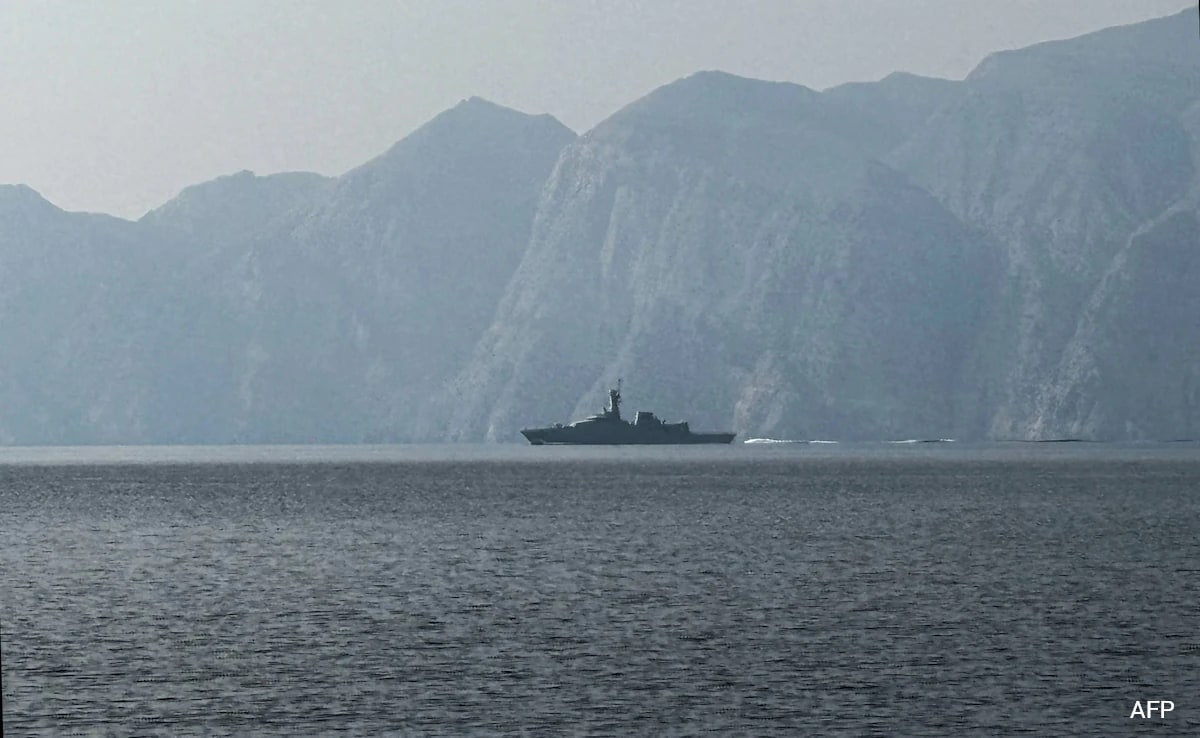
The Strait of Hormuz is currently the most expensive 21 miles of water on the planet. This week, the Islamic Revolutionary Guard Corps (IRGC) Navy issued a series of navigational advisories that ostensibly aim to "protect" commercial shipping from sea mines. By dictating new, narrow corridors for entry and exit, Tehran is doing much more than managing a hazard. It is asserting a de facto toll-and-trace system over 20% of the world’s oil supply, effectively turning an international waterway into a private driveway.
The timing is far from accidental. Just hours after a fragile, US-brokered ceasefire was announced between Washington and Tehran, the IRGC shuttered the strait again, citing Israeli strikes in Lebanon as a violation of the spirit of the truce. The "alternate routes" now being broadcast via radio to baffled tanker captains are a masterclass in asymmetric leverage. Iran is using the threat of its own minefields—both real and suggested—to force a new maritime reality where no ship moves without IRGC oversight.
The Minefield Mirage
For decades, naval analysts have warned that Iran could choke the strait with a mix of sophisticated bottom-dwelling acoustic mines and "dumb" contact mines. The current advisory suggests that the "main zone" of the waterway is now a high-risk area. By funneling all traffic north of Larak Island for entry and south for exit, Iran creates a predictable bottleneck.
This isn't just about safety. When you control the path, you control the pace. By claiming the traditional deep-water channels are mined, the IRGC forces massive Very Large Crude Carriers (VLCCs) into tighter formations that are easier to monitor, board, or tax. It is the maritime equivalent of a highway construction zone that never ends, manned by a crew that holds a grudge against the drivers.
The technical reality of mine warfare is that the threat is often as effective as the weapon itself. A single "sighting" of a floating object can spike insurance premiums by 300% overnight. By self-reporting these hazards and then offering the "solution" of guided routes, Tehran is successfully offloading the political cost of a blockade. They aren't "closing" the strait; they are "securing" it.
The Two Million Dollar Hall Pass
Inside the industry, the chatter isn't just about the mines, but the price of passage. Reports have surfaced of a "transit charge" or "protection fee" reaching as high as $2 million per vessel. For a tanker carrying two million barrels of crude, the math is brutal but manageable when Brent crude is flirting with $110 a barrel.
Oman has historically opposed such tolls, arguing they violate the United Nations Convention on the Law of the Sea (UNCLOS). However, when the alternative is a hull-ripping explosion or a multi-week standoff in the Gulf of Oman, most shipping conglomerates are choosing the checkbook over the bunker.
The United States has responded with characteristic volatility. President Trump recently suggested that if tolls are to be collected, the U.S. Navy should be the one collecting them as "reparations" for maintaining regional stability. This rhetoric further muddies the waters. If both the primary antagonist and the supposed protector are eyeing the same pot of gold, the concept of "Freedom of Navigation" is effectively dead.
Geography as a Weapon
Iran’s strategic shift involves moving its primary export focus away from the vulnerable Kharg Island terminal inside the Persian Gulf to the Jask terminal on the Sea of Oman. This move, years in the making, allows Iran to export its own oil while keeping the Hormuz "kill switch" active for its neighbors.
The new shipping routes prioritize Iranian-approved traffic, specifically vessels destined for Asian markets that have bypassed Western sanctions for years. While Saudi and Kuwaiti tankers wait for "clearance" to navigate the new IRGC corridors, Iranian shadow fleet tankers move with suspicious efficiency.
- Bottlenecking: Forcing ships into narrow lanes makes them vulnerable to drone surveillance and fast-attack craft.
- Data Harvesting: Every ship following the new routes must provide detailed manifests and crew lists to the IRGC "coordination centers."
- Economic Attrition: The delay at the mouth of the strait adds tens of thousands of dollars in daily charter costs, independent of the tolls.
The Ceasefire Paradox
The current two-week ceasefire was supposed to be a cooling-off period. Instead, it has become a period of "salami slicing," where Iran tests how much administrative control it can seize without triggering a full-scale kinetic response. By citing the Lebanon strikes as a reason to close the strait, Tehran is linking disparate theaters of war into a single, cohesive pressure point.
If the IRGC can prove it can manage the strait’s traffic through these "alternate routes" for two weeks, they will argue that this should be the permanent status quo. They are no longer just a regional power with a big navy; they are trying to become the world’s most powerful harbor master.
The global economy is ill-prepared for a long-term "managed" strait. While some pipelines exist—like the UAE’s Habshan-Fujairah line—they lack the capacity to replace the 20 million barrels per day that flow through the water. We are looking at a future where energy security is no longer about production volume, but about who has the map to the minefield.
The IRGC isn't just protecting ships from mines. They are protecting their right to decide who gets to stay in business.