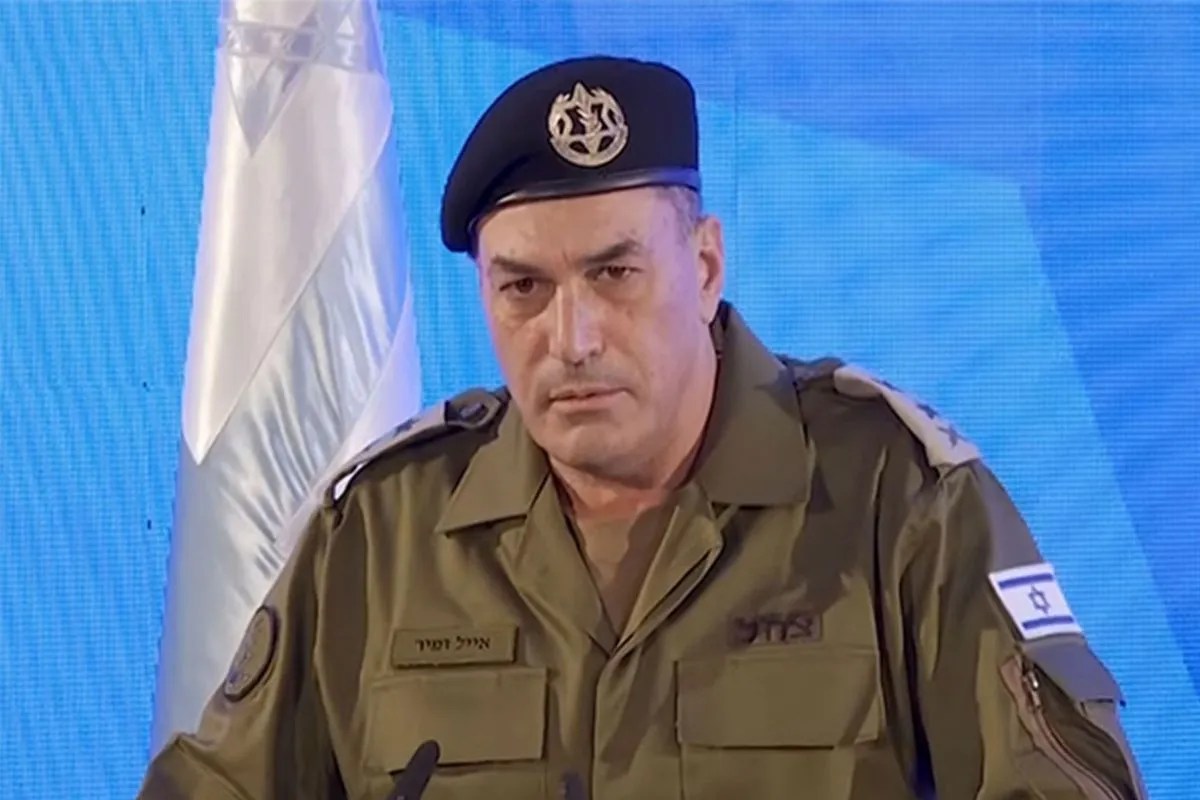
The media is currently obsessing over the statement by the Israeli Army Chief of Staff declaring that "no real ceasefire" exists in Lebanon. Journalists are treating this like a shocking revelation or a failure of diplomacy. They are looking at the situation entirely wrong.
The lazy consensus among foreign policy talking heads is that a ceasefire is a binary switch. It is either on or it is off. When skirmishes continue, they scream that the agreement has failed. This view is naive. It ignores the fundamental mechanics of asymmetric warfare.
In modern conflict, a ceasefire is not peace. It is simply a different phase of mobilization. The continuation of low-level strikes is not proof that the system is broken; it is exactly how the system is designed to function.
The Myth of the Absolute Truce
Every major news outlet frames a ceasefire as a static state of non-violence. This is a fundamental misunderstanding of military operational art. When dealing with non-state actors like Hezbollah, a formalized, permanent halt to hostilities is an impossibility.
"War is the continuation of politics by other means." — Carl von Clausewitz
If we accept Clausewitz's premise, then a ceasefire is merely the continuation of war by logistical means.
During these periods, both sides are aggressively re-engaging in resource allocation. For Israel, this means resetting iron dome batteries, gathering intelligence, and rotating battle-weary troops. For Hezbollah, it means smuggling hardware through porous borders and rebuilding underground networks.
When the IDF Chief of Staff says no real ceasefire is happening, he is not admitting failure. He is setting expectations. He is signaling to the public and the political establishment that the military cannot afford to drop its guard just because a piece of paper was signed in a diplomatic green zone.
The Strategic Cost of Stopping Completely
Let's look at the actual data of modern border conflicts over the last two decades. Every time a complete, unmonitored freeze is implemented, the non-state actor grows exponentially stronger.
Consider the period following the 2006 Lebanon War. United Nations Security Council Resolution 1701 was supposed to create a demilitarized zone south of the Litani River. The international community celebrated it as a success.
What actually happened?
- Hezbollah increased its rocket inventory from roughly 15,000 to well over 130,000.
- Elite Radwan forces established deeply fortified positions right on the border.
- The enforcement mechanism proved completely toothless.
The Asymmetric Advantage of Friction
| Actor | Strategy Under Absolute Halt | Strategy Under Constant Friction |
|---|---|---|
| State Military (IDF) | Bureaucratic stagnation, decay of readiness | High alert, real-time intelligence gathering, active deterrence |
| Non-State Actor (Hezbollah) | Unchecked smuggling, infrastructure rebuilding | Disrupted supply lines, exposed positions, constant attrition |
Constant, low-level friction prevents the enemy from rebuilding their operational capabilities at scale. If Israel completely stops launching intelligence drones or executing tactical counter-strikes against smuggling attempts, they hand the strategic advantage directly to their adversary.
I have analyzed defense procurement and military readiness cycles for years. When operations stop completely, readiness drops like a stone. A state military needs continuous operational feedback. The "no ceasefire" reality is actually a necessary state of active deterrence.
Dismantling the De-escalation Fallacy
People frequently ask on global forums: Why can't international peacekeepers just enforce the border?
The question itself is flawed. It assumes international bodies have the mandate or the stomach for high-intensity enforcement. They do not. UNIFIL cannot, and will not, enter a subterranean bunker to seize a missile shipment. They will write a report.
Relying on external entities to maintain security is a strategy that fails every single time it is tried in the Middle East. The only effective enforcement mechanism is credible, immediate kinetic threat.
The Hidden Downside of Active Friction
To be fair, this contrarian approach has a massive drawback. It creates an environment of perpetual anxiety for civilian populations on both sides of the blue line. It wreaks havoc on local economies, paralyzes tourism, and demands continuous defense spending that could otherwise fund domestic infrastructure.
But the alternative is worse. The alternative is a false sense of security that leads directly to a catastrophic surprise conflict. We saw the result of strategic complacency on October 7. The Israeli defense establishment learned a bitter lesson: assuming an adversary is deterred just because they are quiet is a fatal error.
Stop Demanding Diplomatic Theater
Western diplomats love the theater of a signed treaty. It looks great on a resume. It creates a fantastic photo opportunity. But these treaties often ignore the reality on the ground.
Hezbollah's command structure is decentralized. Even if top leadership agrees to a pause, local field commanders frequently act independently, probing lines and testing resolve. If a state military does not respond to those minor provocations instantly, the threshold of acceptable violence shifts.
What the media calls "violating the ceasefire" is actually the maintenance of the status quo. It is a violent, chaotic dialogue between two heavily armed entities.
If you are waiting for a pristine, quiet peace to settle over the hills of southern Lebanon, you are living in a fantasy world. The current state of low-intensity strikes, targeted interdictions, and aggressive rhetoric is what stability looks like in this region. It is ugly, it is dangerous, but it is the only realistic framework that prevents total regional escalation.
The Army Chief of Staff isn't panicking. He is telling you the truth. Stop listening to the pundits who want a clean narrative, and start looking at the cold, hard mechanics of survival.